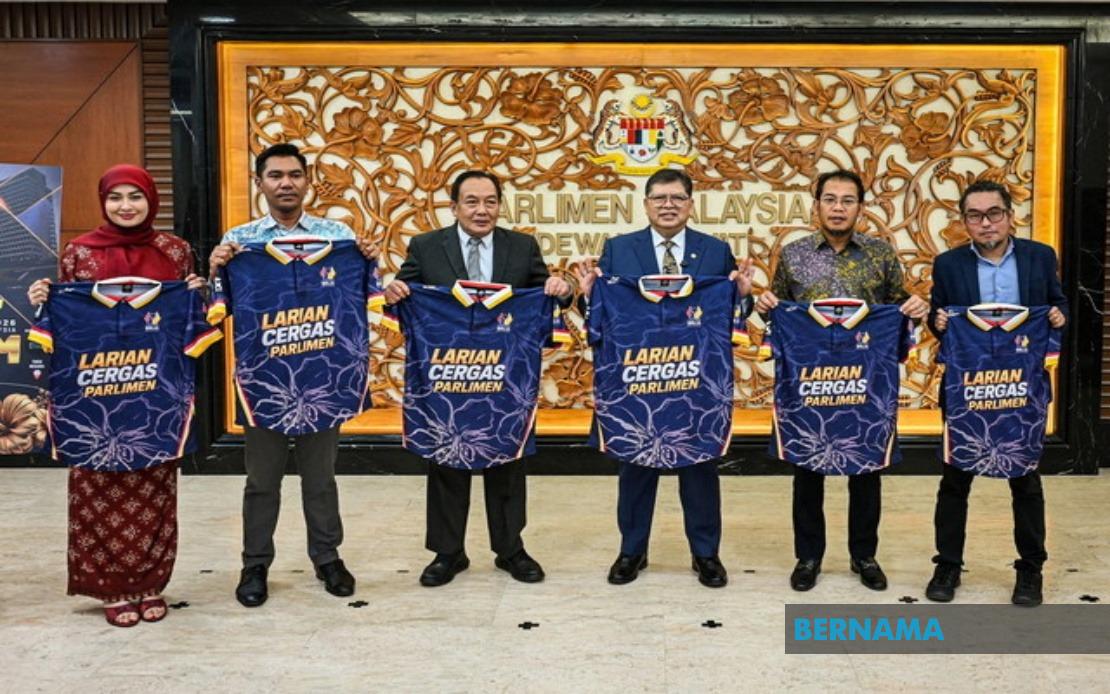
Malaysia's Parliament will debut a wellness initiative designed to tackle rising health concerns among elected representatives, with Dewan Rakyat Speaker Tan Sri Datuk Dr Johari Abdul unveiling plans for the 'Larian Cergas Parlimen' fun run scheduled for July 25. The event, coordinated through the Malaysian Youth Parliament (PBMy) secretariat, represents an institutional attempt to address worrying trends regarding the physical condition of parliamentarians, whose demanding schedules and sedentary work often compromise their wellbeing.
The inaugural 5-kilometre run will commence from the Parliament building itself, winding through several of Kuala Lumpur's most recognisable landmarks including the iconic Tugu Negara national monument, before returning to Parliament. By selecting such a symbolically charged route, organisers are positioning the initiative not merely as a fitness event but as a visible demonstration of Parliament's commitment to national wellness goals. The choice of landmarks also allows participants to connect physical activity with civic pride, merging health advocacy with national identity.
Johari's remarks during the programme launch revealed the underlying motivation for the event, which transcends simple recreational enjoyment. He articulated concern about mounting evidence that members of both the Dewan Negara and Dewan Rakyat face escalating health challenges stemming from the intersection of intensive parliamentary duties and lifestyle choices incompatible with sustained wellbeing. Rather than treating this as an individual responsibility issue, the initiative frames healthy living as a collective parliamentary concern requiring institutional intervention and leadership demonstration.
The speaker emphasised that lawmakers themselves must function as visible advocates for wellness culture, particularly when engaging with younger segments of society increasingly susceptible to sedentary habits. By positioning parliamentarians as influencers and champions of healthy living rather than merely privileged decision-makers distant from public concerns, the event attempts to rebuild trust in political institutions through tangible personal example. This approach recognises that legislative credibility extends beyond policy pronouncements to encompass the lived practices and demonstrated values of those wielding political authority.
Participation in the run extends beyond Parliament's elected and appointed members to embrace the general public, transforming what might have been an exclusive internal exercise into a community engagement platform. This inclusive design enables ordinary Malaysians to share space and activity with their representatives in a non-adversarial context, potentially humanising politicians while simultaneously creating opportunities for informal constituent interaction. The accessibility of a simple 5-kilometre run ensures that participants of varying fitness levels can engage meaningfully without requiring specialised athletic capability.
Johari's vision for the programme's expansion represents perhaps the most significant aspect of the initiative's ambition. By proposing that similar fun runs be organised at state legislative assemblies nationwide, he is attempting to institutionalise wellness promotion across Malaysia's multi-tiered governance structure. Should this vision materialise, it would create a coordinated network of health advocacy events connecting federal, state, and potentially local government levels while establishing consistency in how elected representatives signal commitment to population health priorities.
The timing of this initiative, launched in July, reflects strategic consideration of Malaysia's tropical climate and the availability of participants during school and work holiday periods. The specific date of July 25 allows sufficient promotional lead time while capitalising on mid-year momentum when fitness resolutions remain relatively fresh in public consciousness. This scheduling demonstrates that even symbolic political gestures require careful logistical planning to maximise participation and impact.
For Malaysian readers, the wellness run carries implications extending beyond Parliament's internal affairs. Growing awareness of lifestyle diseases including diabetes, hypertension, and obesity has elevated national health discourse, making governmental institutions' overt commitment to fitness increasingly significant. When parliamentarians publicly commit to physical wellness through participation in community events, they implicitly validate health promotion as a priority worthy of leadership attention and resource allocation.
The initiative also reflects evolving expectations regarding political leadership accountability. Contemporary constituents increasingly expect their representatives to embody the values and commitments they advocate legislatively. A parliament that passes health policy while its members visibly struggle with lifestyle-related conditions risks credibility erosion. By proactively addressing this perception gap through the fun run, Parliament signals responsiveness to implicit public expectations about representative authenticity and alignment between stated principles and demonstrated practice.
From a Southeast Asian perspective, Malaysia's parliamentary wellness initiative joins regional efforts to address escalating health crises through governance-level interventions. As the region confronts rising non-communicable disease burdens, governmental institutions experimenting with different promotion strategies contribute valuable insights into effectiveness of various approaches. Whether entertainment-focused community events like fun runs genuinely shift health behaviours or primarily serve symbolic purposes remains an open empirical question that Malaysian implementation may help clarify.
The Malaysian Youth Parliament's involvement as coordinating secretariat deserves particular attention, as it suggests deliberate intergenerational framing of the initiative. By placing youth-focused institutional machinery at the event's administrative centre, Parliament positions wellness promotion as particularly relevant to younger constituencies while creating mentorship opportunities between established parliamentarians and emerging political participants. This structural choice reflects recognition that sustainable health culture shifts require institutional embeddedness across generational lines.
Registration mechanisms for interested participants, while not detailed in available information, will prove crucial in determining whether the initiative achieves its stated objectives of broad engagement versus remaining an elite parliamentary exercise. The accessibility of registration processes and removal of potential barriers to participation will significantly influence whether July 25's fun run becomes a genuine community event or primarily serves symbolic purposes for already-engaged constituencies. Future assessments of the event's impact should carefully track not merely participation numbers but demographic representativeness of those registering.
Ultimately, Parliament's inaugural wellness fun run represents a pragmatic acknowledgment that institutional health and individual representative wellbeing cannot be perpetually decoupled from public health outcomes. While a single 5-kilometre run cannot reverse epidemic-scale health challenges, its establishment as an annual institutional practice could meaningfully contribute to shifting parliamentary culture toward greater health consciousness. Should the initiative expand to state legislatures and become embedded in governance calendars nationwide, it may constitute a significant though understated contribution to Malaysia's broader public health transformation.

