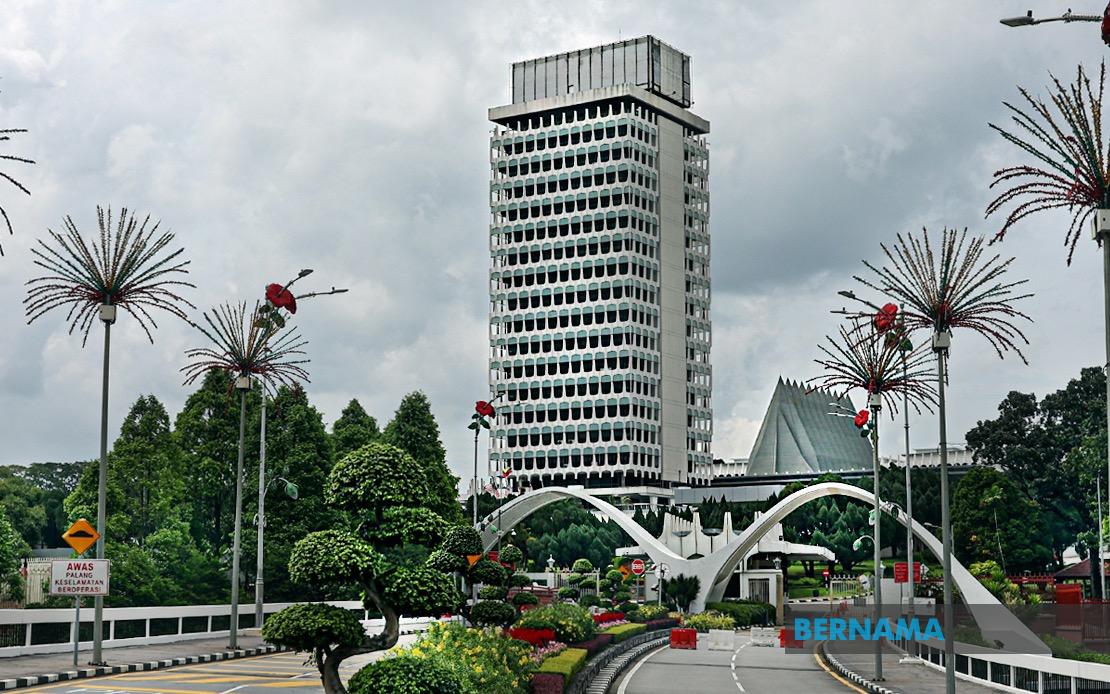
The third week of Parliament's sitting brought substantive legislative movement and wide-ranging policy debates encompassing competition law, agricultural regulation, human rights oversight and national security concerns. Two competition bills achieved passage following discussion, while a third piece of legislation governing the rice sector moved to its initial reading stage, signalling the government's agenda to modernise regulatory frameworks across key economic and food security domains.
The Competition (Amendment) Bill 2026 and the Competition Commission (Amendment) Bill 2026 form part of a broader effort to update Malaysia's competition regime in response to the evolving digital economy landscape. These amendments are designed to equip authorities with stronger tools to investigate and sanction anti-competitive behaviour, a concern that has grown more pressing as digital platforms increasingly shape market dynamics across Southeast Asia. For Malaysian businesses and consumers, the reformed legislation promises more rigorous enforcement against practices that distort competition, though implementation will prove critical to determining real-world impact on market conduct.
Equally significant was the tabling of the Control of Padi and Rice (Amendment) Bill 2026, which reflects government determination to tighten oversight of an agricultural sector long troubled by quality degradation and illicit practices. The proposed amendments dramatically escalate financial penalties for violations, with the maximum fine rising to RM1 million, substantially higher than previous thresholds. This legislative approach acknowledges that Malaysia's rice industry faces persistent challenges around malpractice and quality assurance, problems that directly affect food security and farm-gate economics for producers across the country's rice-growing regions.
Parallel to legislative business, Parliament devoted significant attention to the Human Rights Commission of Malaysia (SUHAKAM) Annual Report 2024, with lawmakers offering varied recommendations for improving human rights protection and implementation. The debate underscored Parliament's role in scrutinising the effectiveness of Malaysia's human rights machinery, a function that carries particular weight given regional attention to governance standards and civil liberties protections. Multiple ministries subsequently delivered winding-up responses, indicating whole-of-government engagement with the commission's findings and recommendations.
A substantial contingent of government ministers, spanning eleven portfolios including Home Affairs, Health, Foreign Affairs, Finance and the Prime Minister's Department, completed their departmental responses to parliamentary queries. This coordinated ministerial presence reflected the breadth of issues raised during the sitting and the cross-cutting nature of many parliamentary concerns, from economic policy through to defence procurement and public health infrastructure.
Prime Minister Datuk Seri Anwar Ibrahim's appearance during Minister's Question Time centred on two principal topics: government support for micro, small and medium enterprises and the state of press freedom in Malaysia. On the MSME front, Anwar reiterated the government's commitment to improving how financial institutions process and approve credit applications from smaller businesses, framing this as essential to sectoral sustainability and broader economic resilience. The emphasis on financing efficiency reflects recognition that capital access remains a persistent constraint for Malaysian SMEs competing within increasingly integrated regional supply chains.
The Prime Minister's remarks on press freedom carried particular salience given Malaysia's recent slip in the World Press Freedom Index, a development that has drawn international scrutiny and domestic debate. Anwar attributed the ranking decline to several factors assessed by international monitoring organisations, including enforcement actions against certain media outlets. However, he clarified that such actions target specific categories of content deemed problematic under Malaysian law, specifically material touching on religion, race and the royal institution alongside matters deemed to threaten national security. This framing has become routine in government communications, yet it continues to generate discussion internationally and among media professionals regarding the boundaries between legitimate state interests and editorial independence.
Significantly, Anwar announced a procedural shift regarding complaints against journalists employed by recognised news organisations. Rather than triggering automatic investigation and enforcement action, such complaints will now first pass through the Malaysian Media Council (MMM) for assessment. This institutional modification aims to introduce a filtering mechanism between complaint lodgement and state enforcement, though the practical effect will depend substantially on MMM's operational independence and investigative rigour. For Malaysian journalism, the change represents a modest procedural safeguard, though observers note that ultimate enforcement authority remains with state agencies.
Two Special Select Committees presented their findings to the chamber, addressing organ donation and transplantation policy alongside concerning trends in abuse and violence cases. The organ transplantation report presumably examined Malaysia's donation framework and transplant outcomes, issues relevant to public health planning and potentially to the country's position within ASEAN's healthcare development landscape. The second committee's six-year analysis of abuse and violence statistics painted a troubling picture of rising incidents, prompting parliamentary discussion about prevention strategies and victim support mechanisms.
Defence and security matters also featured prominently, with lawmakers scrutinising the decision to select a replacement missile system for the Littoral Combat Ships' current Naval Strike Missile armament. This acquisition process reflects Malaysia's ongoing effort to modernise its maritime defence capabilities, a matter of strategic importance for a nation with extensive maritime territory and interests. Detailed parliamentary discussion of weapons system procurement remains relatively infrequent, making such debates valuable for parliamentary oversight of defence expenditure and strategic choices.
Public health infrastructure digitalisation emerged as another focused discussion point, with parliamentarians examining government efforts to accelerate digital system deployment across public healthcare facilities. This initiative addresses longstanding inefficiencies in hospital management systems and patient record handling, areas where technological investment can yield substantial operational improvements and better patient outcomes. The push for healthcare digitalisation carries particular relevance for Malaysia's ageing population and the growing burden of chronic disease management across regional healthcare systems.
Deputy Finance Minister Liew Chin Tong's disclosure regarding 1Malaysia Development Berhad liabilities commanded significant parliamentary attention. The revelation that government liabilities arising from 1MDB—encompassing both settled obligations and outstanding amounts—total RM51.4 billion underscores the enormous fiscal impact of the fund's collapse and subsequent restructuring. This figure remains a persistent reminder of the episode's damage to national finances and public trust, and continued parliamentary scrutiny reflects ongoing concern about fiscal responsibility and governance accountability.
Parliament Speaker Tan Sri Dr Johari Abdul's public reminder to legislators regarding regular health screening, prompted by a colleague's admission to a cardiac centre, injected a note of personal welfare into formal parliamentary business. While appearing routine, such reminders carry symbolic weight in cultures emphasising both formal governance and collective responsibility for institutional members' wellbeing. The remaining week of parliamentary sitting through July 16 promises to complete outstanding business and conclude the Fifth Session's proceedings, with the legislative agenda continuing to balance economic reform, sectoral regulation and governance accountability.

