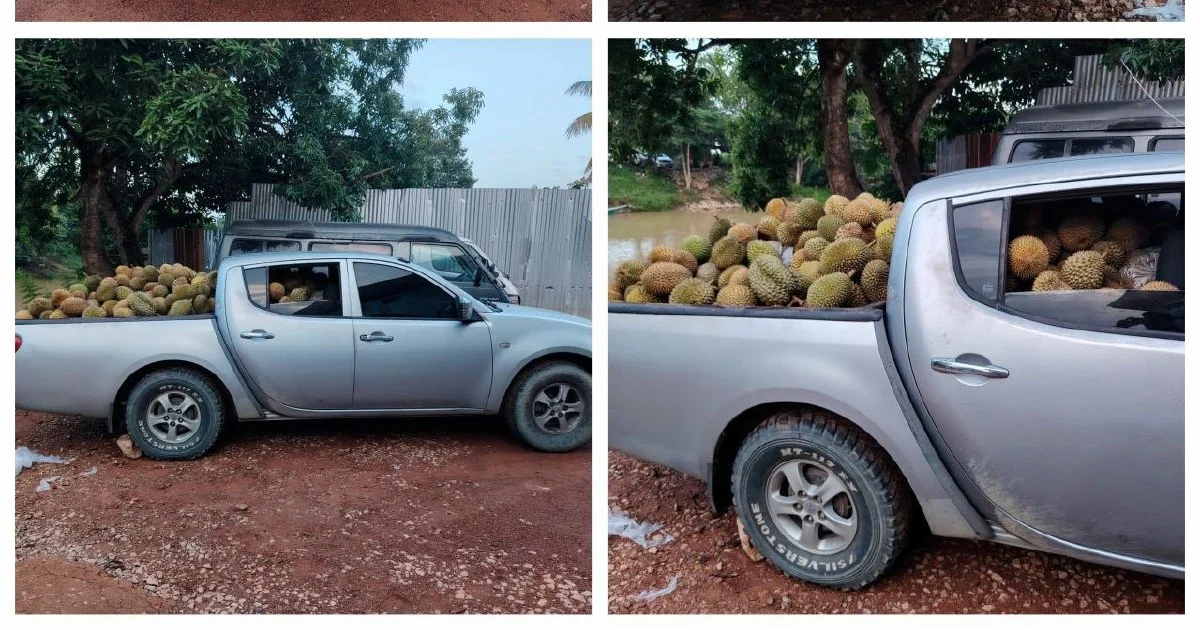
A 22-year-old part-time driver's modest livelihood turned criminal when authorities apprehended him at Rantau Panjang last night while moving 700 kilograms of suspected smuggled durians across state lines. What began as a seemingly straightforward opportunity to earn between RM60 and RM70 daily ended in arrest and investigation, highlighting the persistent challenge of agricultural product smuggling through Malaysia's porous borders.
The incident occurred during a routine enforcement operation by customs and border control officials who discovered the substantial cache of durians packed into the vehicle. The quantity seized represents one of several significant intercepts by authorities attempting to crack down on the systematic trafficking of the spiky tropical fruit, which commands premium prices in both domestic and international markets. The durians were destined for onward distribution, authorities indicated, suggesting the young driver formed merely one link in a more extensive smuggling network.
Rantau Panjang, a strategic border crossing point between Malaysia and Thailand in the northeastern state of Kelantan, has long served as a vulnerable entry and exit point for illicit goods. The porous nature of cross-border commerce in this region, combined with the high demand for premium durians during peak season, creates fertile conditions for smuggling operations. Authorities have intensified surveillance along this corridor as part of a broader initiative to curtail illegal agricultural trafficking.
The meagre daily wage offered to the driver—a sum barely sufficient for subsistence living—underscores how smuggling networks recruit economically disadvantaged individuals to assume considerable legal risk. Such recruitment tactics exploit financial desperation, offering modest compensation to young workers who may lack alternatives or possess limited understanding of the serious consequences they face. The arrest serves as a cautionary reminder of how vulnerable populations become ensnared in criminal enterprises through seemingly innocuous employment opportunities.
Durian smuggling has emerged as a significant regional concern, with demand from neighbouring countries and international markets driving extensive illegal trade. Thai and Vietnamese buyers particularly seek Malaysian durians, renowned for their quality and taste profiles, and are willing to pay premium prices that incentivize cross-border operations. The profit margins for organised smuggling rings remain substantial enough to justify maintaining sophisticated distribution networks despite enforcement efforts.
The timing of this arrest coincides with the peak durian season across Malaysia, when production reaches annual highs and market prices fluctuate considerably. Higher domestic prices sometimes encourage producers and middlemen to divert fruit through informal channels, circumventing taxes and regulatory requirements. This economic dynamic creates persistent pressure on enforcement agencies to maintain vigilant border controls during these high-demand periods.
The investigation into the 22-year-old driver will likely focus on identifying the network orchestrating the smuggling operation. Authorities typically trace back through supply chains to locate suppliers, organisers, and intended recipients, frequently uncovering larger criminal enterprises than initially apparent. The driver's cooperation and intelligence gathered during interrogation could prove instrumental in dismantling the operational structure that deployed him.
From an enforcement perspective, this arrest demonstrates the continued resource deployment required to interdict smuggling at Malaysia's borders. Customs officials and border personnel face unrelenting pressure to screen vehicles whilst maintaining traffic flow, a balancing act that occasionally allows substantial shipments to evade detection. The successful apprehension of 700 kilograms reflects both effective intelligence and strategic checkpoint positioning.
The incident also raises questions about agricultural export regulation and the informal economy surrounding durian distribution. Licensed exporters operate within established frameworks with compliance requirements and tariff obligations, whereas smuggling operations entirely circumvent these systems. This regulatory arbitrage creates competitive advantages for illegal traders and undermines the viability of legitimate producers operating within formal channels.
Malaysia's durian industry, valued at substantial annual revenue and providing livelihoods for tens of thousands of farmers and workers, faces persistent challenges from smuggling that reduces legitimate trading volumes and depresses farm-gate prices. When significant quantities traverse borders illegally, legitimate producers experience market pressures that compress margins and discourage investment in orchards and infrastructure improvements.
Border enforcement agencies across Southeast Asia increasingly recognise that tackling agricultural smuggling requires coordinated regional approaches extending beyond individual checkpoints or national boundaries. Intelligence sharing agreements and joint task forces have yielded improved interdiction rates, though organised crime networks continue adapting their methods and routes to circumvent detection. The arrest at Rantau Panjang represents one data point within this broader enforcement landscape.
The consequences facing the young driver likely include criminal charges under customs legislation and smuggling statutes, potential imprisonment, substantial fines, and a permanent criminal record that will severely constrain future employment prospects. The disparity between his modest compensation and the serious legal jeopardy he faces illustrates the fundamental unfairness inherent in smuggling operations, where upper-echelon organisers remain insulated from frontline risk whilst directing economically vulnerable operatives into direct enforcement danger.

