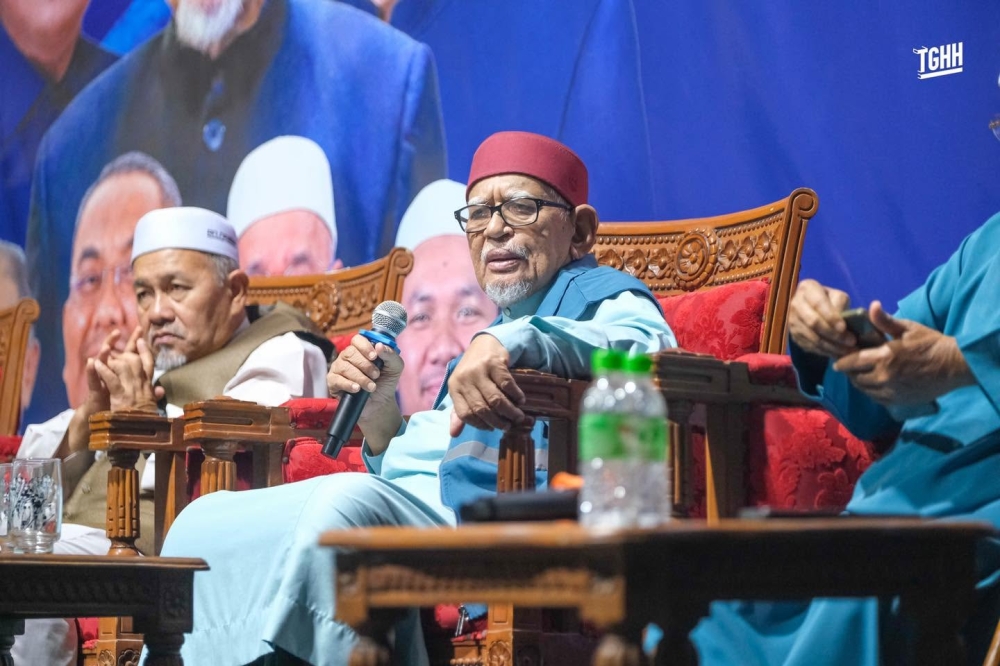
The Islamist party PAS has formally indicated its acceptance of an Umno-led administration in Negeri Sembilan, provided that governance arrangements maintain Malay-Muslim leadership at the executive level. The development marks a significant shift in coalition positioning within the state following recent electoral developments, with PAS prioritising ideological compatibility over numerical advantage in determining political partnerships.
PAS leaders have stipulated that any power-sharing arrangement must preserve the primacy of Malay-Muslim representation in the menteri besar position and key state portfolios. This condition reflects the party's broader political philosophy, which emphasises communal interest as the foundation for governance legitimacy. The stance effectively acknowledges Umno's organisational capacity and electoral support while securing PAS's core demand for Islamic and Malay-centric governance principles.
The acceptance of Umno's leadership represents a pragmatic calculation by PAS in the context of Negeri Sembilan's political fragmentation. Rather than contest for the top executive role, PAS has recognised that securing influence over governance direction proves more valuable than holding the formal position of menteri besar. This approach allows the party to maintain policy input whilst avoiding potential electoral vulnerability that could arise from directly assuming responsibility for state administration.
Umno's position as the likely anchor of any ruling coalition reflects its historical dominance in Negeri Sembilan politics and substantial representation in the state assembly. However, the party faces the practical challenge of assembling a working majority, making cooperation with PAS essential for governmental stability. PAS's agreement to subordinate its menteri besar ambitions therefore provides Umno with the partner commitment necessary to form a functioning administration.
The coalition dynamics in Negeri Sembilan carry implications beyond the state itself, signalling broader trends in Malaysian federalism where smaller Islamic-oriented parties increasingly seek portfolio influence and policy direction rather than chief executive positions. This pattern contrasts with earlier periods when competitive tension between Umno and PAS drove aggressive electoral campaigns and contested nominations for top positions.
For Malaysian readers, the Negeri Sembilan arrangement demonstrates how contemporary coalition mathematics operates at state level, where individual assemblypersons' alignment can determine which party leads government. The emphasis on Malay-Muslim governance also reflects ongoing debates about constitutional protections and community representation that resonate across Malaysia's multiethnic federation, particularly given similar power-sharing negotiations occurring in other state legislatures.
The stability implications for Negeri Sembilan governance should not be overlooked. An Umno-PAS partnership, once formalised through formal agreement and legislative voting, would provide the state with executive continuity and clear policy direction. Given that Negeri Sembilan experienced previous political instability when coalitions fractured, securing PAS's commitment to an Umno-led government represents tangible progress toward institutional steadiness.
PAS's willingness to accept secondary roles in state governments, provided its ideological requirements are met, reflects the party's strategic maturation since earlier decades when leadership positions dominated internal calculations. This evolution suggests that Islamic-oriented political movements increasingly recognise that executive responsibility in multiethnic states requires navigating complex governance challenges, and that influencing policy from portfolio positions may better serve party interests than holding ceremonial or constitutionally-constrained chief positions.
The agreement also provides Umno with partnership flexibility. By securing PAS support without conceding the menteri besar position, Umno maintains control over the state executive's overall direction whilst incorporating Islamic perspectives into governance. This arrangement allows Umno to position itself as the moderate centre of Malaysian politics whilst satisfying PAS's requirement for Malay-Muslim governance primacy.
Regional observers will note that this Negeri Sembilan arrangement reflects patterns visible across Southeast Asian politics, where religiously-oriented parties increasingly occupy coalition roles focused on policy influence rather than executive prominence. The willingness of PAS to structure agreements around substantive governance input rather than formal position-holding demonstrates sophisticated understanding of power dynamics within Malaysia's parliamentary system.
Looking forward, the success of the Umno-PAS arrangement in Negeri Sembilan may establish a template for similar negotiations in other states where coalition formation remains contested. The agreement essentially recognises that governing legitimacy in Malaysia derives not exclusively from electoral victory but from securing stable parliamentary majorities and maintaining governance arrangements acceptable to key political constituencies.

