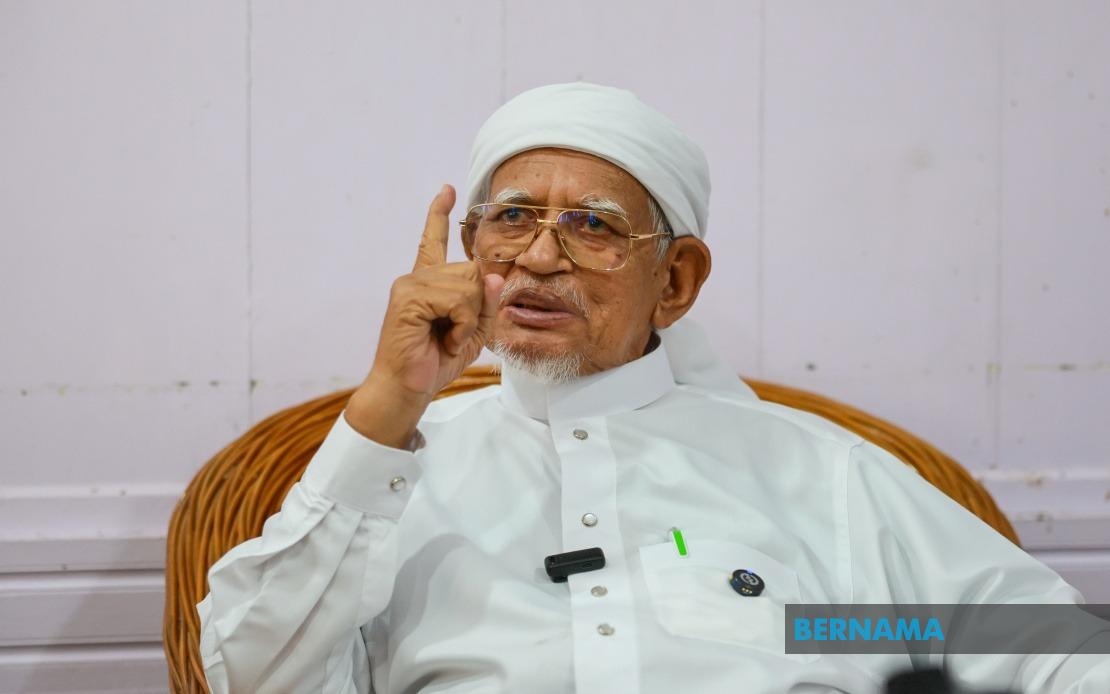
The fragile unity of Perikatan Nasional faces fresh strain as PAS president Tan Sri Abdul Hadi Awang asserted that Bersatu has automatically forfeited its membership in the coalition. Speaking after a religious lecture at the Rusila Mosque in Marang on August 7, Abdul Hadi contended that Bersatu's stated ambition to establish a separate political alliance constitutes an automatic withdrawal from PN, negating the need for formal notification or procedural documentation.
The underlying disagreement stems from earlier reports that Bersatu president Tan Sri Muhyiddin Yassin had indicated plans to construct a new coalition partnership with several other political entities following the Negeri Sembilan state election. This statement prompted Abdul Hadi's interpretation that such intention alone is sufficient grounds for automatic expulsion from the three-party coalition that also comprises PAS and PKR, though the latter's relationship with the grouping has been complicated.
According to Abdul Hadi's reading, no formal process is required for Bersatu to be considered departed from PN. He maintained that the mere expression of intent to form an alternative coalition automatically severs membership ties, eliminating the necessity for an official pronouncement from PN leadership. This interpretation reflects a maximalist understanding of coalition discipline and a strict constructionist approach to party conduct within the broader framework.
Yet Bersatu's secretary-general Datuk Seri Mohamed Azmin Ali swiftly rejected this characterisation, presenting a contrasting legal and constitutional analysis. Azmin pointed to the constitutional framework governing PN, arguing that no automatic expulsion mechanism exists within the coalition's founding documents. According to his reading, any decision regarding a component party's membership status must be determined through formal channels established within the PN Constitution itself.
Azmin specifically invoked Clause 7A of the Perikatan Nasional Constitution, which designates the presidential council as the sole body with authority to adjudicate matters of membership retention or termination. He underscored that as of the time of his statement, the presidential council had not convened to address Bersatu's standing within the coalition, meaning no formal decision regarding membership status had been made through proper governance structures.
The dispute crystallises broader tensions about internal coalition discipline and decision-making authority within PN. By asserting that Abdul Hadi lacks independent authority to unilaterally determine Bersatu's membership status, Azmin challenged the implicit hierarchy that the PAS president appeared to be asserting. The disagreement carries implications for how coalition members perceive their obligations to one another and the mechanisms through which disputes are resolved within the three-party framework.
Azmin's position carries weight given Bersatu's established role in PN since the coalition's formation in 2020, during which it served as a stabilising force during various political transitions. The secretary-general's invocation of constitutional procedure suggests Bersatu intends to contest any unilateral move against it through formal channels rather than accepting a fait accompli based on rhetorical pronouncements. This legalistic approach contrasts with the more informal, politically driven assertion by the PAS president.
The disagreement between PN's heavyweights reveals potential vulnerabilities in coalition cohesion at a time when Malaysian politics remains fluid. Each party within the triumvirate possesses distinct electoral bases and organisational strengths, which can either reinforce mutual dependency or exacerbate tensions when strategic objectives diverge. The question of Bersatu's coalition future appears to hinge partly on differing interpretations of constitutional procedure and partly on competing claims regarding political authority.
Azmin indicated that Bersatu would escalate the matter by lodging an official complaint with the Registrar of Societies, suggesting the party is prepared to pursue institutional remedies if necessary. This move signals that Bersatu is not inclined to accept Abdul Hadi's assertion passively and instead intends to defend its position through available regulatory mechanisms. Such recourse to formal institutions underscores the serious nature of the disagreement and hints at deeper frustrations that may have accumulated between coalition partners.
The timing of Bersatu's apparent repositioning strategy and the conflicting statements from PN's leadership suggest the coalition is experiencing stress related to electoral calculations and resource allocation. Coalition formations in Malaysia often prove temporary arrangements of convenience, dissolving or reconfiguring when political circumstances shift. Whether PN can navigate this current controversy while maintaining functional unity will likely determine its relevance in Malaysian politics during the coming electoral cycle and beyond.
For Malaysian political observers, the episode exemplifies how coalition frameworks, despite formal constitutional provisions, remain vulnerable to disputes over interpretation and authority. The outcome of this particular disagreement may set precedents for how future membership disputes are handled within PN and establish expectations about the balance of power among its constituent parties.

