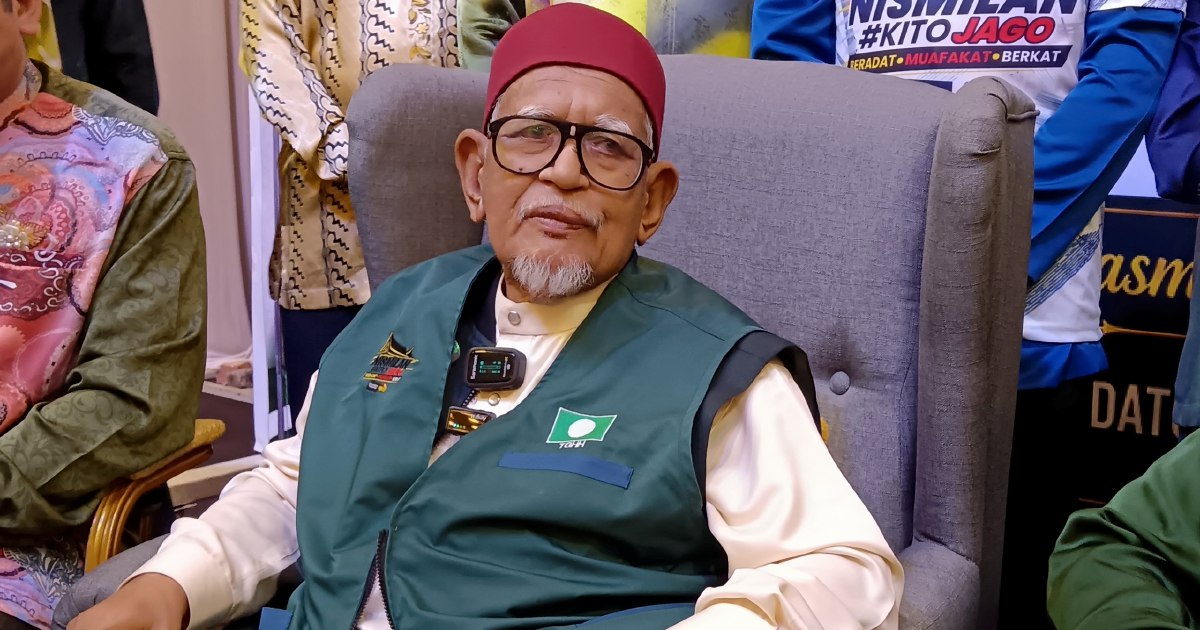
The ideological rift within Perikatan Nasional has widened considerably, with PAS president Tan Sri Abdul Hadi Awang firmly dismissing charges from former coalition leader Tan Sri Muhyiddin Yassin that the bloc has deteriorated into what he termed a "toxic" partnership. Speaking at an event in Jempol, Hadi rejected the characterization outright, instead attributing recent tensions and instability within the opposition coalition to actions taken by Bersatu, which continues to occupy a significant position within the broader PN framework.
The exchange between the two senior figures represents a notable escalation in what has become an increasingly fractious relationship within PN ranks. Muhyiddin's assessment, delivered through public commentary, carried the implication that PAS's direction of coalition affairs had introduced corrosive dynamics that were undermining unity and coherence. His perspective reflected lingering frustrations over strategic decisions and the overall trajectory of the partnership since PAS assumed a more commanding role in its leadership structure and policy orientation.
Hadi's rebuttal carries particular weight given his current position as PAS president and his party's instrumental role in maintaining PN's parliamentary presence. By pivoting the blame toward Bersatu, Hadi was essentially arguing that internal discord stems not from PAS governance or leadership philosophy, but rather from the actions and postures adopted by Muhyiddin's own party. This tactical repositioning places the onus of coalition deterioration squarely on the Bersatu leadership, suggesting that party has become the principal source of dysfunction and complication.
The deterioration of PN dynamics reflects broader structural challenges within opposition coalitions in Malaysia's contemporary political landscape. Since the 2022 general election, the various opposition blocs have struggled to maintain cohesion, with competing visions for governance, ideological direction, and leadership hierarchy creating persistent friction. PN, in particular, has been vulnerable to these pressures given the distinct philosophical orientations of its constituent parties and their differing approaches to addressing national priorities and electoral strategies.
Bersatu's position within PN has become increasingly precarious following the 2023 general election results, which saw the coalition perform less impressively than anticipated. The party faced internal questioning about its strategic choices and effectiveness, even as external observers questioned whether Bersatu retained sufficient influence to shape coalition direction meaningfully. Muhyiddin's recent criticism can be partially understood as a reflection of these underlying insecurities and frustrations with how the coalition has evolved under PAS stewardship.
For PAS, the stakes in this confrontation extend beyond mere reputational management. As an Islamist party that has positioned itself as both a viable governing force and a custodian of Islamic principles in Malaysian politics, PAS faces persistent scrutiny regarding its ability to lead heterogeneous coalitions without imposing controversial ideological positions. The charge of creating a "toxic" environment could be construed by critics as suggesting that PAS leadership has introduced divisiveness or pursued agendas that alienate coalition partners and broader constituencies. Hadi's vigorous denial represents an effort to salvage both party credibility and PN's organizational viability.
The PN partnership, forged in late 2021 around shared opposition to the then-governing Barisan Nasional and later Pakatan Harapan coalitions, has never achieved the institutional stability or philosophical coherence necessary for genuinely harmonious collaboration. PAS and Bersatu, despite both holding conservative political positions, have exhibited fundamentally different operating styles and strategic priorities. PAS's grassroots organizational strength and ideological consistency contrast sharply with Bersatu's more fluid approach to coalition-building and its greater susceptibility to elite-level factional disputes.
Muhyiddin's public articulation of coalition dysfunction serves multiple purposes in the current political context. It allows him to position himself as an honest broker willing to acknowledge problems rather than suppress them through party loyalty. Simultaneously, it creates space for repositioning Bersatu's electoral strategy and coalition partnerships ahead of state-level contests and the subsequent general election cycle. By publicly airing grievances, Muhyiddin may be laying groundwork for future realignments or at least securing concessions regarding PN's governance structure and decision-making processes.
The Malaysian electorate's response to these internal opposition conflicts has generally been one of disengagement and skepticism. Successive rounds of coalition turmoil have eroded public confidence in opposition leadership's capacity to govern effectively. Both PAS and Bersatu face electoral calculations that require maintaining sufficient coalition cohesion to remain viable alternatives to the incumbent government, yet internal pressures constantly threaten that cohesion. The accusations and counter-accusations between senior leaders do little to inspire voter confidence that opposition coalitions possess the maturity and discipline necessary for national governance.
Moving forward, the trajectory of PN relations will likely determine broader opposition dynamics in coming electoral contests. If Hadi and Muhyiddin cannot achieve some form of reconciliation or at minimum establish functional working arrangements, the coalition risks fracturing further or becoming marginalized as a political force. This matters significantly for Southeast Asian observers, as Malaysia's internal political evolution influences regional stability and the broader contest between competing governance models across the Association of Southeast Asian Nations region.
The fundamental question underlying this dispute concerns whether PN can transition from a vehicle for opposition consolidation into a genuine governing coalition capable of managing competing interests and ideologies. Hadi's insistence that Bersatu bears responsibility for coalition problems rather than intrinsic flaws in PAS leadership suggests he believes such a transition remains possible. Whether Malaysian voters and fellow coalition partners accept that assessment will significantly shape opposition prospects for the remainder of this electoral cycle and beyond.

