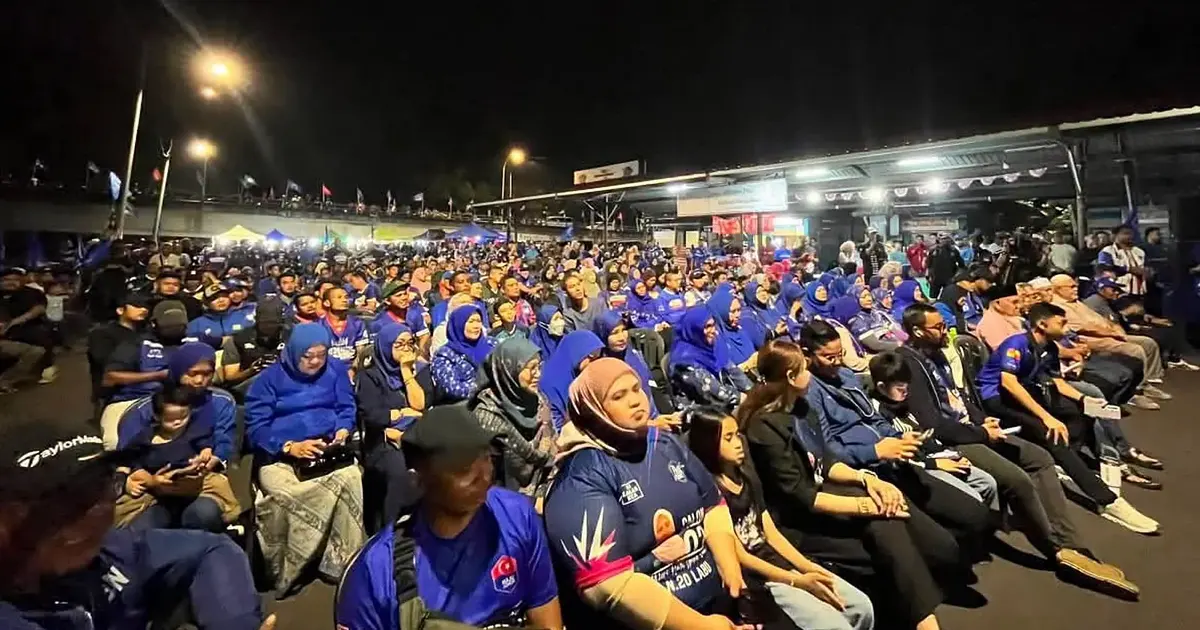
PAS has moved to clarify its positioning on race relations in Malaysia, pushing back against what it characterises as misrepresentation of its 'Malay unity' agenda by political opponents. In recent remarks, the party sought to distinguish between promoting solidarity within the Malay community and fostering animosity toward Chinese and Indian Malaysians, a distinction the party views as critical to its political narrative going forward.
Ahmad Fadhli Shaari, a prominent figure within the party, made an appeal directly to non-Malay voters to evaluate PAS on the basis of its leadership's actual pronouncements rather than allegations and interpretations put forward by other political actors. This approach reflects a broader PAS strategy to reshape its public image, particularly among communities that have historically viewed the party with caution or scepticism. The party's outreach effort suggests an awareness that messaging around race and unity requires careful calibration in Malaysia's ethnically diverse electorate.
The clarification arrives amid ongoing debate within Malaysian political discourse about how parties balance appeals to their core constituencies with the need to demonstrate inclusivity across the broader population. PAS has long been associated with a focus on Malay-Muslim interests, a positioning that has sometimes created tension with its relationships with non-Muslim communities and with parties that draw support from across ethnic lines. The party's current messaging strategy appears designed to suggest that emphasising one community's interests need not entail diminishing others' standing or promoting animosity.
For Chinese Malaysian voters in particular, PAS has historically been a secondary consideration in electoral calculations. Chinese-majority constituencies have traditionally gravitated toward parties perceived as multiethnic in composition and leadership, with the Democratic Action Party, Malaysian Chinese Association, and other formations commanding greater support. Any attempt by PAS to broaden its appeal must contend with deeply embedded voting patterns and community-level narratives about party identity and trustworthiness.
Similarly, Indian Malaysian voters have generally prioritised parties offering specific representation of their community's concerns, whether through the Malaysian Indian Congress, the Democratic Action Party, or other formations. PAS's efforts to communicate with this constituency face comparable structural challenges rooted in longstanding patterns of political affiliation and community discourse.
The timing of PAS's clarification reflects Malaysia's broader political landscape, in which coalition-building and voter coalition expansion have become critical strategic imperatives. Recent electoral cycles have demonstrated the volatility of Malaysian politics and the shifting nature of voter allegiances. Any party seeking to strengthen its position cannot afford to rely solely on its existing support base; reaching beyond traditional constituencies has become necessary for parties aiming to expand their parliamentary representation and political influence.
Ahmad Fadhli Shaari's direct appeal to non-Malay voters to assess PAS through primary sources rather than secondary commentary carries implicit criticism of rival parties' campaign messaging. This rhetorical move attempts to reframe how PAS is understood by placing the burden of fair evaluation on voters themselves rather than accepting characterisations that other parties have propagated. The approach assumes that direct engagement with party statements will produce more favourable impressions than perceptions shaped by opponents' critiques.
Contextually, Malaysia's multireligious and multiethnic character creates particular sensitivities around political messaging touching on communal identity. Statements about Malay unity must navigate a domestic environment where historical grievances, constitutional arrangements, and social anxieties around communal relations remain salient. The distinction PAS seeks to draw between community solidarity and interethnic animosity becomes politically significant precisely because such messaging can readily be misinterpreted or leveraged by opponents as evidence of divisive intent.
The party's overture to non-Malay voters also reflects competitive dynamics within Malaysia's Islamic political space. While PAS maintains a distinct organisational identity, the broader landscape of Malay-Muslim political representation includes other formations with varying approaches to interethnic relations and governance philosophy. PAS's attempt to present itself as compatible with multiethnic electoral politics may be partly driven by competitive necessity within this crowded space.
For Malaysian political observers, PAS's clarification raises substantive questions about whether messaging aimed at internal community solidarity can be successfully separated from how it is received and interpreted by external audiences. The gap between stated intention and perceived impact has long been a challenge in multiethnic democratic politics, particularly when rhetoric concerns identity, unity, and community interests.
Moving forward, whether non-Malay voters respond positively to PAS's invitation to assess the party on its own terms will depend on multiple factors: the consistency of party messaging across time and contexts, visible policy outcomes affecting non-Malay communities, and comparative evaluation of what other parties offer. The party's clarification represents an attempt to manage perceptions, but sustained reputational rebuilding across communal lines typically requires demonstrable commitment extending beyond rhetorical gestures.

