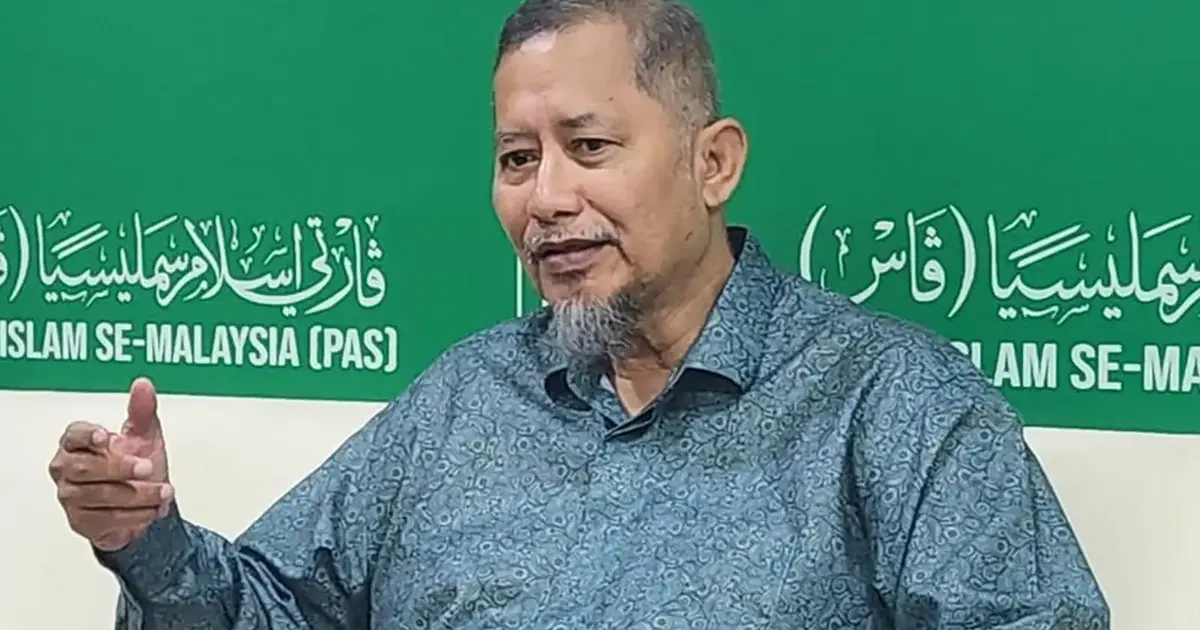
PAS treasurer Iskandar Abdul Samad has thrown down a gauntlet to Bersatu, declaring that his Islamist party would emerge victorious should the two major components of Perikatan Nasional face off directly at the ballot box. The statement underscores deepening tensions within the opposition coalition that has become increasingly fractious following the May 2023 general election, during which Perikatan Nasional made significant inroads but ultimately failed to capture federal power.
The treasurer's confidence appears rooted in PAS's substantial ground organisation across Malaysia's heartland, particularly in its traditional strongholds across the Malay peninsula. Where PAS has invested decades building networks among rural constituents and leveraging its extensive Islamic institutional infrastructure, Bersatu remains a comparatively younger entrant to electoral politics, having only fractured from UMNO in 2016. This organisational asymmetry, coupled with PAS's deeper roots within conservative Muslim communities, potentially grants the party a structural advantage should the two organisations compete for overlapping voter bases.
Iskandar's remarks carry additional weight given his position within PAS's financial apparatus, suggesting the statement reflects considered party strategy rather than mere rhetoric. The timing of such declarations often signals preparedness for certain electoral scenarios, and this comment may indicate PAS leadership is actively preparing contingency plans should its alliance with Bersatu deteriorate further. Recent months have witnessed mounting policy divergences and leadership disputes between the two parties, transforming what was once a cooperative partnership into an increasingly strained arrangement dominated by mutual suspicion.
The political calculation underlying PAS's confidence merits examination within the Malaysian context. Bersatu's electoral fortunes have proven considerably more volatile than those of established parties, having depended heavily on Mahathir Mohamad's personal political capital and subsequently on his successor Muhyiddin Yassin's ability to navigate complex coalition politics. When these individual leaders face electoral challenges or loss of momentum, Bersatu's support tends to fluctuate dramatically. By contrast, PAS maintains more stable voting patterns rooted in ideological commitment and community-based organisation, rendering its support base comparatively resilient to personality-driven fluctuations.
From a Southeast Asian perspective, the prospective fracturing of Perikatan Nasional carries broader significance. Should PAS and Bersatu contest elections separately, the opposition would fragment its strength across multiple vehicles, potentially benefiting the governing Pakatan Harapan coalition. For Malaysian voters concerned about opposition unity and effective governance alternatives, such developments suggest diminishing prospects for coherent opposition governance models. The region watches closely as Malaysia's political configurations potentially shift, given the nation's status as Southeast Asia's most economically developed parliamentary democracy.
The statement also illuminates internal Perikatan Nasional dynamics that have proven increasingly difficult to manage. Rather than publicly emphasising coalition unity and harmony, party leaders now engage in competitive posturing that signals underlying crisis. Iskandar's comments represent a thinly veiled assertion that should the partnership collapse, PAS would be better positioned to absorb defecting supporters and emerge as the stronger entity. This behaviour pattern typically indicates serious disagreements over power distribution, policy direction, and electoral strategy that cannot be easily reconciled through conventional mediation.
PAS's assessment of its electoral superiority over Bersatu must be understood against the backdrop of recent state and national electoral performance. PAS has demonstrated stronger resilience in retaining support across multiple election cycles, whereas Bersatu has experienced more dramatic swings in voter preference. Moreover, PAS controls several state governments, providing tangible evidence of administrative capacity that translates into voter confidence. Such ground-level governmental experience, accumulated over years, offers psychological and institutional advantages that newer parties struggle to replicate quickly.
The treasurer's remarks simultaneously serve a domestic political purpose within PAS itself. By projecting confidence and dominance over Bersatu, Iskandar reinforces the narrative that PAS represents the true custodian of conservative Malay-Muslim political interests. This messaging resonates powerfully with PAS's core constituency, strengthening party cohesion and preventing defections to competing conservative movements. Internal party morale matters considerably in Malaysian politics, where grassroots activists and local leaders drive electoral machinery.
Looking forward, such public pronouncements create political distance between the two parties that becomes increasingly difficult to overcome through diplomatic reconciliation. Each statement of superiority raises stakes and creates face-saving complications for leadership attempting to preserve coalition unity. If Perikatan Nasional eventually fragments, historians will likely point to escalating competitive rhetoric as symptomatic of irreversible breakdown. PAS's treasurer has essentially signalled that from his party's perspective, competing separately represents an acceptable outcome rather than a catastrophic failure, a significant psychological shift from coalition-preservation mentality.