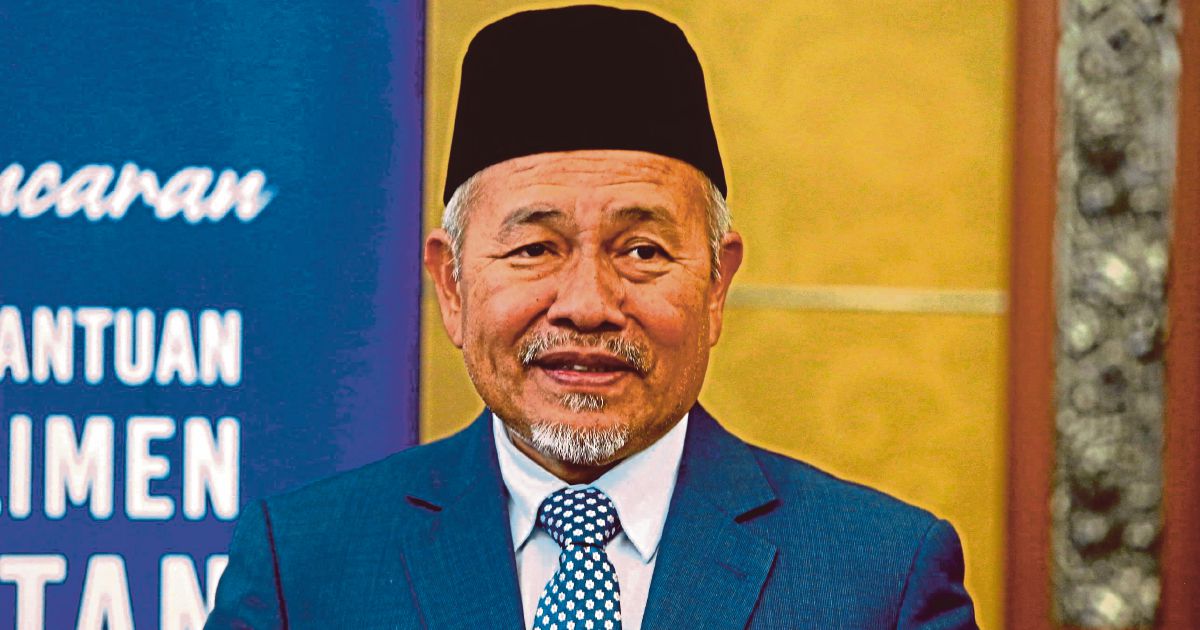
In a striking moment of cross-party dialogue from Seremban, Pas deputy president Datuk Seri Tuan Ibrahim Tuan Man has publicly commended Umno for withdrawing its parliamentary support for Negri Sembilan's state government, framing the decision as a courageous intervention in the state's political landscape. The remark signals an unusual willingness to acknowledge rival coalition partners and underscores the fluid nature of Malaysian politics beyond rigid BN-PH divisions.
Tuan Ibrahim's characterisation of Umno's move as a "bold move" reflects the significance of such withdrawals in state-level governance. When a major party like Umno—historically the backbone of federal Barisan Nasional dominance—steps back from supporting a state administration, it typically triggers a reassessment of legislative arithmetic and often precipitates fresh electoral contests. In the Negri Sembilan context, Umno's departure removes a critical pillar of support, making the current configuration untenable and necessitating either fresh alliances or a return to voters.
The timing and political calculus merit closer examination. Umno's withdrawal suggests internal deliberations about the value of continuing its investment in Negri Sembilan's governance versus the reputational or strategic costs of sustaining an increasingly fragile administration. For a party navigating its own recovery following the 2018 general election watershed and subsequent internal upheaval, repositioning at state level allows flexibility without immediately affecting federal coalitional arrangements. This tactical manoeuvre demonstrates how state-level politics operates as a testing ground for parties reassessing their alliances and messaging.
Pas's welcoming of this development carries particular weight. The Islamist party, having achieved unprecedented parliamentary representation and federal coalition status in recent years, has steadily expanded its influence across Malaysian state politics. By publicly praising Umno's move, Tuan Ibrahim positions Pas not as a narrow sectarian party but as one willing to engage pragmatically with traditional rivals when shared interests align around democratic renewal and voter consent. This rhetorical positioning serves Pas's broader rebranding effort as a mainstream governing force.
The invocation of "opening the floor for voters" articulates a democratic principle increasingly central to Malaysian political discourse. Following the 2018 general election's emphasis on electoral accountability and subsequent shifts toward greater civil society engagement, political actors now routinely justify major decisions by reference to popular mandate and voter choice. When Tuan Ibrahim frames Umno's withdrawal as enabling electoral renewal, he appeals to this broader conversation about democratic legitimacy and the importance of periodic electoral contests as mechanisms for accountability.
For Negri Sembilan specifically, the withdrawal sets the stage for significant political realignment. As a state with historically competitive electoral contests and shifting power dynamics between BN and Opposition coalitions, the withdrawal creates genuine uncertainty about the administration's sustainability and potential electoral outcomes. Voters in the state now face a prospect previously constrained by existing arrangements, with implications for how constituencies and demographic groups reassess their political preferences and coalition loyalties.
The Umno decision also reflects evolving calculations about state-level coalition strategies across Malaysia. Increasingly, parties view state governments as venues where they can test different partnership configurations, demonstrate governance capacity, or strategically withdraw to enhance their positioning for subsequent elections. This flexibility contrasts with the more rigidly hierarchical federal coalition arrangements that historically characterised Malaysian politics. By allowing state-level experimentation, major parties like Umno and Pas can adapt to local conditions while managing broader national coalitional commitments.
Tuan Ibrahim's public acknowledgement illuminates broader patterns in Malaysian cross-party relations that often remain beneath formal political statements. Despite belonging to historically opposing coalitions—Pas allied with Pkr and Dap in federal Pakatan Harapan, while Umno anchors Barisan Nasional—senior figures increasingly engage in pragmatic recognition of shared political interests and principled decision-making by rivals. Such moments of bipartisan acknowledgement suggest a political culture slowly maturing beyond purely adversarial framings, though factional and ideological tensions remain pronounced.
The statement also carries implications for Negri Sembilan's broader electoral timeline and campaign dynamics. With Umno's withdrawal triggering inevitable state elections, multiple parties now position themselves for contests that will determine the state's direction for the coming years. Pas, as a growing electoral force with strongholds across multiple states, views such contests as opportunities to expand its representation and validate its claims to competent governance. Similarly, other political actors reassess their Negri Sembilan strategies against a transformed political landscape.
Umno's decision, meanwhile, suggests internal party calculations about which state administrations warrant continued investment and support. For a party still navigating questions of leadership, direction, and coalition positioning following its 2018 electoral loss and subsequent federal opposition years, strategic withdrawal from certain state governments represents a rational choice to preserve resources, maintain credibility, and avoid association with increasingly unstable administrations. This selectivity reflects mature political management rather than blanket commitment to all existing arrangements.
Looking forward, Tuan Ibrahim's remarks position Pas to benefit electorally from whatever transpires in Negri Sembilan. By publicly praising Umno's withdrawal as democratically responsible, Pas establishes itself as a principled actor supporting voter empowerment while simultaneously preparing to contest the resulting elections. This rhetorical and strategic positioning exemplifies how Malaysian political actors navigate the intersection of coalition loyalty, electoral ambition, and appeals to democratic legitimacy in an increasingly fluid political environment.

