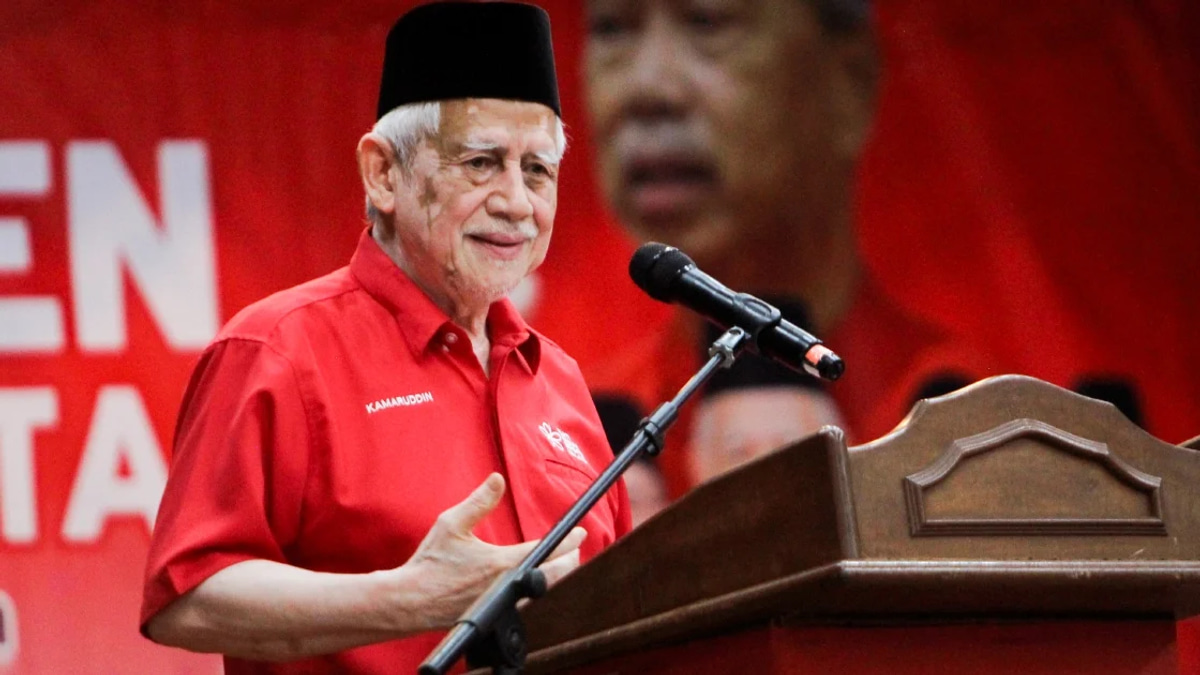
A member of parliament from PAS has issued a strategic warning to Bersatu, cautioning that fielding rival candidates in the upcoming Johor and Negri Sembilan state elections risks fragmenting the opposition vote and ultimately benefiting Pakatan Harapan rather than either party. The message reflects deepening concerns within the Malay-Muslim coalition about how intra-coalition contests could undermine their collective electoral positioning in these crucial state contests.
The caution articulates a familiar political dilemma in Malaysian electoral contests: vote splitting among ideologically aligned parties during a competitive election cycle. When opposition parties with overlapping support bases contest the same seats rather than coordinate candidacies, they risk allowing their common opponent to win with a plurality. This dynamic has played out repeatedly in Malaysian politics, where fractured opposition performances have handed victories to dominant ruling coalitions.
Johor, Malaysia's second-largest state by population and a significant economic powerhouse, represents strategic electoral terrain. The state's mixed demographic profile and diverse political history make its electoral outcome influential for broader national political trajectories. Similarly, Negri Sembilan's seat count, though smaller, carries symbolic weight within the Klang Valley region and Selangor's orbit. Both states currently serve as important testing grounds for emerging coalitions and realigned political forces.
PAS and Bersatu, despite both being components of the federal government and the broader Perikatan Nasional framework, maintain distinct constituencies and competing leadership ambitions. This structural reality creates persistent tension between formal coalition unity and practical electoral competition. State elections, with their more localized dynamics and lower-cost campaigning environment compared to general elections, often become venues where coalition partners test their independent strength.
The PAS MP's warning implicitly acknowledges that Bersatu, having separated from UMNO and repositioned itself as an independent political force, may view state elections as opportunities to establish distinct organizational presence and demonstrate grassroots capacity. However, this strategic logic conflicts with the broader coalition's competitive interest against Pakatan Harapan, which remains organized and capable of capitalizing on opposition disunity.
Packatan Harapan's potential gains from such fragmentation extend beyond mere seat arithmetic. A divided opposition performance in these states would reinforce narratives of Perikatan Nasional instability and coalition dysfunction, contrasting with Pakatan Harapan's messaging around unity and coordination. The optics of internal bickering damage opposition credibility with voters skeptical about political reliability.
The warning also reflects deeper concerns about coalition cohesion at the federal level. State election results often signal broader shifts in political momentum and party strength, influencing perceptions of governments' stability and capacity to govern. A weakened collective showing in Johor and Negri Sembilan could reverberate across the political landscape, emboldening Pakatan Harapan narratives and complicating the federal coalition's legislative position.
Bersatu's calculations involve balancing several competing interests. The party's survival depends partly on demonstrating independent relevance and mobilizing its own support base. Contesting aggressively signals to members that the party remains a serious political force, not merely junior partner status within Perikatan Nasional. However, this comes at the cost of weakening the coalition's overall electoral competitiveness and risking the PAS MP's cautioned outcome.
For Malaysian voters and observers, the unfolding dynamic illustrates how coalition politics at the federal level creates complex incentives that do not always align during subnational contests. The warning from the PAS parliamentarian essentially makes explicit the tension that exists implicitly whenever multiple parties within the same governing coalition compete for the same electoral space.
The strategic advice being offered reflects conventional political wisdom: temporary organizational autonomy or electoral gains in state contests pale compared to the damage caused by allowing the opposition to consolidate power in any state. This logic assumes that preserving coalition government at the federal level requires demonstrating baseline competence and coordinated strength in state elections.
How Bersatu responds to this warning will reveal much about the party's medium-term political strategy and its commitment to the Perikatan Nasional framework. A decision to contest aggressively despite PAS's caution would signal that Bersatu prioritizes independent party development over coalition unity, a choice with consequences extending beyond these two state elections.
Meanwhile, Pakatan Harapan remains positioned to benefit from any opposition disunity, regardless of which Malaysian state faces elections. The opposition coalition's strategic challenge involves weaponizing evidence of governing coalition dysfunction while simultaneously maintaining its own organizational cohesion—a perennial tension in Malaysian oppositional politics.