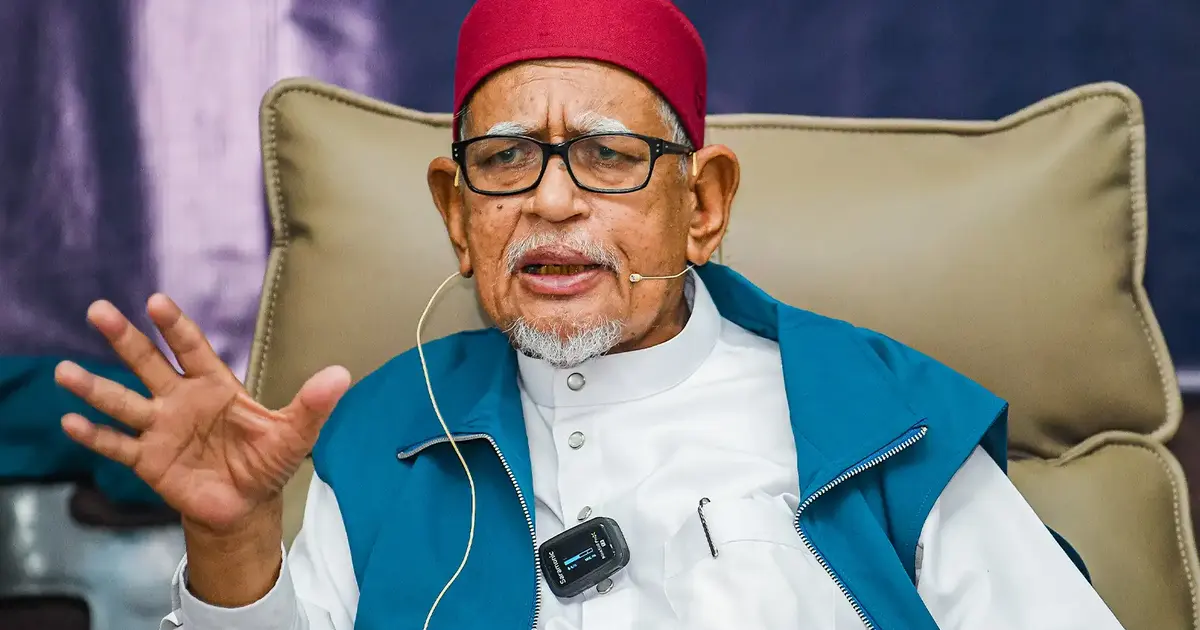
PAS president Hadi Awang is holding firm on his recent statements regarding the Democratic Action Party, even as he faces legal scrutiny over the remarks. The veteran politician has emphasised that while authorities have called him in for questioning, he has not yet been formally charged with any offence related to his comments. His willingness to engage with the judicial process signals confidence in his legal position, though the situation highlights the continuing tensions within Malaysia's fractious political landscape.
The summoning by police represents a preliminary stage in the investigation process, rather than a definitive step toward prosecution. Under Malaysian law, such summons are standard procedure when authorities seek to obtain statements from individuals under investigation. Hadi's distinction between being questioned and being charged carries legal weight, as the former does not presuppose culpability while the latter would indicate prosecutors believe sufficient evidence exists to pursue the matter formally.
Hadi's remarks about DAP have drawn scrutiny from various quarters, reflecting the deep divisions that characterise Malaysian politics. The DAP, as the largest non-Malay party in the ruling coalition, has long been a flashpoint in political discourse, particularly among parties that draw substantial support from Malay-Muslim constituencies. PAS, which has positioned itself as a defender of Malay-Muslim interests, maintains a combative relationship with the Chinese-majority party despite both sitting in the Pakatan Harapan-led government.
The willingness of authorities to investigate the PAS president's remarks underscores the complicated relationship between free political speech and legal boundaries in Malaysia. The country's laws on sedition and criminal defamation remain tools that can be wielded against political opponents, and the mere investigation of a senior politician's words can carry significant symbolic weight regardless of eventual charges. This dynamic shapes how Malaysian politicians calibrate their public statements, knowing that controversial remarks may trigger official responses.
Hadi's stated readiness to face court proceedings reflects a broader pattern in Malaysian politics where senior figures often challenge legal actions against them rather than backing down from contentious positions. By maintaining his stance, he signals to his political base that he will not be intimidated by state machinery, a message that resonates particularly strongly within PAS's core voter demographic. The party's supporters often view the government through a lens that suspects secular bias against Islamic-oriented parties.
The timing of these developments matters in the broader context of coalition politics. Pakatan Harapan has struggled to maintain unity across its disparate components, with tensions between its Malay-Muslim wing, represented by PAS, and its urban, multiethnic base creating recurring friction. Incidents like this one can either serve as pressure points that test the coalition's resilience or as opportunities for political posturing that deflects from governance challenges.
For Malaysian readers observing this episode, it illustrates how political disagreements can escalate into legal matters, and how the country's justice system interacts with high-profile political actors. The case also demonstrates that investigation does not equal guilt, and that Malaysian courts remain the appropriate venue for resolving disputes over whether statements cross legal lines. The outcome will likely set precedents for how severely political speech can be constrained before legal consequences attach.
The international dimensions of Malaysia's internal political disputes also merit consideration. Foreign observers watching Malaysian politics often point to such moments as examples of how legal systems can be enlisted in political competition. However, Hadi's confidence in facing judicial process suggests he believes his comments fall within protected speech, or at minimum, that evidence to support charges is weak.
As this situation develops, the response from other political actors will reveal much about the state of Malaysian democracy. Whether colleagues from across the political spectrum support Hadi's right to speak freely, or whether they view his remarks as genuinely crossing acceptable boundaries, will indicate how Malaysian politics is trending. The balance between protecting minority rights and allowing robust political debate remains perpetually contested in Malaysian governance.
Looking forward, the investigation's trajectory will depend on how prosecutors interpret Hadi's remarks against existing legislation. Malaysia's courts have shown varying willingness to enforce laws against political speech, and judicial independence in politically sensitive cases remains a concern that observers monitor carefully. The Hadi case may ultimately clarify the practical boundaries of political speech in contemporary Malaysia, providing guidance for how future politicians navigate similar situations.

