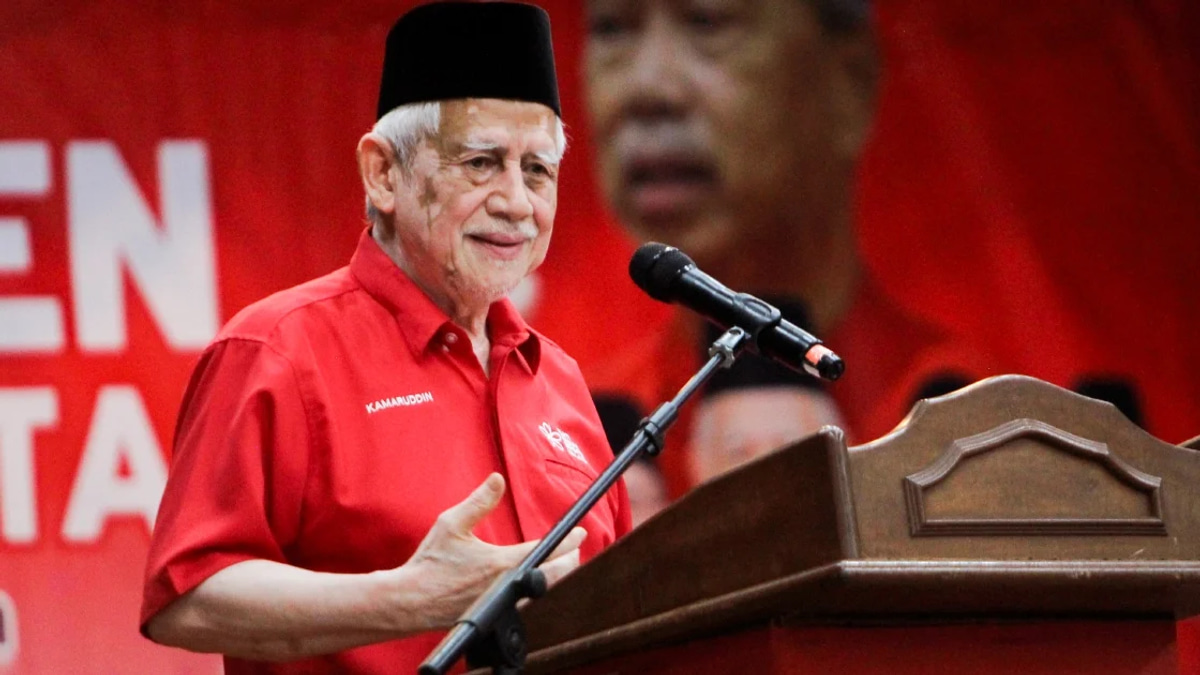
Political analysts have cautioned PAS against attempting to remove Bersatu from the Perikatan Nasional coalition, warning that such a manoeuvre could inflict significant damage on the Islamist party's standing among centrist voters who have become increasingly important to its electoral fortunes.
The tension between PAS and Bersatu within the PN framework reflects deeper fractures in Malaysia's political opposition landscape, where ideological differences and competing leadership aspirations have repeatedly strained relationships among coalition partners. While PAS has cultivated an image of Islamic governance and religious conservatism, the party has simultaneously sought to broaden its appeal beyond its traditional base, a balancing act that becomes precarious when major coalition decisions hang in the balance.
A push to expel Bersatu would carry significant reputational consequences for PAS, as it would be perceived as hardline party politics rather than the result of principled disagreement. Political observers note that moderate voters—particularly urban, educated Malaysians across different states—have shown greater willingness to support PN as a credible alternative to the federal government, precisely because they view the coalition as representing diverse perspectives and containing ideologically distinct factions. An aggressive move against another major component party would undermine that perception of inclusiveness and pragmatism.
The Perikatan Nasional alliance has repeatedly struggled with internal cohesion, with disputes over power-sharing arrangements, electoral seat allocation, and strategic direction frequently threatening its stability. Bersatu, as the numerically smaller party relative to PAS, has nonetheless occupied a disproportionately influential position within the coalition, particularly after its 2022 switch from the federal government to opposition politics. This dynamic generates friction, as PAS members increasingly view Bersatu's prominence as unmerited relative to its parliamentary representation.
However, the political calculus becomes more complex when considering the broader voter coalition that PN has managed to assemble. The bloc has attracted voters dissatisfied with both the ruling federal government and the primary opposition bloc, carving out space as a middle ground alternative. These swing voters, concentrated in urban constituencies and among younger demographics, tend to favour coalition stability and competent governance over ideological purity or factional dominance. They respond negatively to perceptions of party infighting and self-interested manoeuvring.
PAS's historical identity as a religious-focused party has simultaneously attracted devoted base voters and occasionally alarmed centrist Malaysians concerned about governance approaches that might prioritise religious law over inclusive policymaking. The party's recent electoral gains, particularly in the 2022 general election, came partly from voters seeking an Islamic governance model but also from Malaysians simply seeking change and credible opposition alternatives. Losing even a portion of this latter group through perceived heavy-handedness within PN would meaningfully diminish PAS's leverage in future elections.
The timing of any such manoeuvre would prove crucial to its political reception. Forcing out Bersatu during a period of relative PN stability might generate accusations of naked power consolidation, whereas attempting it during moments of coalition stress could potentially be reframed as correcting structural imbalances. Nevertheless, moderate voters generally prefer that internal coalition disputes be resolved through negotiation and compromise rather than expulsion, viewing collaborative problem-solving as a superior alternative to factional warfare.
Bersatu's presence in PN also serves strategic purposes beyond simple representation. The party retains supporters in several states and maintains influence in particular geographic pockets where PAS has weaker organisational infrastructure. Removing it would require PAS to absorb these constituencies and rebuild party structures in new areas, a challenging undertaking that would consume resources better directed toward countering the federal government's machinery during election campaigns.
The risk to PAS extends beyond electoral performance to the broader viability of PN as a political force. Should the coalition fracture visibly over leadership disputes or factional conflict, it would likely splinter into its component parties, each weakened and less capable of mounting a serious electoral challenge. Voters have already demonstrated in multiple elections their frustration with political instability and coalition breakdowns, punishing parties perceived as prioritising internal scores over governance readiness.
Political observers suggest that PAS would achieve greater long-term advantage by working within the coalition framework to enhance its influence and visibility, demonstrating superior governance capability and inclusive leadership rather than pursuing aggressive removal tactics. This approach would appeal to the moderate voters whose support has proven essential to PN's competitive position while simultaneously strengthening PAS's argument that it represents a mature, responsible alternative ready for government.
The incident highlights the persistent tension in Malaysian coalition politics between ideological coherence and electoral pragmatism, a balance that PN has thus far navigated imperfectly. For PAS specifically, the coming months will test whether the party recognises that consolidating moderate voter confidence ultimately serves its interests better than winning internal dominance through divisive tactics.