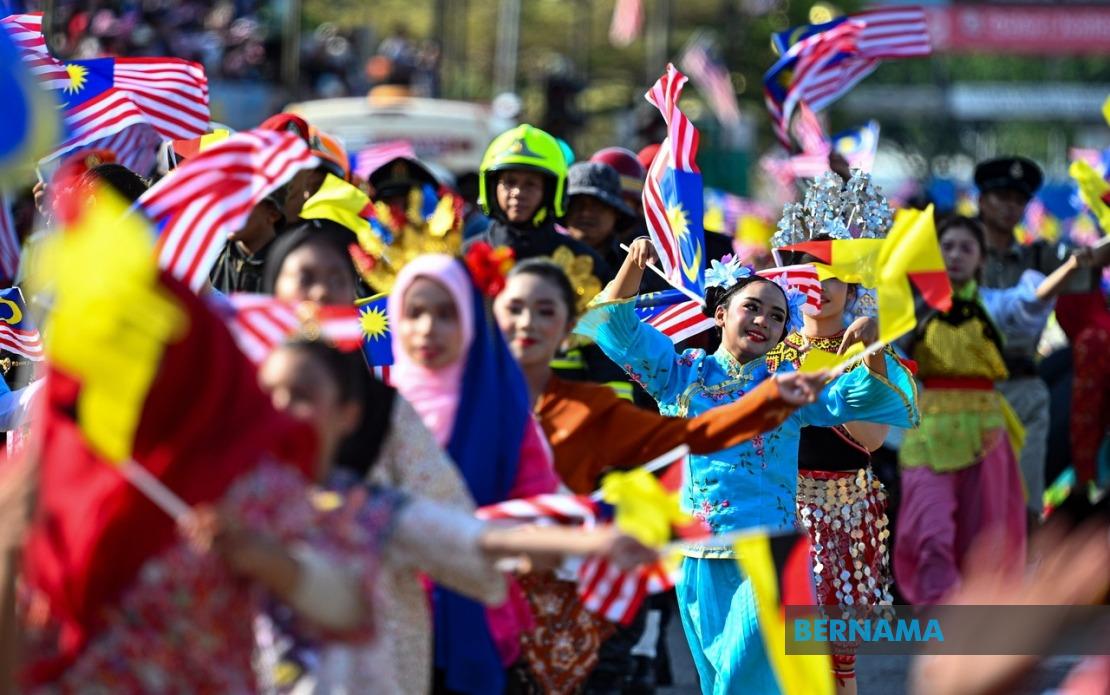
The Negeri Sembilan government's National Day 2026 commemoration attracted a crowd exceeding 30,000 people representing Malaysia's diverse racial and cultural backgrounds, gathering at Dataran Majlis Bandaraya Seremban on August 31. The substantial attendance demonstrated the public's willingness to participate in civic celebrations, with visitors arriving as early as 5.30 am to secure prime viewing positions before official proceedings began.
Menteri Besar Datuk Ismail Lasim attributed the impressive turnout to genuine enthusiasm and patriotic commitment among Negeri Sembilan residents. During remarks to journalists following the ceremony, he highlighted conversations with early arrivals who spoke about the importance of celebrating the nation's founding principles together. The presence of families with young children and multigenerational groups underscored the event's role in transmitting historical consciousness across age groups within Malaysian society.
Despite the strong attendance figures, event organisers deliberately scaled back certain operational elements compared to previous years. The decision to reduce parade contingents and reduce the number of military and government assets on display reflected concerns about prolonged exposure to air quality challenges, specifically regional haze conditions that periodically affect Southeast Asia. Notably, weather conditions on the day proved favourable, suggesting that precautionary measures did not ultimately diminish the celebration's quality, though organisers had prioritised public health considerations in their planning.
Tuanku Muhriz Tuanku Munawir, the Yang Dipertuan Besar of Negeri Sembilan, and Tunku Ampuan Besar Tuanku Aishah Rohani Tengku Besar Mahmud arrived at approximately 8.20 am, receiving ceremonial welcomes coordinated by the Menteri Besar. Their presence underscored the formal significance accorded to national commemorations within Malaysia's constitutional monarchy framework, where state rulers actively participate in official ceremonies as custodians of state identity and continuity.
The parade itself mobilised 82 separate contingents encompassing more than 4,000 active participants drawn from across Negeri Sembilan's governmental, educational, and private sectors. Government departments and statutory agencies marched alongside representatives from district administrations, schools, universities, and corporate entities, reflecting the broad institutional involvement in national celebrations. This coordination across public and private domains illustrates how Malaysian National Day observances function as inclusive civic rituals that transcend bureaucratic boundaries.
The Guard of Honour comprised personnel from the 15th Battalion Royal Malay Regiment (RAMD) stationed at Senawang, with Major Dr Muhammad Hazim Abdul Qhalib leading three commissioned and 103 non-commissioned officers in formal military ceremony. Lieutenant Ahmad Izzudin Abdul Kadir served as the unit's Colours officer, while Warrant Officer 1 Darul Azhar Mohamed held the position of Regimental Sergeant Major. The accompanying combined brass band, drawing musicians from both the 24th Battalion RAMD and the Malaysian Army Basic Training Centre under Drum Major Warrant Officer 2 Azwan Zakaria, performed traditional and patriotic musical selections including Sembah Tari, Aladom, Seruan Tentera and Tentera Benteng, establishing the ceremonial atmosphere expected at state-level national commemorations.
Defence and security asset displays featured prominently throughout the event, with decorated vehicles, vintage automobiles, and restored bicycles attracting sustained spectator interest. The Malaysian Armed Forces, Royal Malaysia Police, Immigration Department, Fire and Rescue Department, Health Ministry, Malaysian Civil Defence Force and Seremban City Council all showcased operational equipment and personnel, providing civilian audiences with unusual access to security sector resources and capabilities. Such displays serve dual purposes within Malaysian civic culture, simultaneously demonstrating institutional capacity while normalising the presence of security apparatus within public life.
Family attendance patterns revealed the intergenerational significance that many Malaysian households attach to National Day observances. Siti Ruayiza Rebin, a 42-year-old housewife, described a consistent practice of bringing her three children, now aged 19, 15 and 12, to annual celebrations since their infancy. She emphasised her deliberate strategy of instilling historical consciousness through early exposure to independence commemorations and school-based patriotic programming, reflecting broader parental approaches to civic socialisation throughout Malaysia. Her testimony demonstrates how personal household practices interconnect with state-sponsored celebrations to reinforce nationalist narratives across demographic divides.
Mohd Khairul Azmi, a 45-year-old private-sector employee, similarly described the celebration's educational value for his five and seven-year-old children, who expressed particular excitement at observing military vehicles and security assets rarely displayed publicly. His family's 6 am arrival to secure optimal viewing positions reflected the practical logistics involved in managing large crowds while maximising the experiential value for younger attendees. Both parent testimonies emphasise how Malaysian National Day celebrations function not merely as symbolic state occasions but as pedagogical experiences through which families transmit appreciation for historical sacrifice and national achievement to successive generations.
The broader significance of Negeri Sembilan's 2026 National Day commemoration extends beyond immediate attendance figures to reflect continuity in Malaysian institutional practices surrounding independence anniversary observances. Regional events such as Seremban's celebration maintain traditions established since Merdeka 1957, demonstrating persistent public interest despite evolving demographic, technological and social contexts. The gathering illustrated how state governments translate federal commemorative frameworks into locally-rooted ceremonies that resonate across communities, sustaining collective national identity through routine public ritual that incorporates diverse institutional and familial participation.
For Southeast Asian observers monitoring Malaysian civic cohesion, Negeri Sembilan's successful National Day observance suggests sustained commitment to inclusive, multi-racial national celebration practices despite periodic political divisions and sectarian tensions. The substantial turnout, institutional breadth, and multi-generational family participation patterns indicate that foundational nationalist consensus remains intact within Malaysian society, at least regarding ceremonial acknowledgement of independence achievements and historical continuity. Such observations carry implications for understanding broader regional patterns of national commemoration and state legitimacy maintenance across Southeast Asia.

