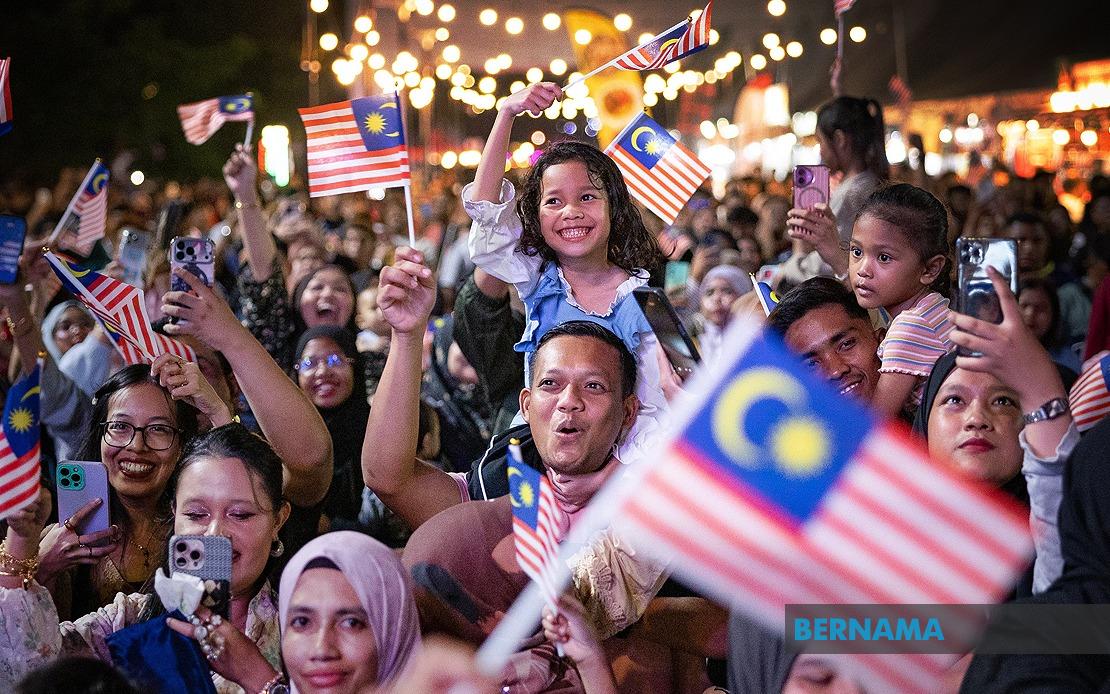
Malaysia rang in the eve of its 69th National Day with scenes of jubilant crowds and palpable patriotic sentiment across major cities and towns. The celebrations reflected a renewed spirit of togetherness among citizens from all walks of life, with families, youth groups and community organisations joining countdown events at key landmarks. The scale and enthusiasm of the gatherings underscored the enduring significance Malaysians attach to their independence and national identity, even as the country navigates contemporary challenges.
Kuala Lumpur's Dataran Merdeka served as the centrepiece of the evening's festivities, drawing an estimated 100,000 visitors who began arriving as early as 8 pm to secure vantage points. The historic square, bathed in the warm glow of the Sultan Abdul Samad Building's illumination, became a sea of Jalur Gemilang flags as attendees of all ages assembled for the 'Kita Bagi Jadi @ Ambang Merdeka 2026' concert. The diversity of the crowd reflected the multicultural fabric of Malaysia's capital, with visitors from different backgrounds united in their patriotic spirit and desire to welcome the new national day together.
The evening's entertainment programme showcased Malaysia's vibrant music and entertainment landscape through a carefully curated 90-minute concert. Local artistes including Aina Abdul, Aman RA, Nadia Aqilah, Asmidar, Haziq Rosebi, Mimifly, Izen Kong and Pasya performed alongside approximately 350 supporting performers who delivered a dynamic presentation interweaving contemporary music with narratives about Malaysia's historical journey and cultural achievements. The production design deliberately wove together performances, dance sequences and storytelling elements to create an immersive experience that celebrated the nation's diversity and heritage.
The event attracted high-level political representation, with Minister in the Prime Minister's Department (Federal Territories) Hannah Yeoh and Kuala Lumpur Mayor Datuk Seri Fadlun Mak Ujud attending the festivities. The presence of senior government officials underscored the importance accorded to these celebrations as moments for reconnecting with citizens and reinforcing collective national values. The programming subsequently expanded to include additional entertainment, with screenings of the films 'Mukhsin' and 'Sepet' scheduled from 2 am onwards, offering attendees extended engagement with Malaysian cinema.
The midnight transition brought a carefully orchestrated sequence of ceremonial and entertainment elements designed to mark the moment with appropriate solemnity and joy. The elite VAT 69 Commando unit performed an impressive skydiving display shortly before the stroke of midnight, while Menteri Besar Datuk Seri Amirudin Shari, who arrived at 9.20 pm, led the assembly in singing Negaraku. A parade of state contingents and elaborately decorated vehicles then proceeded through the square, followed by spectacular performances from the Fire and Rescue Department, police and Malaysian Armed Forces personnel who executed coordinated displays showcasing their operational capabilities.
The culmination of the evening featured sustained fireworks and sophisticated lighting displays that illuminated the night sky above the capital's heritage district, creating a dramatic backdrop for the declaration of Merdeka. Distinguished performers including Datuk Ramli Sarip, Datuk Awie, Gerhana Skacinta, Merrah and Wani Kyrie delivered a finale concert that carried the celebrations into the early hours of National Day itself. The midnight ceremonies also drew attendance from state-level leadership, with Chief Minister Datuk Seri Ab Rauf Yusoh and his wife Datin Seri Zuriyah Abd Aziz present alongside state executive council members.
Beyond the main venue, Dataran Merdeka offered a diverse range of activities and facilities designed to create an inclusive celebratory environment. The Bulatan Sultan Azlan Shah Run provided recreational activity for fitness-minded attendees, while Jualan Rahmah stalls and a thrift market catered to shopping interests. Food vendors positioned throughout the precinct served traditional and contemporary Malaysian cuisine to the assembled crowds. Free health screening services offered by medical personnel ensured attendees could access basic wellness checks, while a karaoke competition and the novelty Tantirana Haunted House provided entertainment alternatives for different demographic segments.
Perlis State also marked National Day Eve with significant attendance, with the state sports complex welcoming over 46,000 visitors who participated in celebrations that emphasised safeguarding national independence. The Perlis gathering opened with performances of Negaraku and the state anthem, followed by displays of traditional martial arts that highlighted Malaysia's cultural heritage. State leadership, including those addressing the assembly, reminded participants of the sacrifices previous generations had made to secure the nation's independence and the corresponding responsibility incumbent on contemporary citizens to preserve these hard-won gains.
The royal perspective on the occasion came through Tuanku Syed Sirajuddin's address, which contextualised the independence Malaysians enjoy within a historical framework of struggle and sacrifice. The royal message emphasised that the nation's freedom emerged from extensive efforts by people across racial and religious lines working toward common purpose. The royal address articulated the expectation that contemporary Malaysians should approach their stewardship of the nation with knowledge, integrity, unified commitment and a profound sense of duty—qualities essential for meeting the challenges of an increasingly complex geopolitical and economic environment.
The scale and character of National Day Eve celebrations provide insight into how Malaysians continue to regard their independence and national identity despite the passage of nearly seven decades. The multigenerational attendance and enthusiastic participation suggest that foundational narratives around independence retain emotional resonance for the population. However, the emphasis in official messaging on unity across racial and religious lines, repeated throughout various state celebrations, also reflects ongoing official concern about maintaining cohesion in an increasingly diverse and economically stratified society. The celebrations thus function as important ritual moments for reinforcing national consensus and reminding citizens of shared historical origins, even as Malaysia confronts questions about political accountability, economic inequality and regional stability that will shape its next chapter of development.

