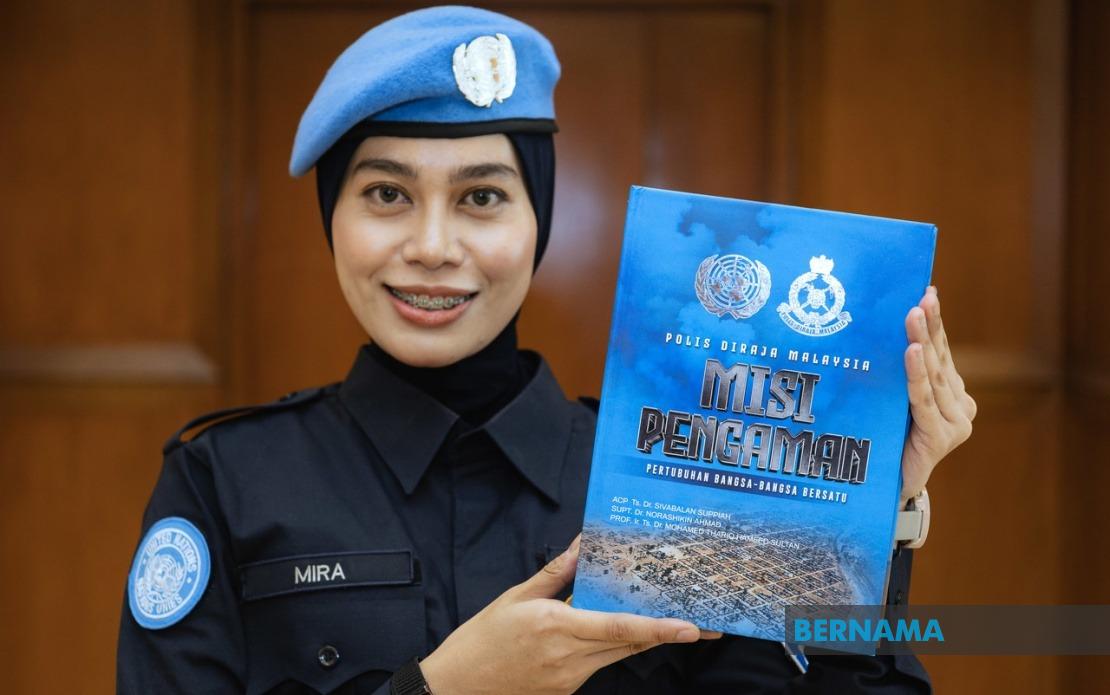
The Royal Malaysia Police inaugurated a significant historical publication today that encapsulates Malaysia's contributions to United Nations peacekeeping efforts across three decades of international deployments. The 500-page volume, titled 'United Nations Peacekeeping Missions of the Royal Malaysia Police,' represents the culmination of extensive research and strategic documentation by multiple institutional partners, positioning it as a critical addition to Malaysia's national security literature.
Inspector-General of Police Tan Sri Mohd Khaled Ismail framed the book as far more than a mere historical record, describing it as a comprehensive masterclass in institutional crisis management and strategic decision-making under extreme conditions. His remarks emphasised that the publication serves to demonstrate how Malaysia's police force has transformed from a domestically focused organisation into a globally recognised peacekeeping entity operating under United Nations mandate. This transformation reflects a fundamental shift in how Malaysian security institutions approach their mandate beyond national borders.
The narrative arc of the book traces PDRM's evolution in policing doctrine and operational philosophy, moving from primarily managing internal security challenges to executing complex humanitarian and peace stabilisation missions in conflict-affected regions. This trajectory matters significantly for understanding how Southeast Asian nations develop institutional capacity and international standing. The experiences documented reveal how Malaysian personnel have adapted their training, tactics, and leadership approaches to function effectively in environments drastically different from their home operating context.
Mohd Khaled highlighted that the thirteen global missions recorded in the publication demonstrate genuine leadership tested under the most demanding circumstances—operating with constrained resources, navigating cultural complexity, and making consequential decisions amid sustained uncertainty. Rather than presenting sanitised accounts, the book apparently grapples with the practical realities of peacekeeping work, offering readers actionable frameworks for understanding how cross-cultural cooperation functions at operational levels and how high-stakes decision-making occurs in real time.
A central thesis emerging from the publication contends that Malaysia's 'Acuan Kepolisian Watan'—the national policing model—possesses sufficient flexibility and effectiveness to be implemented across diverse geographical and political contexts. This assertion carries implications beyond Malaysia, suggesting that Southeast Asian approaches to law enforcement and security can meet international standards and gain recognition on the global stage. For policymakers in the region, this narrative validates investment in indigenous security doctrines adapted to local conditions rather than wholesale importation of foreign models.
The Inspector-General reframed the significance of PDRM's peacekeeping involvement beyond conventional security metrics, instead emphasising the humanitarian dimensions that align with Malaysia MADANI's development philosophy. Peacekeeping operations, from this perspective, constitute more than military or police force projection; they represent Malaysia's commitment to enabling communities to recover dignity, rebuild social order, and restore hope in post-conflict environments. This framing resonates with Malaysia's positioning as a responsible regional power invested in human development outcomes.
The publication benefited from collaboration among PDRM, UPM Press, Yayasan Generasi Malaysia, and the National Book Development Foundation, representing an unusually comprehensive institutional partnership spanning security services, academia, and civil society foundations. This model of cooperation itself carries instructive value, demonstrating how government agencies, universities, and philanthropic organisations can combine resources and expertise to produce knowledge assets that serve broader national interests. The partnership underscores recognition that institutional memory and historical documentation constitute public goods warranting multi-sector investment.
At the launch ceremony, PDRM received formal recognition from ASEAN Records for deploying the largest national police contingent to any single host country across the entire series of UN peacekeeping operations. This distinction positions Malaysia as a disproportionately substantial contributor to regional and global peace operations, reflecting both institutional capacity and political commitment to multilateral security frameworks. For Malaysia and other ASEAN members, this achievement demonstrates the region's growing role in international peace and security architecture.
The timing of the book's release aligns with broader conversations within Southeast Asia about the region's security responsibilities and institutional capabilities. As tensions persist across multiple flashpoints and traditional powers vie for influence, publications documenting how regional states have developed and deployed their security institutions gain heightened relevance. Malaysia's documented experience in managing complex peacekeeping assignments offers tangible lessons for other nations contemplating or expanding their own international security engagement.
The 13 missions encompassed in the book span multiple continents and decades, providing comparative perspectives on how PDRM adapted its approach across different conflict typologies, cultural contexts, and operational mandates. Readers encounter not abstract principles but concrete examples of problem-solving, resource improvisation, and leadership under pressure. This granular documentation transforms the volume from ceremonial contribution to institutional history into a practical resource for security professionals, policymakers, and scholars examining how institutional learning occurs in high-stakes environments.
For Malaysian audiences specifically, the publication offers an uncommon window into how national institutions operate beyond Malaysia's borders and how personnel trained in Malaysia's security frameworks contribute to global humanitarian efforts. It builds public understanding of the international dimensions of national security and reframes security work as incorporating peace-building and humanitarian components rather than purely military or enforcement functions. This educational value extends to younger generations considering careers in security services, potentially attracting talent to institutions demonstrated to operate at internationally recognised standards.
The book's accessibility as a comprehensive historical record also serves archival functions, preserving accounts of Malaysian participation in specific UN operations that might otherwise remain dispersed across institutional records or individual memory. As personnel retire and institutional leadership changes, documented historical narratives become critical repositories of institutional knowledge and decision-making rationales. This preservation function alone justifies the multi-stakeholder investment in the publication's development and distribution.

