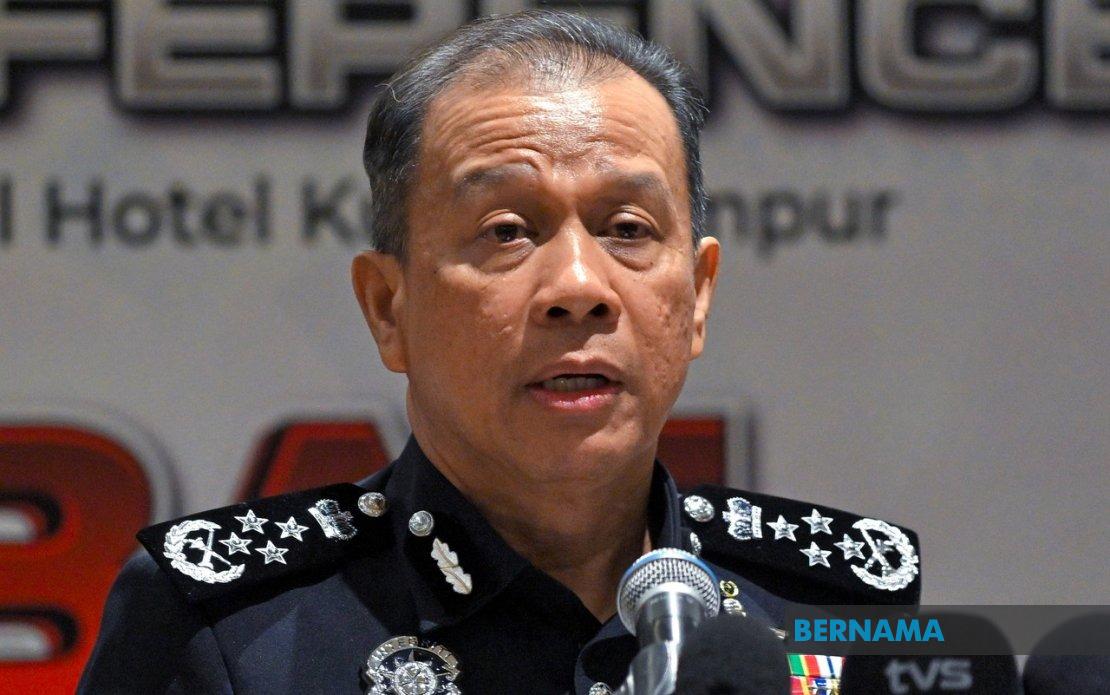
The Royal Malaysia Police has committed to a significant expansion of its role within Malaysia's airport security framework, pledging full cooperation with a Cabinet directive to station police personnel within Aviation Security, or AVSEC, operations across the country's major aviation hubs. Inspector-General of Police Tan Sri Mohd Khalid Ismail confirmed the force's readiness to participate in what the government positions as an urgent strengthening measure for the nation's aviation security posture, following recent high-profile incidents that exposed vulnerabilities in existing protocols.
The decision represents a substantial shift in Malaysia's approach to airport security governance. Tan Sri Mohd Khalid indicated that the PDRM is currently collaborating with the Home Ministry, Ministry of Transport, and allied government bodies to establish the operational architecture for this deployment. These preliminary discussions are focused on delineating key operational parameters, including the specific responsibilities assigned to police officers, the airports and facilities where they will be stationed, staffing levels required, geographic divisions of labour, and how police operations will interface with existing AVSEC and civil aviation personnel.
From the police leadership's perspective, embedding law enforcement directly into aviation security structures will create meaningful synergies that current arrangements lack. Tan Sri Mohd Khalid articulated a vision in which police involvement would enhance the aviation security ecosystem's capacity for coordinated intelligence work, enable faster identification of emerging threats, facilitate smoother enforcement actions when breaches are detected, and allow rapid intervention against attempts to use airports as conduits for criminal enterprise. The rationale suggests that fragmentation between security agencies has historically impeded quick response times and information flow.
The initiative sits within a broader security modernization agenda that extends beyond personnel deployment. Malaysian authorities are simultaneously tightening access protocols at airport perimeters, upgrading passenger and baggage screening technologies, refining risk assessment methodologies, and fostering deeper institutional collaboration among the multiple organizations responsible for aviation security. By stacking these measures—physical controls, procedural upgrades, intelligence-led prevention, and enforcement coordination—the government aims to create what security specialists term a "layered" or "defence-in-depth" approach, where multiple independent safeguards reduce the likelihood that any single security failure permits criminal breach.
The government's emphasis on intelligence-based operations reflects evolving best practices in aviation security globally. Rather than relying solely on random screening or static checkpoints, intelligence-driven systems use behavioral analysis, passenger data scrutiny, and threat pattern recognition to identify higher-risk individuals and shipments for enhanced examination. Police involvement, according to the PDRM statement, would strengthen this analytical capacity by bringing law enforcement's criminal intelligence networks and investigative expertise into real-time collaboration with AVSEC personnel.
Tan Sri Mohd Khalid explicitly committed that the police force would prioritize flight safety and the security of Malaysia's international entry and exit points, asserting that attempts to exploit aviation facilities for illicit purposes would not be tolerated. This public assurance addresses concerns that expanded police presence could introduce new risks or inefficiencies if not carefully managed. The statement effectively signals that the PDRM views this responsibility as a core institutional priority, not a peripheral task.
The policy announcement came shortly after government spokesman Datuk Seri Fahmi Fadzil publicly revealed the decision, framing it as an immediate response to the detention in Indonesia of a Malaysian commercial pilot suspected of involvement in drug smuggling. That incident, which received significant media attention across Southeast Asia, crystallized public and official concerns about security gaps at Malaysian airports and in the vetting of aviation personnel. The case demonstrated that existing protocols had not caught suspicious activity before an individual with direct airport access allegedly became entangled in transnational narcotics trafficking, triggering urgent policy recalibration.
For Malaysia's aviation industry and travelling public, the expansion of police presence will create a more visible security footprint at major airports. Airlines and ground-handling companies will need to adapt operational procedures to accommodate police personnel and ensure smooth coordination during boarding, baggage handling, and passenger processing. While well-designed integration should minimize disruptions, some adjustment periods are inevitable as AVSEC and police teams develop shared standard operating procedures and mutual familiarity.
Regionally, Malaysia's move signals to other Southeast Asian nations that countries are willing to substantially reorganize their security institutions in response to demonstrated vulnerabilities. As air travel across ASEAN continues expanding and cross-border criminal networks adapt their tactics, Malaysia's experiment with deeper police integration into airport operations may influence how neighboring countries approach their own aviation security governance. Enhanced intelligence-sharing between Malaysian police and regional counterparts, an implicit benefit of stronger police participation in AVSEC operations, could also yield dividends in detecting and preventing transnational threats.
The successful execution of this initiative will depend critically on implementation details not yet fully publicized. Questions remain about training standards for police officers assigned to AVSEC duties, the command structure governing police-AVSEC coordination, performance metrics for evaluating the effectiveness of this hybrid model, and resource allocation among competing priorities within police aviation divisions. These operational complexities will determine whether the policy delivers tangible security improvements or becomes a bureaucratic overlay that complicates airport operations without proportionate security gains.
Both the PDRM and government have presented this deployment as a temporary emergency measure, with language emphasizing it as an "immediate step" in response to specific incidents. However, institutional arrangements typically acquire permanence once established, and if public perception registers the policy as successful in preventing incidents, political pressure to maintain or expand the arrangement will likely intensify. The long-term sustainability of this model thus hinges on achieving measurable security outcomes while managing operational costs and avoiding the mission creep that sometimes accompanies expanded security apparatus.
Moving forward, the success of police integration into aviation security will require clear demarcation of authorities, robust inter-agency communication protocols, and consistent training. The Cabinet's decision reflects a judgment that gaps in Malaysia's current security architecture necessitate institutional innovation. Whether this particular reorganization provides an optimal solution or merely addresses the most visible symptoms of deeper structural problems will become apparent only through sustained operational experience and transparent evaluation of results.

