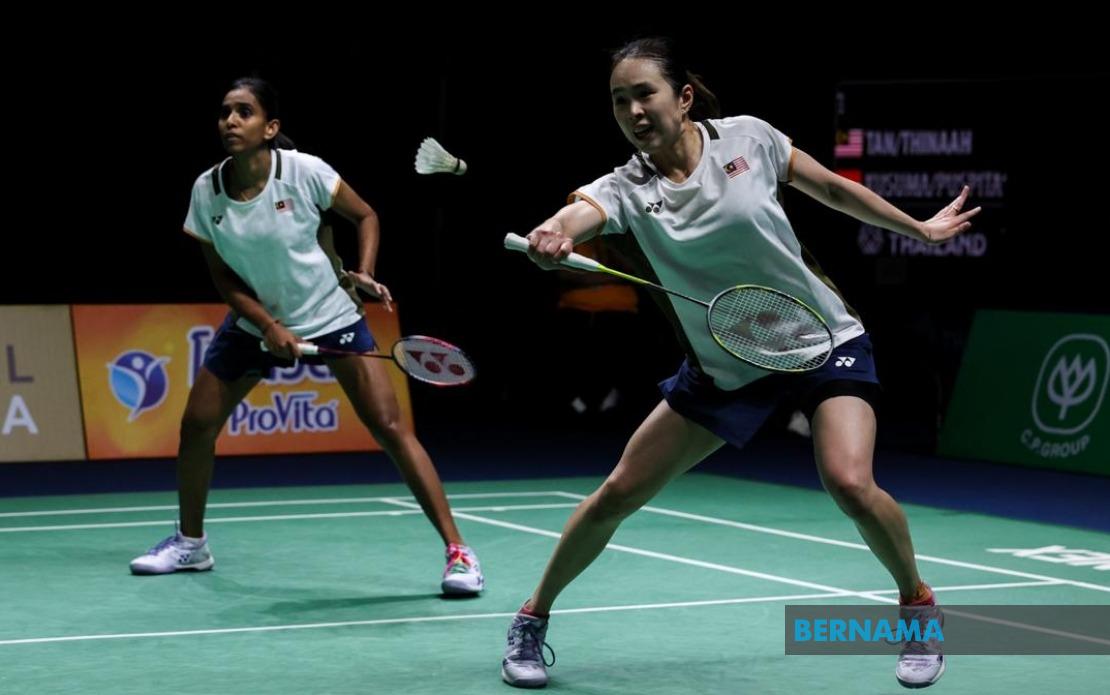
Malaysia's leading women's badminton doubles partnership suffered a stunning reversal in Taiwan on August 2 when Pearly Tan and M. Thinaah lost to unseeded Japanese opponents Sumire Nakade-Miyu Takahashi at the Taiwan Open 2026 final. As the tournament's top seeds and ranked fifth globally, the Malaysian pair entered the match as heavy favourites against their world number 71 rivals, making the straight-sets defeat a significant upset that raised questions about their readiness for upcoming international competitions.
The first set proved particularly troublesome for the Malaysian duo, who struggled to find their rhythm against the spirited Japanese challenge. Nakade and Takahashi's aggressive approach overwhelmed Pearly-Thinaah's defensive structures, allowing the unseeded pair to secure a decisive 21-16 victory in the opening game. This early setback placed immediate pressure on the Malaysians, who needed a strong response in the second frame to keep their title hopes alive.
The second set revealed a closer encounter than the scoreline suggests, with both pairs engaged in an absorbing battle that saw momentum shift multiple times throughout the 40-minute contest. Pearly-Thinaah managed to claw back from a difficult position, demonstrating resilience by levelling the match at 18-18 and creating genuine opportunities to force a deciding third set. However, the Japanese team's composure under pressure proved decisive in this critical phase, as they reeled off three consecutive points to seal a 21-18 victory and claim the Taiwan Open title.
In analysing the loss, Thinaah acknowledged that the Japanese pair's attacking strategy, particularly their relentless pressure during defensive rallies, had taken a considerable physical and mental toll on her performance. The Malaysian player recognised that her team's defensive capabilities required substantial improvement if they were to compete at the highest level going forward. This frank assessment suggests that the partnership is identifying specific technical weaknesses rather than attributing the loss to luck or circumstance, a mature approach that may benefit their development during the preparation period ahead.
Despite the disappointment in Taipei, Pearly offered a cautiously optimistic perspective regarding the team's trajectory towards the 2026 World Championships. She emphasised that the partnership has been gradually recapturing their winning form and refining their on-court rotations, suggesting that recent performances have contained sufficient positive elements to build upon. The pair's ability to extract encouraging signs from recent matches indicates a coaching environment focused on progression rather than panic following individual defeats.
Physical conditioning emerged as the primary area requiring urgent attention before the world championships commence. Both players acknowledged that their fitness levels, particularly regarding stamina and explosive power during extended rallies, had lagged behind the demands of elite international competition. This honest evaluation of fitness gaps suggests that their training regimen may need recalibration, with potentially increased emphasis on conditioning work during their return to Malaysia. The willingness to identify such deficiencies early in the Olympic cycle provides an opportunity for targeted intervention before major championships.
The Taiwan Open final represented the second major tournament showdown for the pair during 2026, following their triumphant victory at the Indonesia Masters in January. That earlier championship success demonstrated their capacity for winning major events and suggested they remained among the world's most formidable women's doubles teams. The contrast between their January triumph and this August disappointment highlights the inconsistency that has occasionally plagued even the most talented Malaysian badminton pairings, where confidence and momentum can fluctuate significantly across a competition calendar.
For Malaysian badminton, the result serves as a reminder that world rankings and seeding convey only partial information about competitive standing. The continued emergence of talented unseeded pairs means that every tournament presents genuine challenges to established hierarchies, demanding sustained excellence and peak physical preparation from top-ranked athletes. Pearly-Thinaah's setback should galvanise their preparation programme rather than derail confidence, given that the 2026 World Championships remain their primary target and several months remain for tactical and physical refinement.
Regionally, the rise of Japanese women's doubles talent, exemplified by Nakade and Takahashi's upset victory, reflects the broader competitive landscape in Asian badminton where multiple nations continue developing strong emerging players. Malaysia remains among the regional powerhouses, but maintaining that status requires constant attention to training standards and competitive preparation. The partnership's planned focus on fitness improvements upon returning to Malaysia addresses precisely the factors necessary for maintaining world-class performance across a demanding competition schedule.
The immediate pathway forward involves consolidating lessons from Taiwan during domestic preparation. The coaching team will likely prioritise cardiovascular and explosive strength conditioning alongside tactical refinement of defensive structures that proved vulnerable against aggressive attacking opponents. These adjustments, combined with Pearly-Thinaah's demonstrated willingness to address technical shortcomings, position the pair reasonably well for a sustained challenge at the 2026 World Championships despite this setback in Taipei.

