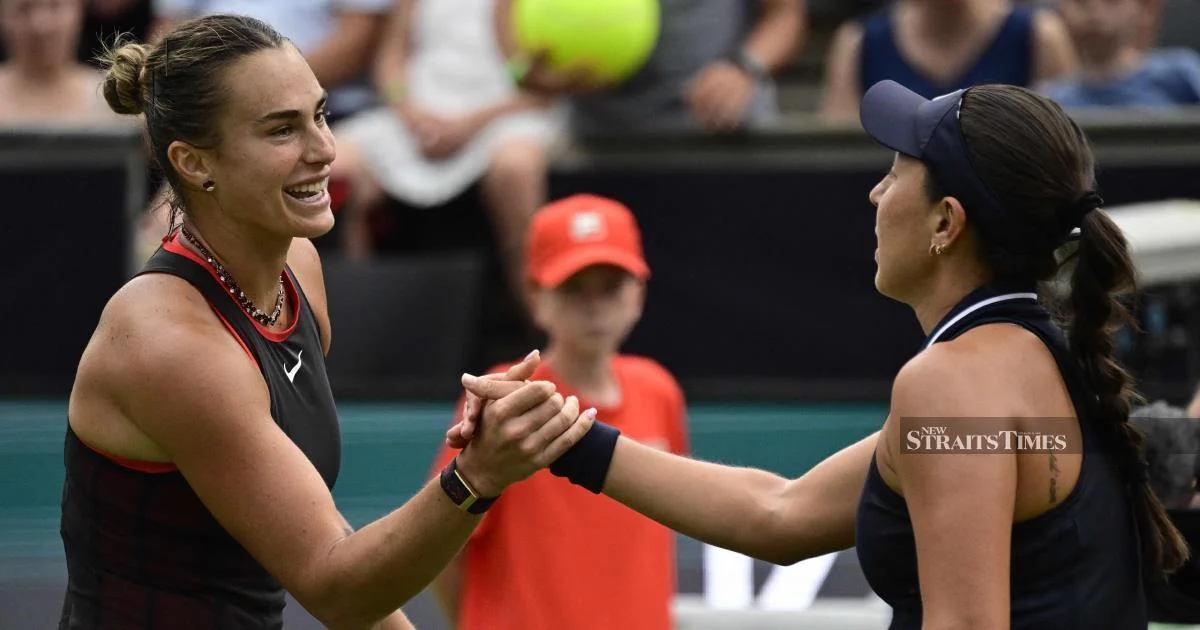
Jessica Pegula has secured a return to the Berlin WTA grass-court final, dismissing world number one Aryna Sabalenka with a commanding 6-2, 6-7 (4-7), 6-0 victory in the semi-finals. The American's impressive performance marks her second appearance in the championship match at the prestigious tournament, underscoring her growing influence on the professional tennis circuit.
Pegula's pathway to the final showcased the kind of clinical tennis that has increasingly defined her career in recent seasons. The American controlled the opening set with remarkable consistency, breaking Sabalenka's serve multiple times to claim it 6-2 and establish early momentum in the contest. This aggressive opening proved crucial in setting the psychological tone, forcing the world's top-ranked player to respond defensively from the outset.
The second set evolved into a tightly contested affair that hinged on crucial moments and mental fortitude. Though Pegula threatened to dominate again, Sabalenka demonstrated the resilience that has sustained her position as the tour's leading player. The set extended to a tiebreaker where Pegula's precision wavered slightly, allowing Sabalenka to capitalise and level the match at one set apiece. That tiebreaker represented the defending champion's only significant period of ascendancy throughout the entire contest.
Grass-court tennis has become an increasingly comfortable surface for Pegula, whose serve-and-volley repertoire and ability to finish points at the net align naturally with the quick nature of play on grass. The third set exemplified this comfort perfectly. After the psychological lift of winning a tight second set, Sabalenka appeared unable to regain her competitive footing, and Pegula delivered a performance of near-total dominance to secure the decisive 6-0 scoreline. The breadth of this final-set margin highlighted the gap that emerged between the two competitors as the match progressed.
For Sabalenka, the loss represents a rare stumble on grass, a surface where she had entered the tournament with considerable momentum. The world number one has redefined herself as a complete player in recent years, yet grass courts remain an area where establishing consistent excellence remains a work in progress. This semi-final exit, while disappointing, does not fundamentally alter her standing as the tour's dominant force, though it reinforces questions about her adaptability on the game's faster surfaces.
Pegula's ascent has been marked by steady improvement and consistent performances in significant tournaments. The American has worked methodically to elevate her ranking and presence on the world stage, and reaching major finals has become an increasingly common occurrence in her schedule. This Berlin appearance represents another stepping stone in what has become a remarkably consistent upward trajectory.
The tournament itself occupies an important position in the professional calendar as one of the few elite grass-court events contested in the women's game. With Wimbledon still several weeks away, Berlin serves as a crucial preparation ground and ranking points opportunity for competitors preparing for the season's most prestigious championship. Pegula's progression to the final ensures she will accumulate significant points and valuable match experience on a surface where confidence and momentum prove particularly valuable.
For Southeast Asian tennis observers, Pegula's success carries broader significance. The American's approach to the game—emphasising athleticism, court positioning, and strategic variety—contrasts with some of the more power-dominated styles increasingly prevalent in women's professional tennis. Her success in reaching finals across diverse surfaces demonstrates that alternative tactical approaches remain competitive at the highest levels.
Pegula's previous final appearance at Berlin represents her tournament history here, making this return to the championship match a testament to her consistency and the progress she has made in recent seasons. Reaching a second final at the same tournament underscores that her previous success was no aberration but rather the product of sustained improvement and adaptation to what the tournament demands.
The American's journey to this final also highlights the unpredictability that remains in elite women's tennis despite the dominance of players ranked at the very top. While Sabalenka's world number one ranking reflects genuine superiority in most contexts, grass-court tennis retains the capacity to level the playing field and reward those whose techniques and temperaments suit the surface's particular demands.