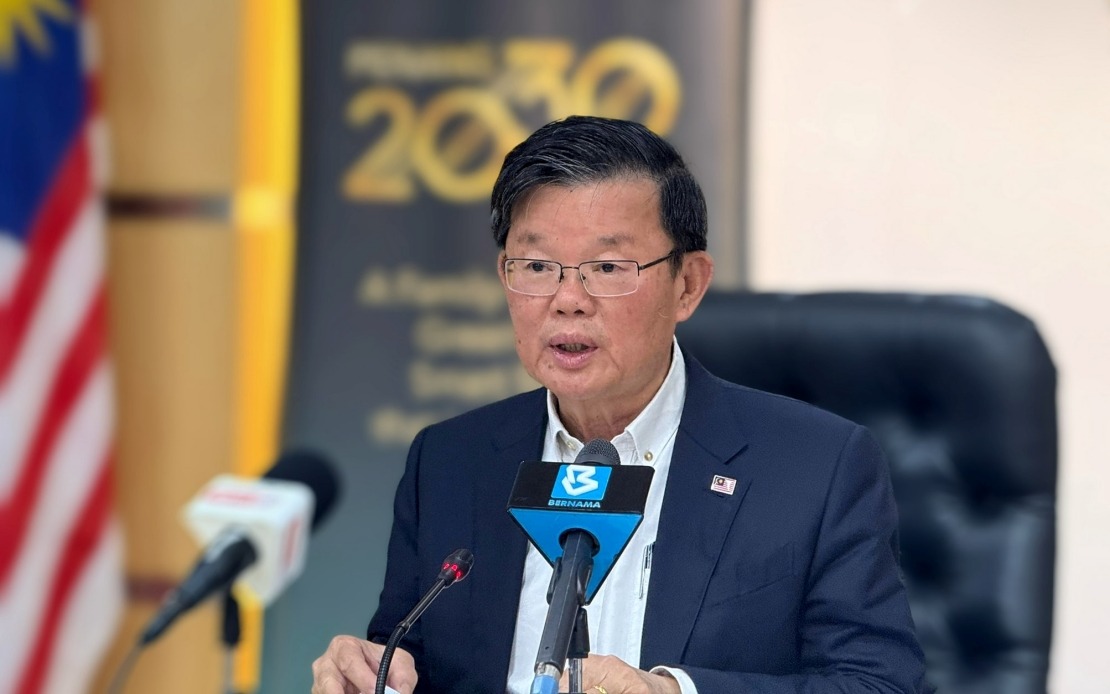
Penang's Pakatan Harapan leadership is undertaking a comprehensive strategic review in preparation for the nation's next general election, with all component subcommittees instructed to convene meetings and submit detailed progress assessments by early August. The directive, announced by coalition chairman Chow Kon Yeow at a media gathering in George Town on July 15, signals an intensified focus on organisational readiness and electoral positioning across the state, reflecting broader efforts within PH to consolidate its parliamentary and state-level gains.
The coalition's preparatory exercise extends beyond routine administrative updates, encompassing a systematic examination of its performance across multiple fronts. According to Chow, the review will involve critical analysis of both operational strengths and identified shortcomings, with the explicit aim of recalibrating campaign messaging and grassroots engagement strategies to maintain voter confidence. This methodical approach underscores recognition within Penang PH that sustaining electoral success requires continuous refinement rather than complacency, particularly in a state where the coalition has established strong institutional control.
Chow, who serves concurrently as Penang Chief Minister, emphasised the coalition's openness to constructive criticism and external input throughout this reassessment process. He framed the exercise as democratic and inclusive, noting that PH welcomes suggestions from party members, allied organisations, and civil society actors that could illuminate pathways for improvement. This rhetorical positioning is significant in Malaysian political context, where coalitions often face internal pressures and competing narratives about direction and leadership, making public declarations of unity and receptiveness strategically important.
The stability of Penang's Unity Government—the political arrangement binding together PH and Barisan Nasional at state level—remains a cornerstone of the coalition's strategic calculus. Chow explicitly affirmed that inter-coalition relations continue without friction, with component parties maintaining constructive working relationships and no party unilaterally advancing contested policy initiatives. This statement carries weight given the historical tensions that have occasionally surfaced within PH at both state and federal levels, and between PH and its BN partners in the national Unity Government framework.
The 2023 Penang state election delivered a commanding mandate for the PH-BN alliance, which secured 29 of 40 contested seats. Within this result, DAP captured all 19 seats it contested, establishing overwhelming control of the state assembly and effectively determining the policy environment. PKR's seven seats and Amanah's single seat complemented DAP's dominance, while BN's two seats represented a symbolic concession to the Umno-led coalition's role in the Unity Government arrangement. This distribution of strength shapes internal coalition dynamics and Chow's capacity to lead without significant parliamentary constraint.
For Malaysian observers, the Penang PH strategy review reflects broader patterns within the federal coalition as well. The federal Unity Government, established after the 2022 general election, has weathered various pressures and personality-driven tensions while maintaining formal coherence. Penang's experience as a single-state laboratory demonstrates how PH and BN can coexist within shared governance structures, provided clear understandings about policy autonomy, ministerial portfolios, and electoral positioning are maintained. The apparent stability Chow describes suggests these understandings are functioning adequately in Malaysia's wealthiest and most urbanised state.
The early August reporting deadline carries practical significance for election preparation timelines. By concentrating subcommittee assessments at a defined moment, Penang PH can synthesise findings into coherent strategic directives before the more intensive phases of campaign mobilisation commence. This administrative discipline reflects professional political management and contrasts with more ad hoc approaches sometimes observed in Malaysian state organisations. The timing also allows sufficient runway before any snap election call, though neither the federal nor state governments have signalled imminent dissolution of parliaments.
For voters and political analysts monitoring Penang's trajectory, the coalition's readiness exercises indicate confidence about maintaining its current configuration. There is no suggestion of major leadership transitions, policy reversals, or coalition restructuring. Rather, the process appears designed to sharpen existing advantages—DAP's strong grassroots networks, PKR's alliance-building capacity, and the symbolic value of the Unity Government's cross-coalition character in an era when Malaysian politics has become increasingly polarised along competing coalition lines.
The stakes for Penang PH extend beyond state-level politics. As Malaysia's richest state and a significant contributor to federal PH electoral prospects, Penang's organisational health directly influences national coalition dynamics. A cohesive, electorally confident Penang operation strengthens PH's bargaining position within the national Unity Government and enhances the coalition's capacity to mount competitive campaigns in other states where its position is less secure. Conversely, any decline in Penang PH's performance would reverberate across the coalition's federation-wide calculations and potentially shift the internal balance of power toward BN components within the national government.
Looking forward, the practical outcomes of these strategic reassessments will become evident in how Penang PH campaigns, allocates resources across constituencies, and positions itself against both internal coalition partners and opposition forces. The emphasis on addressing weaknesses while consolidating strengths suggests a coalition management approach focused on sustainable competitive advantage. Whether this translates into enhanced electoral performance, improved governance delivery, or merely maintained status quo will ultimately determine whether such preparatory exercises prove strategically consequential or primarily cosmetic in character.

