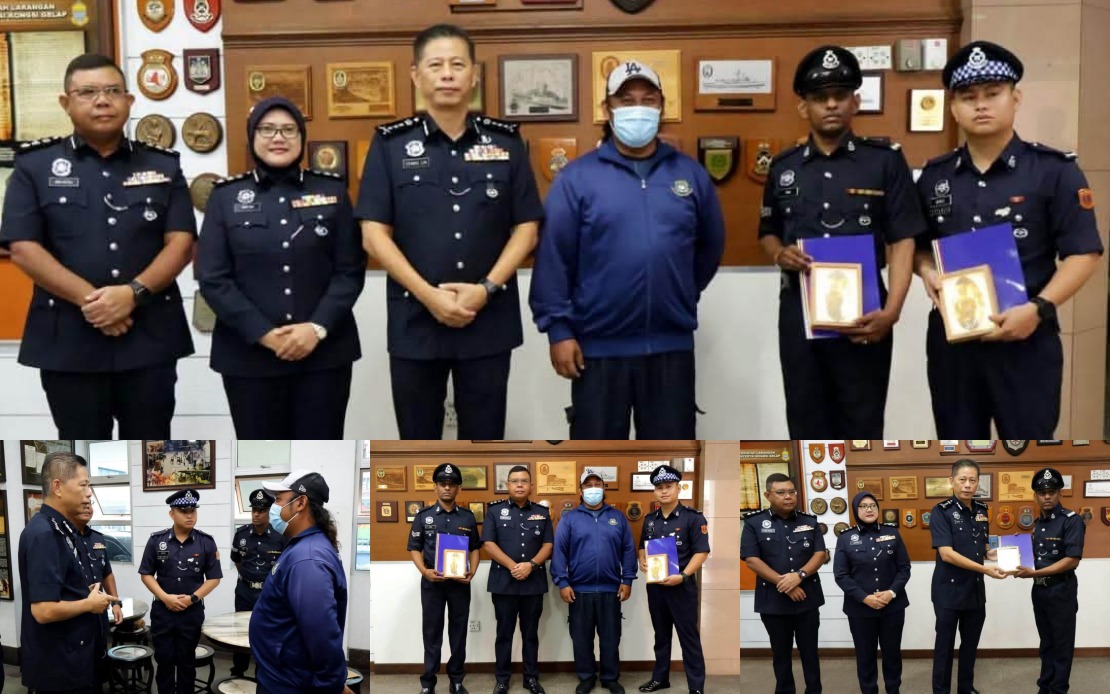
A father's desperate bid to get his gravely ill child to hospital found unexpected allies in two Penang police officers who went far beyond routine escort duty to ensure the youngster received urgent medical attention. The incident, which unfolded on a congested Thursday morning in Penang, has prompted the state police chief to hold up the officers' conduct as a model for how law enforcement should engage with the public during moments of crisis.
Muhamad Fitrizuhaili Md Haris was navigating through bumper-to-bumper traffic en route to Penang Hospital with his nine-year-old son Muhamad Faaeq, who was running dangerously high fever, displaying signs of weakness and had become barely responsive. The journey from Teluk Kumbar coincided with the morning rush hour, when Penang's roadways transform into slow-moving arteries clogged with commuter vehicles. For the anxious father, every second felt like an ordeal as he weighed the risks of battling the gridlock against the medical urgency of his son's condition.
Relief came in an unexpected form when Muhamad Fitrizuhaili spotted a Royal Malaysia Police Mobile Patrol Vehicle near the Udini underpass along Jalan Masjid Negeri. Without hesitation, he flagged down the vehicle and explained his predicament to the officers inside. His instinct proved sound. Rather than simply pointing directions, Corporal R. Sivaraj and Constable Jerico Jaitin immediately activated their patrol vehicle's capabilities to cut through the congested traffic, creating a passage through the otherwise impassable morning commute.
What distinguished the officers' response was their willingness to extend assistance beyond the confines of standard protocol. Upon reaching Penang Hospital's entrance, Sivaraj and Jaitin did not simply deposit the father and son at the emergency department doors and depart. Instead, they accompanied the pair inside the Emergency Department, located a wheelchair, and personally helped transport the young patient into the treatment area. For a distressed parent struggling with the weight of uncertainty and medical anxiety, such gestures transcended mere procedural obligation.
Muhamad Fitrizuhaili later reflected on the experience with evident gratitude, describing how the officers' conduct extended beyond the practical assistance of navigating traffic. He emphasized that both Sivaraj and Jaitin provided verbal reassurance and emotional support during a period when he felt overwhelmed and uncertain about what lay ahead. Their willingness to engage empathetically with his fear, coupled with their immediate and decisive action, left an indelible impression. As a council officer with the Penang Island City Council, he possessed professional understanding of bureaucratic procedure, yet even his experience could not have anticipated such personalized attention from frontline police personnel.
According to Muhamad Faaeq's medical update, the young patient continues receiving treatment for a confirmed viral infection and has since stabilized. The prognosis, while still requiring ongoing hospital care, had improved markedly from those frightening initial hours. This positive outcome provides context for understanding why the father's gratitude extended so deeply—the officers' intervention may have directly facilitated access to timely clinical intervention during a critical window.
For Corporal Sivaraj, the incident represented simply the application of professional instinct honed across fourteen years of police service. He noted straightforwardly that he and Jaitin made no deliberate calculation about their response; they simply recognized urgency and acted to alleviate it. The severe congestion they encountered left little room for hesitation, and their decision to deploy the patrol vehicle's mobility advantages toward humanitarian ends reflected a pragmatic assessment of how their resources could best serve a community member in need.
Penang Police Chief Datuk Dennis Lim Kwang Keng formally recognized both officers' actions by presenting them with letters of commendation. Lim's public statement carried broader implications than simply acknowledging two individuals' good conduct. He deliberately reframed the police role in terms that Malaysian audiences have sometimes struggled to align with law enforcement's public image. According to Lim, the incident exemplified that police responsibilities encompass far more than law enforcement, regulatory oversight, or crime prevention. Community policing fundamentally requires responsiveness to citizens' immediate welfare needs, particularly in situations where rapid professional intervention can determine outcomes.
Lim articulated this principle explicitly, noting that the officers' swift response demonstrated the police force's commitment to assisting the public during emergencies requiring immediate intervention. Such recognition serves a crucial function beyond simple morale-building. In Malaysia's context, where public confidence in law enforcement varies considerably across demographic and geographic lines, visible examples of police officers prioritizing community welfare can help reshape perceptions and strengthen the social contract between enforcement agencies and the populations they serve.
The Penang incident also illustrates broader infrastructure and traffic management challenges that affect the region. Petaling Jaya, Kuala Lumpur, and other Malaysian urban centers experience similar congestion during peak hours, creating bottlenecks that can become life-threatening when medical emergencies occur. While individual officers' compassionate response to such situations remains invaluable, the underlying congestion problem suggests a need for systematic solutions—whether through improved traffic management technologies, expanded hospital networks, or enhanced emergency response protocols that account for foreseeable delays.
For Malaysian readers particularly in congested urban areas, the story carries practical resonance beyond its heartwarming surface narrative. It reminds families that flagging down police vehicles during genuine emergencies can yield assistance, and it demonstrates that at least some frontline officers maintain sufficient discretion and judgment to prioritize human welfare over rigid procedure. Simultaneously, it raises implicit questions about whether such outcomes should depend on individual officers' initiative rather than forming part of systematic emergency protocols.
The recognition extended to Sivaraj and Jaitin by their departmental leadership signals that police leadership values community-oriented interventions, not merely investigative success or enforcement metrics. Whether such recognition actually influences broader institutional culture and incentive structures remains an open question worthy of ongoing observation. Nevertheless, the Penang case provides a concrete example of how law enforcement personnel operating within standard parameters can generate positive community outcomes when guided by situational awareness and human compassion.

