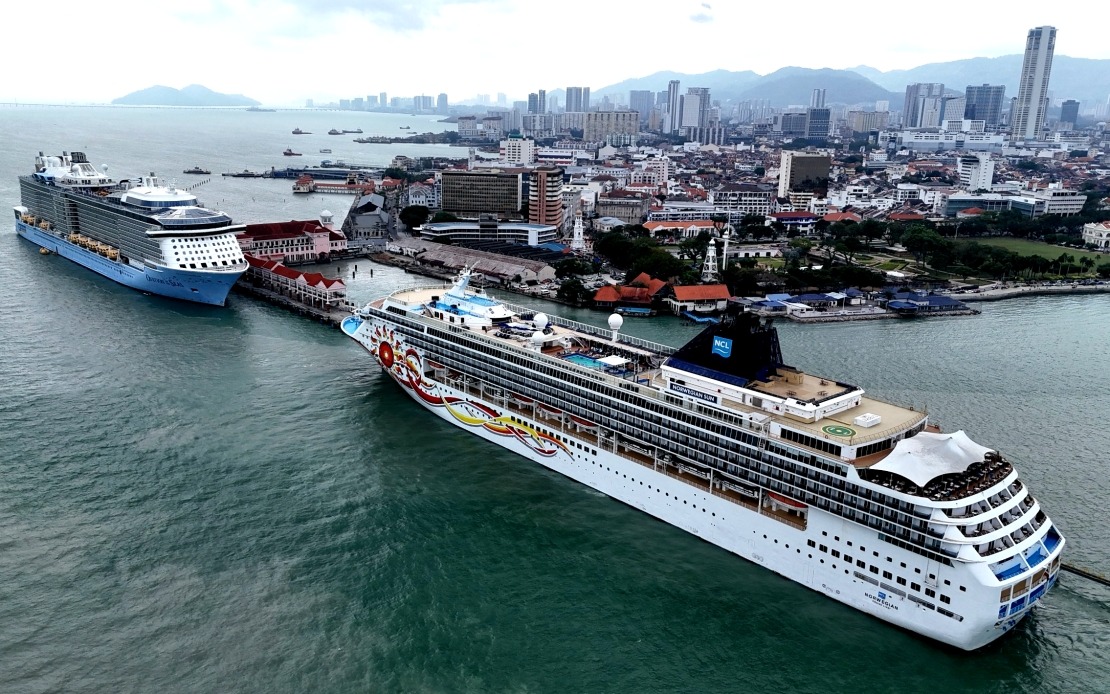
The Penang Port Commission marked a significant milestone by reinforcing its commitment to inclusive development during celebrations in George Town, emphasising that prosperity gained from port expansion must reach beyond commercial interests to benefit entire communities. Datuk Yeoh Soon Hin, the commission's chairman, positioned the organisation's 70-year trajectory not merely as a story of maritime infrastructure advancement but as a broader narrative encompassing social responsibility and welfare support. This framing aligns with the Malaysia MADANI framework, the government's overarching development philosophy that prioritises shared prosperity and equitable resource distribution across different income and social levels.
The timing of this pledge carries particular significance for Penang, a state whose economy has traditionally relied heavily on port operations and manufacturing. As global trade patterns continue to evolve and regional competition for container traffic intensifies, port authorities across Southeast Asia face mounting pressure to demonstrate their value extends beyond shareholder returns. The Penang Port Commission's explicit linkage between infrastructure development and community welfare represents a strategic acknowledgment that legitimacy and social licence depend on visibly redistributing economic gains to marginalised populations. This approach may offer lessons for other regional port operators navigating similar pressures to balance profitability with social responsibility.
During the commemorative event, which doubled as the launch of Penang Port's 2026 National Month celebration, the commission distributed contributions to 185 beneficiaries drawn from welfare homes across Penang. The recipients included orphans, individuals with disabilities, and single mothers—demographic groups that typically struggle during periods of rapid economic transformation. The presence of Yang Dipertua Negeri Tun Ramli Ngah Talib and his wife, Toh Puan Raja Noora Ashikin Raja Abdullah, at the tea reception underscored official endorsement of the commission's welfare initiatives and signalled state-level support for this interpretation of development responsibilities.
Yeoh's remarks articulated a vision wherein port development and community support are not competing priorities but complementary objectives. He emphasised that the past seven decades had encompassed varied welfare activities beyond core port management functions, suggesting institutional capacity and commitment to broader development goals. This statement implicitly positions the Penang Port Commission as an anchor institution with duties extending beyond commercial operations—a framing that increasingly resonates with stakeholders concerned about inclusive growth. For Malaysian policymakers monitoring port sector performance, such statements provide measurable indicators of how management interprets social responsibilities within a commerce-driven enterprise.
The presentation of the Jalur Gemilang, Malaysia's national flag, to representatives of ten port industry companies served multiple communicative functions. It symbolically connected private sector participants to national unity narratives and signalled that patriotic obligation encompasses contributing to community welfare. This ceremonial dimension reinforces cultural expectations that economically successful entities, particularly those operating critical national infrastructure, should demonstrate commitment to broader societal wellbeing. For port industry companies dependent on government concessions and operating licences, such flag presentations implicitly communicate alignment with state expectations regarding corporate social responsibility.
Yeoh's call for continued community support through voluntary contributions, volunteer service, and organised programmes indicates the commission recognises that sustainable welfare outcomes require engagement beyond occasional distributions. By specifically inviting ongoing involvement from both SPPP and strategic partners, he acknowledged that addressing social vulnerabilities demands institutionalised commitment rather than ad-hoc charity. This approach reflects evolving international best practices in how state-owned enterprises and critical infrastructure operators approach stakeholder engagement and community development. For Malaysian civil society organisations working with vulnerable populations, the Penang Port Commission's explicit openness to partnership creates potential avenues for expanded welfare programmes in the state.
The emphasis on ensuring development benefits reach all segments carries particular resonance in a Southeast Asian context where income inequality and spatial disparities in development outcomes remain persistent challenges. Penang's relative prosperity compared to other Malaysian states makes such commitments especially significant—prosperity concentrated within port-adjacent businesses and urban centres risks widening gaps if development gains do not diffuse throughout the broader population. The commission's positioning suggests awareness that social stability and long-term operational sustainability depend on demonstrating tangible improvements in living standards for disadvantaged communities.
The connection to Malaysia MADANI deserves closer examination, as it represents the government's broader development framework emphasising prosperity, productivity, inclusion, sustainability, and democratic values. By explicitly anchoring its 70th anniversary message to this vision, the Penang Port Commission signals alignment with federal development priorities and positions port operations within a national narrative encompassing inclusive growth. This framing may facilitate future policy coordination and funding arrangements between state and federal authorities, particularly regarding infrastructure investments with social welfare components.
Looking forward, the commission's stated commitments will require concrete implementation metrics and transparent reporting to maintain credibility. Malaysian civil society organisations and watchdog groups increasingly scrutinise whether major public institutions translate welfare rhetoric into measurable outcomes for vulnerable populations. The Penang Port Commission's willingness to make explicit commitments during high-profile events creates accountability frameworks—public statements become benchmarks against which future performance may be evaluated. For other port authorities and state-owned enterprises across Malaysia and the broader region, the Penang model demonstrates how infrastructure operators might navigate contemporary expectations that commercial success and community welfare represent integrated rather than separate objectives.
The 70-year milestone also provides context for understanding institutional evolution. Port commissions established during earlier development eras often focused narrowly on operational efficiency and revenue generation. The Penang Port Commission's reframing of its mission to encompass community welfare suggests adaptation to contemporary expectations regarding corporate citizenship and social responsibility. This trajectory reflects broader global trends wherein infrastructure operators increasingly recognise that licence to operate depends on demonstrating benefits extend beyond immediate commercial stakeholders. For Malaysian policymakers considering governance reforms in other critical sectors, the Penang experience offers a potential model for integrating development and welfare objectives within state enterprise management structures.

