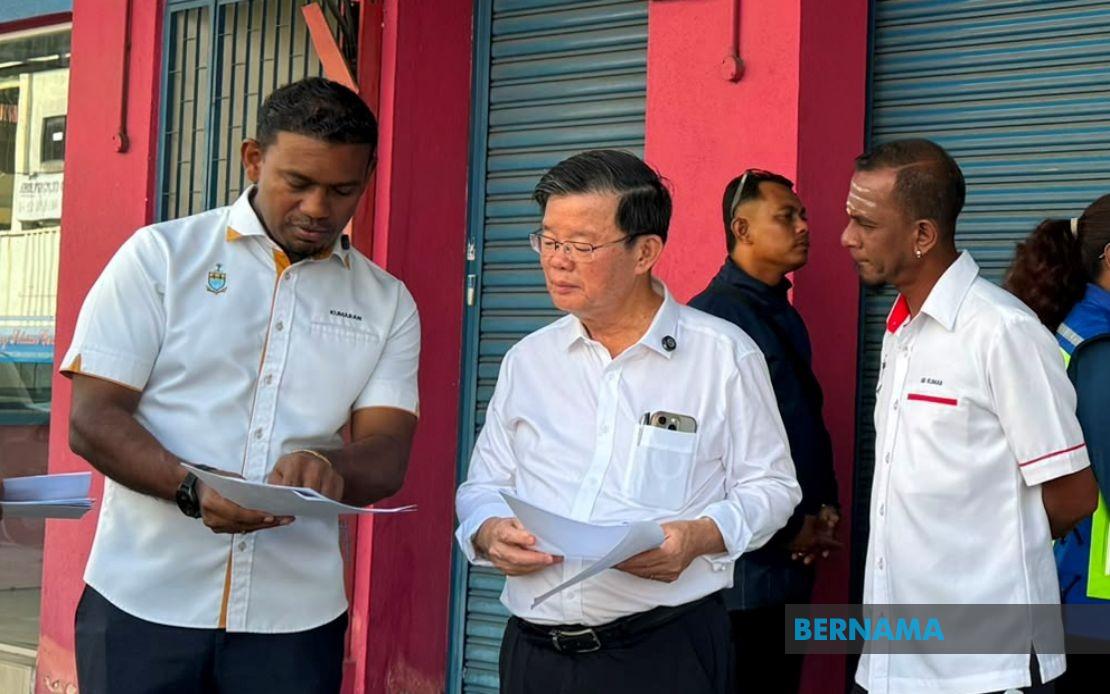
Penang's state government has firmly rejected renewed calls to delay implementation of its revised water tariff structure, with Chief Minister Chow Kon Yeow declaring that the measure, which came into effect on July 1, will remain in place. The decision follows months of consideration and a previous deferral that pushed back the introduction by nearly a year from the originally scheduled date of July 30, 2025, allowing what authorities characterised as additional time for public adjustment despite opposition from lawmakers and consumer advocates.
The revenue generated by the tariff increase—projected at approximately RM20 million annually—represents a vital funding source for Penang Water Supply Corporation's ambitious development agenda. These funds will directly support an extensive capital investment programme totalling nearly RM2 billion dedicated to enhancing the state's water supply resilience and capacity. Beyond this immediate investment requirement, the corporation faces additional substantial expenditure obligations related to sourcing water from neighbouring Perak, an undertaking that will itself demand investments running into the billions of ringgit.
Chow emphasised that the tariff-setting framework itself operates under a standardised mechanism administered by the National Water Services Commission, known as SPAN, which applies consistently across Malaysia's states and territories. Within this regulatory environment, licensed water operators retain the right to apply for tariff adjustments once every three years, with such reviews justified by reference to documented changes in operational costs and newly identified infrastructure development requirements. This institutional structure provides water utilities with a predictable schedule for cost recovery discussions while maintaining oversight at the federal level.
A significant dimension of Penang's tariff structure involves deliberate cross-subsidisation between consumer categories. Domestic household users continue to receive preferential pricing that falls substantially below the actual cost of water production and delivery. Chow revealed that the true cost of supplying water now exceeds RM1 per cubic metre, yet domestic consumers under the new arrangement pay only approximately 65 sen per unit. This discrepancy is intentionally bridged by charging industrial and commercial users premium rates, creating an indirect subsidy mechanism that prioritises affordability for residential customers at the expense of business consumers.
The specific financial impact on households varies considerably by consumption patterns. Data released by PBAPP indicates that approximately 82 per cent of Penang's residential consumers, those using 35 cubic metres or less monthly, will experience a maximum additional daily charge of RM0.08, translating to roughly RM2.55 added to monthly bills. Commercial and industrial users consuming 500 cubic metres monthly face steeper increases, with daily charges rising by RM2.59 or RM77.70 per month. These differentiated impacts reflect the state's policy intention to shield basic household consumption while ensuring that higher-volume business users shoulder proportionally greater cost increases.
Despite the government's resolute stance, opposition continues from politically influential quarters. Bagan Member of Parliament Lim Guan Eng recently circulated a public appeal through social media requesting postponement of the 20 sen per cubic metre tariff increase for an additional twelve months. Lim's intervention reflects broader public sentiment concerns about cost-of-living pressures and highlights the political sensitivity surrounding utility price adjustments, particularly in an economically diverse state like Penang where income inequality remains pronounced.
PBAPP chief executive officer Datuk K. Pathmanathan has articulated the operational imperative driving this decision. According to his statements, implementation of the new tariff structure is fundamentally necessary to mobilise funding for time-sensitive water supply projects mandated under the Water Contingency Plan 2030, a comprehensive strategy designed to ensure long-term supply security for the state. Further deferral would necessarily delay project commencement and compromise the corporation's ability to execute critical infrastructure expansion within planned timeframes.
The Water Contingency Plan 2030 encompasses an ambitious portfolio of development initiatives that collectively address Penang's evolving water security challenges. Priority projects include establishing new water treatment facilities at both Mengkuang Dam and Sungai Perai to expand processing capacity. The programme also incorporates significant land acquisition and physical upgrading work at the existing Sungai Dua Water Treatment Plant, securing property for the forthcoming Sungai Muda Water Treatment Plant, and constructing the substantial Macallum-Bukit Dumbar pipeline infrastructure necessary for improved water distribution across the state's expanding urban and industrial areas.
For Malaysian observers, Penang's experience illustrates the fundamental tension between managing water security in a growing economy and maintaining political acceptability of utility cost increases. As population growth and industrial development intensify demand pressures across Southeast Asia, water-dependent states face similar dilemmas regarding investment financing. The Penang case demonstrates how federal regulatory frameworks attempt to balance utility financial sustainability against consumer affordability concerns through mechanisms like the three-year review cycle and the SPAN-administered tariff methodology.
The broader regional context matters considerably. Penang's reliance on securing additional water sources from Perak reflects a deeper challenge facing Malaysia's northern regions—the mismatch between water demand growth and available local supply in high-growth urban areas. This geographical constraint necessitates expensive inter-state water transfer infrastructure, generating capital costs that ultimately flow through to consumer tariffs. Other Malaysian states facing similar supply constraints will likely confront equivalent decisions regarding tariff implementation in coming years, making Penang's approach a potential precedent for how state governments navigate these controversial but operationally essential adjustments.
The government's decision ultimately rests on the assessment that infrastructure investment cannot be further deferred without jeopardising water security objectives. Whether this reasoning proves persuasive to politically engaged consumers and opposition politicians will partly determine the trajectory of water policy discussions in Penang throughout the remainder of the current electoral cycle. The underlying question—how to fund essential infrastructure while maintaining public support—extends far beyond water services, touching fundamental governance challenges across Malaysia's more developed and rapidly urbanising states.

