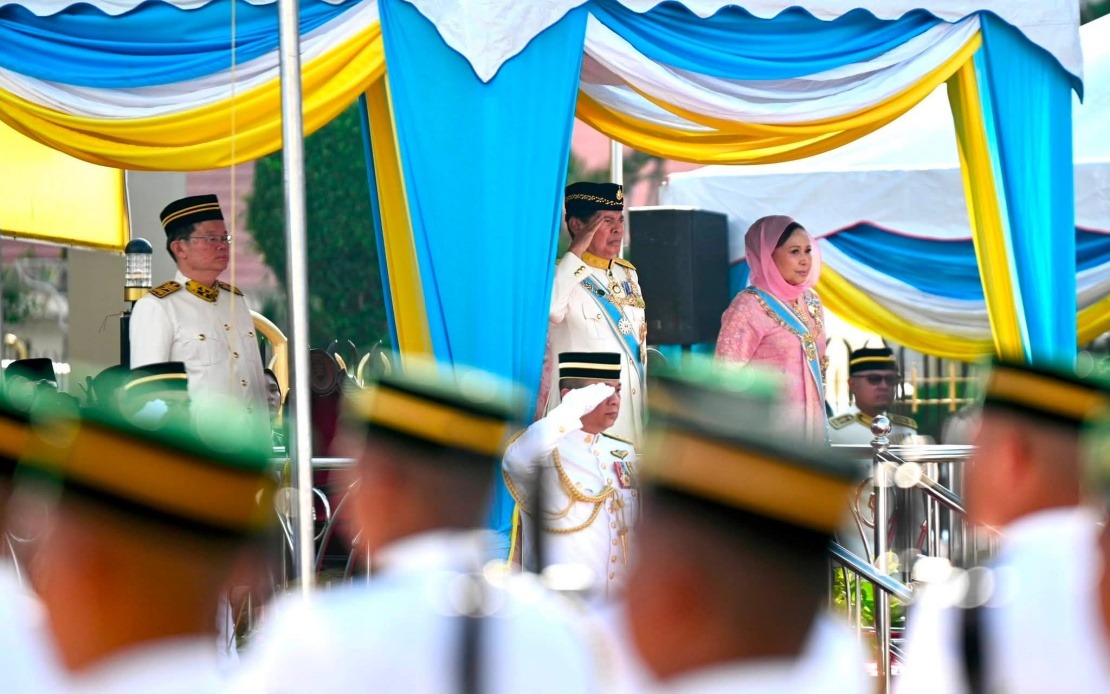
Penang is positioning itself to lead Peninsular Malaysia in international bird conservation efforts by seeking East Asian–Australasian Flyway (EAAF) network designation for the Penaga mudflats, a critical resting ground for migratory species traversing Asia and Australia. Chief Minister Chow Kon Yeow announced the initiative at the state honours investiture ceremony marking the Yang di-Pertua Negeri's 85th birthday, framing the designation as a cornerstone of Penang's broader environmental stewardship agenda. Should the bid succeed, Penang would establish a precedent across the peninsula for wetland protection integrated with development goals.
The EAAF network represents one of Asia's most significant ecological mechanisms, connecting breeding grounds in northeastern Asia with wintering territories across the Indo-Pacific region. Migratory shorebirds, waders, and waterfowl depend on carefully preserved stopover sites to complete journeys spanning thousands of kilometres, making coastal mudflats among the most ecologically valuable landscapes. Penaga's mudflats offer precisely the conditions these species require—shallow water, exposed sediment, and minimal disturbance—yet such habitats face relentless conversion pressures from urban expansion and industrial development across Southeast Asia. Penang's move signals recognition that strategic habitat conservation can coexist with economic growth, a positioning that carries implications for how other Malaysian states approach environmental policy.
Chow emphasised that the mudflats designation forms one element of Penang 2030, an overarching vision positioning the state as green, smart, and family-centric by decade's end. This framing situates environmental protection not as a restraint on progress but as foundational infrastructure for liveable communities and economic resilience. The administration's conservation footprint has already expanded substantially, with permanent forest reserves now covering 6,509.21 hectares across the state. Among these, 3,640 hectares have been formally gazetted as water catchment areas, reflecting Penang's acute awareness that long-term water security depends on protecting forested watersheds from encroachment and degradation. This integrated approach—linking bird habitat protection to water security to liveable urban development—offers a template for how island economies can manage competing pressures.
Climate adaptation has emerged as a central driver of Penang's environmental strategy, evidenced by successful international funding secured for nature-based solutions. The state has garnered USD1.95 million to implement the Penang Nature-based Climate Adaptation Programme, channelling investment toward interventions like the Blue-Green Corridor initiative, flood retention basins, and water absorption systems. These mechanisms harness natural processes to reduce climate risks—absorbing excess water during intense rainfall events while restoring groundwater during dry periods. The approach acknowledges that engineered infrastructure alone cannot address intensifying climate variability, and that ecosystems themselves provide protective services when properly maintained. For Malaysian policymakers watching Penang's experience, the demonstration effect is substantial: international climate finance increasingly favours nature-based solutions over conventional hard engineering, making ecosystem protection an economic asset rather than a cost.
Water security remains a defining constraint on Penang's development trajectory, given the island state's limited freshwater resources and dependence on external supplies via the Sungai Muda intake. The state government has committed to addressing this vulnerability through major infrastructure investments, including the new Rantau Panjang barrage on Sungai Muda, scheduled for completion by 2027. This facility will enhance water security by improving intake capacity and reducing seasonal supply fluctuations. Complementing this engineering intervention, the Penang Water Supply Corporation has developed the Water Contingency Plan 2030, a RM1.185 billion programme designed to expand treated water production and distribution networks across the state. The combined approach—protecting natural water sources through forest reserves while simultaneously investing in modern supply infrastructure—reflects pragmatic recognition that ecosystems and engineering must work in concert.
Beyond environmental initiatives, Chow highlighted the administration's commitment to social inclusion through i-Sejahtera, a welfare programme targeting vulnerable populations. In Phase 1 of 2026 alone, the programme distributed RM53.87 million across six distinct schemes reaching 285,370 recipients, demonstrating the administration's emphasis on cushioning development's social costs. Over the programme's 16-year operational history, Penang has channelled RM639 million to recipients, reflecting sustained commitment to poverty reduction and social safety nets. This welfare emphasis complements the environmental agenda: sustainable development, in Penang's articulation, encompasses not only natural resource protection but also equitable distribution of development benefits. The interweaving of conservation, climate action, and social welfare reflects an integrated development philosophy that recognises these domains as mutually reinforcing rather than competing priorities.
The EAAF designation, if secured, would establish Penang as a model for reconciling international environmental commitments with state-level development agendas. Malaysia has participated in EAAF through various agreements and site designations, but state-level leadership in this arena remains limited. Penang's bid positions the state as an innovator within Malaysia's federal environmental system, where conservation authority traditionally concentrates at national level. Success would create momentum for other states—Selangor, Johor, and Kedah all possess significant wetland systems—to pursue similar designations, potentially expanding Malaysia's footprint within one of the world's most ecologically significant migratory pathways. The cumulative effect could reshape how Southeast Asia approaches boundary-crossing species conservation, moving beyond ad-hoc protection toward systematic habitat networks.
The timing of Penang's initiative reflects broader regional trends toward integrating climate action, biodiversity protection, and sustainable urban development. Across Southeast Asia, island and coastal states face intensifying pressures from climate change, rapid urbanisation, and competing land demands. Penang's approach—linking mudflat protection to water security, flood mitigation, and international climate finance—demonstrates how environmental initiatives can address multiple policy objectives simultaneously. The framework proves particularly relevant for Malaysia's other coastal states, many of which harbour critical ecosystems yet face development pressures and limited conservation resources. Should Penang's EAAF bid succeed, the state's experience would provide practical guidance for implementing international environmental agreements within Malaysia's political economy.
The announcement also reflects evolving expectations around corporate environmental responsibility and political accountability in Malaysian governance. Environmental protection, once positioned as secondary to economic growth, has become integrated into state development visions and measured alongside conventional economic metrics. Chow's public emphasis on conservation spending, ecosystem coverage, and international recognition for environmental leadership suggests that environmental performance now carries political weight in assessing state administration effectiveness. This shift, while incremental, signals changing voter preferences and media scrutiny around how governments balance growth with sustainability. For Penang, the EAAF designation would serve as a tangible achievement in this emerging governance domain, offering measurable proof of environmental stewardship that can be communicated to constituents and investors alike.

