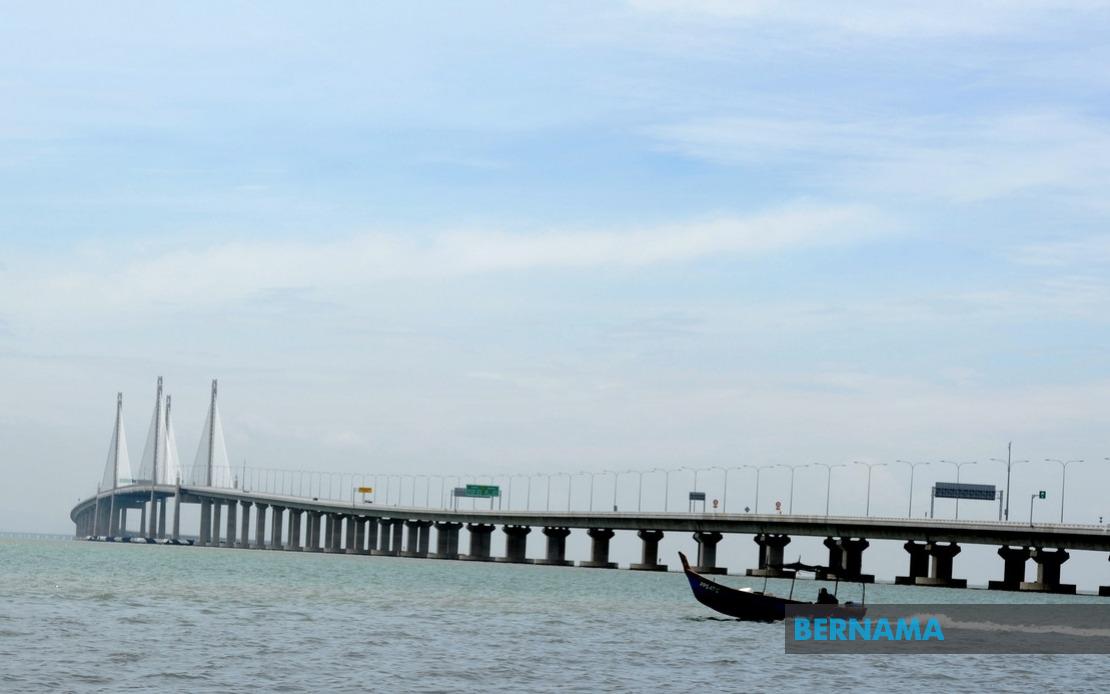
The eastbound carriageway of Penang's Second Bridge, officially known as the Sultan Abdul Halim Mu'adzam Shah Bridge, will undergo a temporary closure spanning seven hours on the night of August 8th. The shutdown, scheduled from 8 pm until 3 am the following morning, has been arranged by bridge operator Jambatan Kedua Sdn Bhd to permit the staging of the Cultural Night Run 2026, a major community event planned for the region.
The closure affects only the directional route running from Batu Maung on Penang island towards Batu Kawan on the mainland. This partial restriction means that travellers heading in the opposite direction—from the industrial zones back towards the island—will experience no disruption whatsoever. The arrangement demonstrates careful traffic planning that attempts to balance event requirements with commuter needs, though motorists will face meaningful diversions during the designated hours.
For those requiring passage from the island to the mainland during the affected window, the Second Bridge operator has identified a practical alternative. The older Penang Bridge, connecting Georgetown to Seberang Prai, will absorb diverted traffic and provide the primary crossing route. This arrangement capitalises on having two major bridge corridors serving the same metropolitan area, a luxury that has proven valuable whenever maintenance or special events necessitate single-bridge closures.
Beyond the main bridge structure, secondary access points remain fully operational throughout the closure period. The routes connecting Bandar Cassia to the North-South Expressway network and the dedicated access from Batu Kawan Industrial Park to the PLUS highway system will both continue normal service. These supplementary connections provide flexibility for logistics and industrial traffic that might otherwise be substantially disrupted by a complete island-to-mainland closure.
The Cultural Night Run 2026 represents the type of community and cultural programming that distinguishes Penang's event calendar and attracts participation from across the region. Night-running events have grown substantially in popularity across Southeast Asia over recent years, drawing hundreds or sometimes thousands of participants who value the novelty of racing under floodlights and the social atmosphere that evening events create. The decision to stage this particular event on the Second Bridge itself suggests organisers view the structure not merely as functional infrastructure but as a distinctive venue capable of enhancing participant experience and event visibility.
Bridge operator Jambatan Kedua Sdn Bhd has issued explicit guidance to all users, emphasising strict compliance with temporary traffic signs and directional instructions during the closure window. This messaging reflects standard safety protocols for infrastructure closures and the operator's recognition that poorly managed traffic diversions can generate accidents, congestion extending well beyond intended closure zones, and frustration among commuters. Clear communication and visible traffic management become critical when converting a major thoroughfare into an event venue.
The timing of the closure—commencing at 8 pm—minimises impact on conventional rush-hour commuting patterns, though it does affect evening travellers, persons returning from mainland employment or commercial activity, and night-shift workers accessing industrial areas. The choice of an overnight window reflects event coordination with Penang's transportation authorities and an effort to contain disruption within hours when general traffic volumes typically diminish compared to daytime peaks.
For Malaysian and broader Southeast Asian contexts, this closure illustrates ongoing infrastructure challenges facing rapidly urbanising regions with expanding populations concentrated across water barriers. Penang's twin-bridge system currently carries approximately 300,000 crossings daily, a volume that strains capacity during peak periods and leaves limited flexibility for maintenance, repairs, or special events. As regional economies grow and vehicle ownership expands, the adequacy of existing crossing capacity has become an increasingly visible policy question.
The incident also reflects evolving relationships between public events and major infrastructure. Unlike historical approaches that would simply prohibit events on critical routes, contemporary transport planning seeks accommodation strategies—designated hours, traffic diversion protocols, enhanced safety measures—that permit community activities while preserving essential connectivity. This balancing act requires coordination between event organisers, traffic authorities, bridge operators, and municipal governments, representing the kind of multi-agency planning becoming standard across regional urban governance.
Motorising commuters planning travel during the August 8-9 window should allow additional time and consider alternative routes proactively. Those working evening shifts, operating delivery services, or commuting from Penang island to mainland employment should identify preferred alternatives well before the closure date. Real-time traffic information from Waze, Google Maps, or official Penang transport channels will provide updated conditions as the event approaches and as actual traffic patterns develop during the closure period itself.

