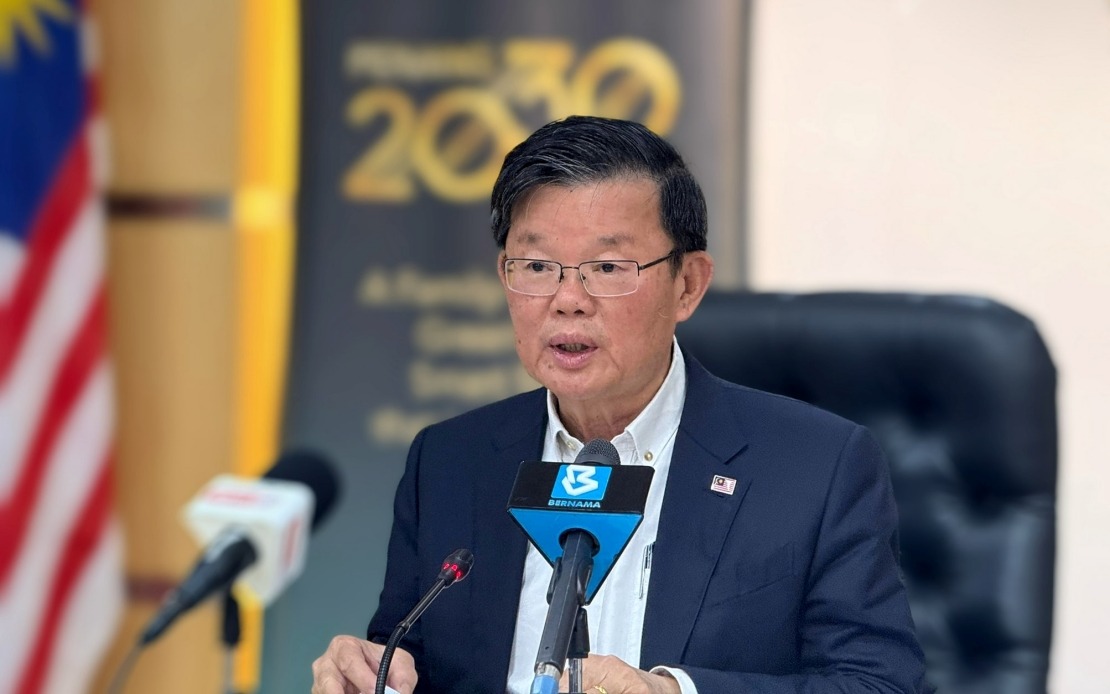
Penang's pursuit of establishing itself as a major international financial hub has taken a formal step forward with the engagement of PricewaterhouseCoopers Advisory Services Sdn Bhd to craft the foundational documents that will guide the initiative. Chief Minister Chow Kon Yeow announced that the PIFC Special Task Force Committee has approved PwC's appointment, with the consulting firm receiving its letter of engagement on June 15 and tasked with completing three critical documents within a 20-week timeframe. These deliverables—a comprehensive white paper, strategic blueprint, and detailed action plan—will form the architectural basis upon which the proposed Penang International Financial Centre (PIFC) will be constructed.
The white paper itself carries substantial weight in the initiative's development. Rather than serving merely as a conceptual document, it will establish the strategic rationale underpinning the PIFC concept, define the regulatory environment within which it will operate, and articulate the broader directional vision that stakeholders must align with. Complementing this high-level framework, the strategic blueprint and action plan will descend into operational specifics, addressing governance structures, physical and digital infrastructure requirements, incentive mechanisms to attract financial institutions and talent, and a phased roadmap for implementation. This layered approach reflects sophisticated planning, moving beyond aspiration toward concrete deliverables.
What distinguishes Penang's approach is its deliberate anchoring to existing competitive advantages rather than creating a financial centre in isolation. Preliminary findings from PwC's work, presented to the task force committee on July 17, identify the state's formidable position in the global electrical and electronics supply chain as a foundational strength upon which the PIFC can build. Penang has cultivated decades of expertise and infrastructure in the E&E sector, attracting multinational corporations and developing sophisticated supply chain networks. The PIFC concept leverages this ecosystem, positioning the financial centre not as a generic offshore banking hub but as a specialized platform serving technology-intensive industries and innovation-driven enterprises.
This positioning carries regional implications. Southeast Asia's financial landscape remains dominated by established hubs like Singapore, while the continent's technology manufacturing base continues expanding across multiple jurisdictions. Penang's proposal to marry financial services with its technology manufacturing credentials could carve out a distinct niche within the region's financial architecture. Rather than competing directly with Singapore's universal banking model, a technology-focused financial centre could serve emerging companies, facilitate innovation financing, and support the region's digital transformation agenda in ways that generalist financial centres might overlook.
The engagement of PwC also signals the seriousness with which the Penang government approaches this undertaking. The consulting firm's role extends beyond document drafting; PwC has been explicitly tasked with conducting extensive stakeholder engagement across multiple constituencies. This encompasses not only local and international industry participants but also regulators, academic institutions, and strategic partners. Such broad-based consultation serves multiple purposes—it validates assumptions against real-world expertise, surfaces potential obstacles early, builds coalition support among constituencies whose cooperation will prove essential for implementation, and ensures the final framework reflects best practices and international standards.
The timeline for completion, with preliminary expectations that the white paper could be finalized by late July or early August, reflects the state government's urgency in moving the initiative forward. This accelerated pace contrasts with the multi-year development cycles typical of financial centre projects in other jurisdictions, suggesting Penang aims to establish first-mover advantage within Malaysia's financial services landscape before competing proposals emerge. The compressed timeline also indicates political will at the highest levels, with Chief Minister Chow's direct involvement and statements reflecting his personal commitment to the project's success.
For Malaysia's broader economic positioning, the PIFC initiative represents an attempt to distribute financial sector capabilities beyond the Klang Valley. Kuala Lumpur has long dominated the nation's financial services sector, concentrating banking, insurance, capital markets, and specialized financial functions in the federal capital. Penang's proposal, if successful, could create a secondary financial hub serving specific industries and geographies, particularly the technology sector and Southeast Asian technology enterprises. This geographic distribution of financial capacity could enhance Malaysia's overall competitiveness and reduce systemic concentration risks inherent in single-hub models.
The initiative also intersects with Malaysia's broader industrial and innovation strategies. The government has articulated ambitions to develop technology-driven clusters and support the emergence of homegrown champion companies capable of competing internationally. A technology-focused financial centre in Penang could serve as an institutional enabler of these objectives, providing specialized financing, venture capital intermediation, and capital markets access tailored to innovative enterprises rather than traditional corporate borrowers. By aligning the PIFC concept with national technology development priorities, Penang frames the initiative as contributing to collective national objectives rather than pursuing parochial state interests.
The engagement of external consultants like PwC also reflects a pragmatic recognition that establishing a functional international financial centre requires expertise in regulatory frameworks, competitive positioning, infrastructure planning, and talent attraction strategies that may not exist entirely within state government resources. International financial centres operate within complex global regulatory environments, must comply with international standards and best practices, and face intense competition from established hubs. Importing specialized expertise through consulting engagements allows Penang to accelerate the learning curve and avoid costly missteps that have derailed financial centre projects in other jurisdictions.
Looking forward, the white paper and accompanying documents will face critical scrutiny from multiple directions. Federal regulators will assess whether the proposed framework aligns with national financial policy and regulatory mandates. Potential private sector participants will evaluate whether the incentive structures, regulatory environment, and operational framework create genuine competitive advantages compared to conducting business in Singapore or other established centres. International financial institutions will judge whether the centre offers sufficient scale, regulatory sophistication, and access to capital to warrant establishing operations. The comprehensiveness and credibility of PwC's analysis will substantially influence these external assessments.
The PIFC initiative ultimately represents Penang's attempt to leverage existing industrial strengths toward expanding its role within Malaysia's financial ecosystem. By anchoring the financial centre concept to the state's proven capabilities in technology manufacturing and supply chain management, planners have positioned the initiative as evolutionary rather than revolutionary—building upon established foundations rather than starting from scratch. The engagement of PwC to develop rigorous strategic documents reflects a commitment to proceeding thoughtfully rather than rashly, grounding the initiative in careful analysis and broad stakeholder consultation. Over the coming months, as the white paper takes shape, the clarity and ambition of Penang's vision for its financial future will become apparent.

