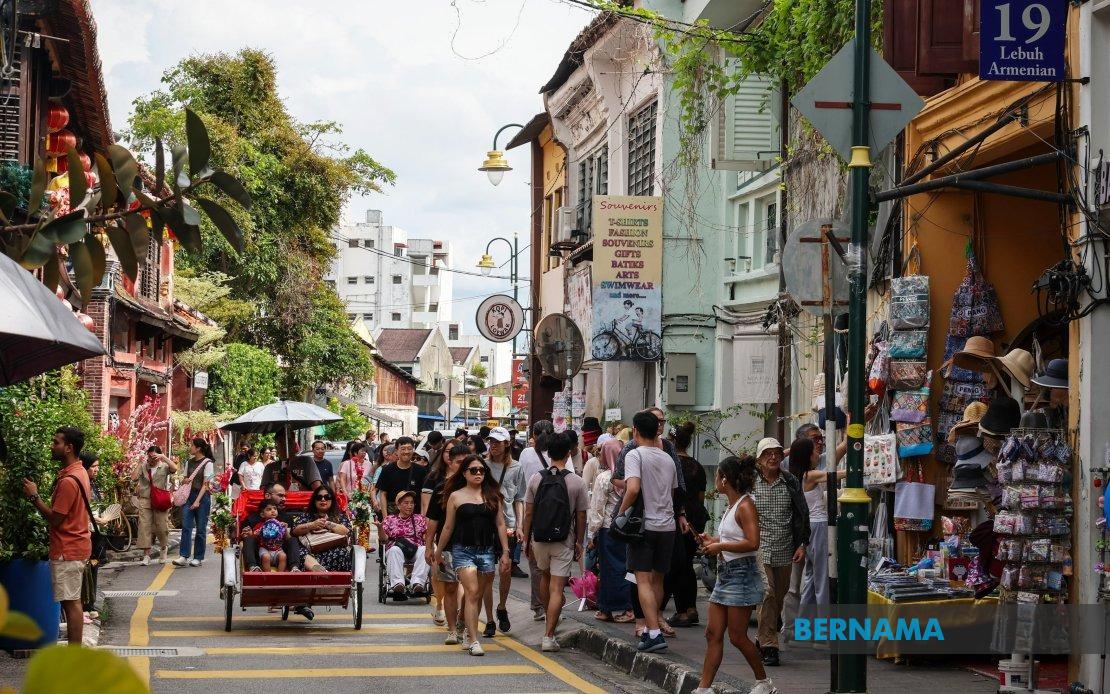
Penang's state government has initiated an immediate and wide-ranging review of structural integrity across all heritage buildings in the state, triggered by a serious incident where debris from a centuries-old shophouse on Armenian Street fell onto pedestrians, leaving two tourists requiring hospitalization. The decision represents a significant shift in how Malaysian heritage authorities balance conservation with public safety—a tension that has simmered across the region's historic precincts for years as aging structures deteriorate under Southeast Asia's humid tropical climate and increasing foot traffic from tourism.
The incident on August 4 saw a wooden beam and concrete debris collapse from the Armenian Street building, striking two Sri Lankan visitors identified as Mohamad Ammtar, aged 66, and Fatimah, 55. Initial investigations attributed the structural failure to termite damage, a common but insidious threat to wooden heritage structures throughout Malaysia, where wood-boring insects thrive year-round. While Mohamad Ammtar was discharged from Penang Hospital following treatment, Fatimah remained hospitalized undergoing further diagnostic imaging to determine the full extent of her injuries, underscoring the real danger posed by deferred maintenance in conservation zones.
Jason H'ng Mooi Lye, the State Local Government and Town and Country Planning Committee chairman, outlined the government's response during an interview with Bernama on August 5. The Penang administration plans to work closely with the National Heritage Department to engage an independent structural engineer who will systematically evaluate buildings designated as heritage structures and flag those presenting safety risks to the public. This collaborative approach reflects a growing recognition that heritage preservation in the 21st century demands technical expertise beyond traditional conservation knowledge, particularly in Southeast Asian contexts where climate, building materials, and usage patterns create unique challenges.
The assessment framework will not stop at identification. Once the independent engineer completes the comprehensive study, the Penang Island City Council (MBPP) intends to issue formal notices to property owners requiring them to execute restoration and remediation work on buildings identified as structurally compromised or hazardous. This enforcement mechanism represents a more assertive stance than many heritage authorities have historically taken, reflecting frustration with the pace of voluntary compliance among owners of aging structures in tourist districts where maintenance costs can strain resources.
H'ng emphasized that preserving Penang's heritage character cannot come at the expense of public safety, a principle that challenges some traditional conservation philosophies that prioritize authenticity and original materials above all other considerations. He acknowledged that heritage restoration typically demands retention of original architectural features and structural elements, yet he advocated for a pragmatic middle ground: the use of contemporary, durable materials in place of original ones—particularly wood—when those original materials have degraded beyond safe function. This position opens the door to innovations such as timber-like composite materials, modern epoxy treatments, and reinforced structural elements that can maintain visual heritage integrity while extending building lifespan and eliminating threats to pedestrians.
The Armenian Street incident illuminates broader challenges facing George Town, which earned UNESCO World Heritage status in 2008. The historic enclave attracts substantial international tourism, yet many of its buildings date from the 18th and 19th centuries and remain privately owned by individuals or families who lack the capital for major restoration work. Penang's tourism sector, valued as a significant economic driver for the state, depends fundamentally on the accessibility and visual integrity of heritage districts, creating a paradox where deteriorating buildings threaten both visitor safety and the very appeal that draws tourists to the region.
Wong Hon Wai, chairman of the State Tourism and Creative Economy Committee, acknowledged this interconnection when he stated that George Town World Heritage Incorporated (GTWHI) and MBPP had been directed to circulate safety advisories to heritage building proprietors across the state. Wong reinforced the necessity of ensuring structural stability in historic properties, framing the initiative not merely as a regulatory obligation but as essential infrastructure management for a tourism-dependent economy. The incident has shifted discussion from abstract preservation principles toward concrete safety obligations and owner accountability.
Termite damage, identified as the immediate cause of the Armenian Street collapse, represents a systemic vulnerability affecting wooden heritage structures throughout Malaysia and across Southeast Asia. Unlike acute structural failures from earthquakes or storms, termite deterioration progresses silently and gradually, often undetected until catastrophic failure occurs. The warm, humid tropical climate provides year-round breeding conditions for wood-boring insects, making preventive treatment and regular inspections critical for buildings with significant wooden components. Many heritage property owners either lack awareness of termite risks or defer treatment due to cost, leaving structures in a precarious state of hidden degradation.
The Penang initiative carries implications extending beyond the state's borders. Other Malaysian cities with significant heritage zones—Kuala Lumpur's colonial district, Melaka's historic precincts, and Georgetown competitors like Ipoh—will likely monitor Penang's structural assessment program as a potential template for their own heritage management strategies. If Penang successfully implements independent engineering review and enforcement mechanisms while balancing conservation authenticity, the model could establish new standards for heritage governance across Malaysia. Conversely, if the process becomes mired in administrative delays or conflicts between conservation doctrine and practical safety requirements, it may discourage other authorities from pursuing similar initiatives.
The financial implications of a comprehensive heritage building audit remain substantial. Independent structural engineering assessments for potentially hundreds of buildings across Penang Island will require significant public and private investment, and subsequent remediation work will impose costs on property owners who may already struggle with maintenance expenses. The state government has not yet articulated how it will address owner concerns about cost-sharing, subsidies, or incentives for compliance, an omission that could prove problematic as the initiative moves from planning into implementation. Without addressing the economic burden on heritage property owners, enforcement notices alone may generate conflict rather than building improvements.
The incident and subsequent policy response also highlight the evolving relationship between tourism development and heritage preservation in Malaysian cities. George Town's UNESCO designation has attracted significant international visitor numbers, bringing economic benefits but also placing strain on aging infrastructure designed for a fraction of current foot traffic. Balancing the desire to capitalize on heritage tourism with the responsibility to protect visitors and residents from safety risks requires sophisticated management approaches that Penang is now beginning to develop. Similar tensions are emerging in other heritage hotspots throughout Southeast Asia, where rapid growth in cultural tourism frequently outpaces the infrastructure and maintenance systems necessary to ensure visitor safety.
Moving forward, success will depend on several factors beyond the initial structural assessment. Penang must develop clear timelines for restoration work, establish transparent communication with building owners about requirements and resources, and potentially create financial assistance programs to reduce barriers to compliance. The state must also consider the cumulative economic impact on the heritage property owner community, which cannot be expected to absorb indefinite maintenance costs without support or tax incentives. Finally, Penang should establish ongoing monitoring mechanisms rather than treating the current audit as a one-time exercise, since structural conditions in heritage buildings deteriorate continuously and require regular reassessment to maintain public safety standards.

