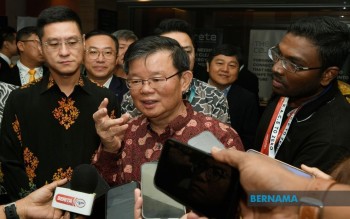
Penang's push to position itself as a green manufacturing hub is gaining momentum, with a quarter-century of companies now seeking access to concessional financing aimed at reducing their environmental footprint. Chief Minister Chow Kon Yeow announced that 25 enterprises have expressed serious interest in the Penang Climate Mitigation Fund, with five applications currently undergoing formal assessment. This early traction suggests growing recognition among the state's industrial base that sustainability credentials are increasingly tied to competitiveness in global supply chains.
The Climate Mitigation Fund represents a collaborative approach to environmental transition, combining state resources with private sector capital. The initiative started with RM20 million in combined funding—RM5 million contributed by the Penang state government alongside RM15 million from Alliance Bank—though the scheme has potential to expand to RM100 million. This structure mirrors similar climate finance mechanisms emerging across Southeast Asia, where governments are leveraging banking partnerships to scale green investment beyond what public budgets alone could support.
Access to the fund is structured to benefit smaller manufacturers most directly. Eligible small and medium enterprises and mid-tier companies can obtain financing up to RM500,000, accompanied by grants, sustainability assessments and expert guidance. This targeted approach acknowledges that while large corporations often have dedicated sustainability departments and internal capital for green transitions, smaller manufacturers frequently lack both technical expertise and affordable financing options to implement climate adaptation measures. The fund essentially lowers barriers to entry for companies wanting to upgrade their environmental performance.
For Penang specifically, the timing of this initiative carries particular significance given the state's outsized role in Malaysia's electronics and electrical equipment sector. Last year, E&E exports from Penang totalled RM436.9 billion, representing approximately 68 percent of Malaysia's total E&E shipments globally. This concentration underscores both Penang's industrial importance and its vulnerability to shifting global supply chain requirements. Major multinational corporations increasingly embed carbon reduction targets throughout their supplier networks, making Penang's E&E manufacturers increasingly exposed to demands for clean energy sourcing and emissions reductions.
Chow articulated a crucial strategic insight during his remarks: environmental compliance has evolved into a competitive necessity rather than merely a regulatory obligation. Multinational buyers assessing manufacturing locations now factor renewable energy availability and carbon intensity alongside traditional considerations like labour costs, infrastructure quality and logistics networks. For Penang manufacturers seeking to retain and attract orders from global companies, the ability to demonstrate renewable energy use and lower Scope 2 emissions has become commercially material. Companies failing to meet these expectations risk losing market access as corporate sustainability commitments trickle downstream to suppliers.
The Penang government's broader energy strategy provides the foundation supporting this climate finance initiative. Launched in November 2024, the Penang Energy Framework establishes concrete 2030 targets: reducing energy intensity by 25 percent and increasing renewable energy's share of the state's energy mix to at least 10 percent. Given Penang's geographical constraints—the state is densely populated with limited available land—rooftop solar has emerged as the pragmatic cornerstone of this transition. New building codes now mandate that commercial and industrial structures utilise at least 75 percent of available roof area for solar installations or meet specified renewable energy sourcing targets calibrated to their electricity tariff category.
Beyond rooftop deployments, Penang is exploring alternative renewable pathways suited to its urban landscape and water infrastructure. The Penang Water Supply Corporation is conducting feasibility studies on floating solar installations across its reservoir systems, a technology gaining traction across Southeast Asia as a space-efficient approach to expanding renewable generation. Meanwhile, Silicon Island—the state's semiconductor and advanced manufacturing development zone—is being designed to embed renewable energy throughout its operations, including a dedicated Green Tech Park powered by on-site solar generation. These projects demonstrate how infrastructure planning can systematically integrate sustainability rather than treating it as an afterthought.
Energy efficiency represents the complementary pillar of Penang's energy transition strategy. The state is implementing energy intensity standards that enable companies to measure, benchmark and progressively improve their consumption patterns. Government and local authority buildings are undergoing systematic assessment for renewable energy and efficiency potential. For new public sector facilities, the target is deriving at least five percent of total energy consumption from renewable sources, with existing government properties encouraged to pursue the same threshold. This approach recognises that efficiency improvements often deliver faster returns than renewable generation alone, particularly when capital for upgrading aging industrial equipment remains constrained.
Penang's state-level energy initiatives align with Malaysia's broader federal framework, specifically the National Energy Efficiency Action Plan 2.0 launched by the federal government. This plan targets reducing national energy demand by 11.6 percent by 2035, establishing a common direction that both state and federal governments are pursuing. The alignment is strategically important: companies operating across multiple Malaysian states benefit from consistent policy frameworks, while conflicting state-level and federal approaches can create confusion and undermine investment decisions. Penang's leadership in translating national targets into concrete state financing mechanisms potentially establishes a replicable template for other states seeking to operationalise Malaysia's clean energy commitments.
The Climate Mitigation Fund demonstrates how targeted concessional financing can catalyse industrial transformation in a specific economic context. By pairing capital with technical assistance and sustainability assessments, the scheme addresses multiple barriers simultaneously—not just cost of capital but also technical knowledge gaps that smaller manufacturers often encounter. As five applications move through assessment and additional companies evaluate the fund's potential benefits, Penang is testing whether aligned policy, capital provision and supply chain pressure can collectively drive measurable emissions reductions across its manufacturing base. The results will offer valuable insights for other economies seeking to balance environmental transition with industrial competitiveness in an increasingly carbon-conscious global economy.

