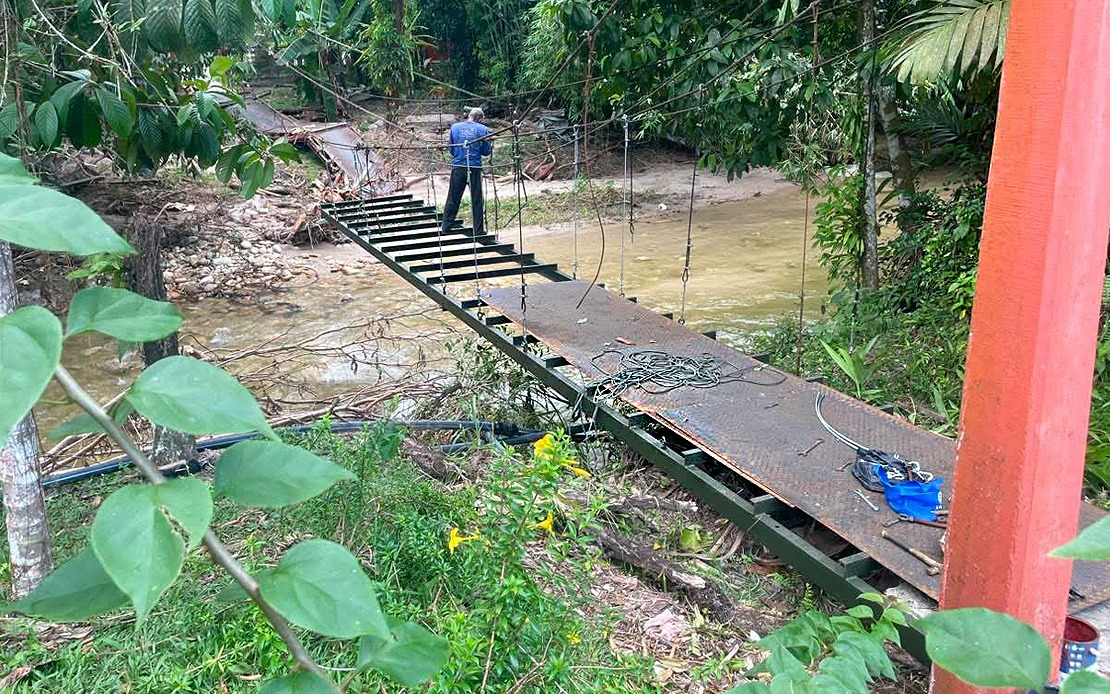
The Perak state government has taken decisive action to restore connectivity to a flood-ravaged village by endorsing a substantial RM500,000 funding allocation for the construction of a permanent concrete bridge in Kampung Ulu Geruntum, Gopeng. The decision comes in response to catastrophic flooding that struck the rural settlement on June 19, when a violent water surge demolished the village's sole bridge, effectively isolating residents and triggering a humanitarian crisis in the area.
Sandrea Ng Shy Ching, chairman of the State Housing and Local Government Committee and assemblyman for Teja, confirmed the approval while simultaneously unveiling a multi-pronged recovery strategy. She emphasised that construction work will commence immediately following the completion of ongoing emergency stabilisation efforts currently being undertaken by state and federal agencies operating at the site. This phased approach reflects the authorities' commitment to ensuring that preliminary safety measures are properly concluded before permanent reconstruction begins, minimising risks to workers and the wider community.
The immediate aftermath of the June 19 incident proved exceptionally challenging for Kampung Ulu Geruntum's residents. The water surge forced more than 50 people to evacuate hastily to the Gopeng Town Hall temporary relief centre, where they remained displaced from their homes and livelihoods for an extended period. The destruction of their primary bridge represented far more than a transportation disruption; it severed vital supply lines for food, medicine, and other essential goods, creating a humanitarian bottleneck that threatened the welfare of vulnerable populations including the elderly, children, and those with medical conditions requiring regular access to external services.
Beyond the headline concrete bridge allocation, the state administration has authorised additional emergency funding streams to address the cascading impacts of the disaster. An emergency provision of RM150,000 has been approved specifically for the construction of a temporary suspension bridge, which is presently being erected and is scheduled for completion by mid-July. This interim structure represents a crucial stopgap measure designed to restore immediate access to the isolated community while permanent reconstruction progresses. The suspension bridge's anticipated completion within weeks offers a realistic timeline for reconnecting residents to broader economic and social networks.
Sandrea also directed RM45,000 from her personal constituency allocation towards restoring critical water infrastructure damaged during the inundation. This funding will facilitate the repair of fractured water pipes and enable the restoration of piped water supply that was interrupted by the flooding event. Water access stands as a fundamental health and sanitation necessity, and the deliberate allocation of dedicated resources signals the political leadership's understanding of infrastructure interdependencies and the compounding nature of disaster impacts on vulnerable communities.
The response architecture demonstrates coordination across multiple governance levels and institutional agencies. Sandrea publicly acknowledged the contributions of numerous organisations and field personnel who have been engaged in rescue, relief, and recovery operations since the disaster struck. Her statement thanking these frontline workers underscores the reality that disaster recovery in Malaysian rural communities often depends on sustained, multi-agency mobilisation and the dedication of personnel operating under challenging field conditions.
For the broader Perak electorate and residents of Gopeng specifically, this funding commitment carries symbolic and practical weight. It represents official recognition that the village's isolation was not merely an inconvenience but a genuine emergency requiring state-level intervention and budgetary reallocation. In the context of Malaysian governance, where rural infrastructure often lags urban counterparts, the decision to invest RM500,000 in a single village bridge signals political will to prioritise peripheral communities' connectivity and resilience.
The timeline architecture—with temporary suspension bridge completion targeted for mid-July and permanent concrete bridge construction beginning thereafter—reflects pragmatic crisis management. Rather than waiting for extended planning and procurement processes that might leave the community disconnected for months, the authorities opted for a rapid interim solution coupled with a longer-term permanent remediation. This sequenced approach demonstrates understanding of rural communities' immediate needs while committing to durable infrastructure solutions.
The incident itself highlights the vulnerability of rural Malaysian settlements to hydrological extremes. Kampung Ulu Geruntum's single-bridge dependency meant that one infrastructure failure produced complete isolation. This pattern recurs across Southeast Asian rural areas where limited road networks and bridges create bottleneck vulnerabilities. The state government's response, if successfully executed, could serve as a template for similar situations in other remote settlements throughout Perak and the broader region where monsoon flooding and water surges pose recurring threats to isolated populations.
Looking forward, the allocated resources must translate into genuine infrastructure improvements on the ground. The stated timeline for suspension bridge completion by mid-July provides a measurable checkpoint for government accountability. Should this deadline be met, it would demonstrate effective project execution; delays would signal capacity constraints or resource management challenges requiring attention. For residents currently displaced from their homes, the progress of these parallel construction efforts will directly determine when normalcy returns to their daily lives and economic activities.

