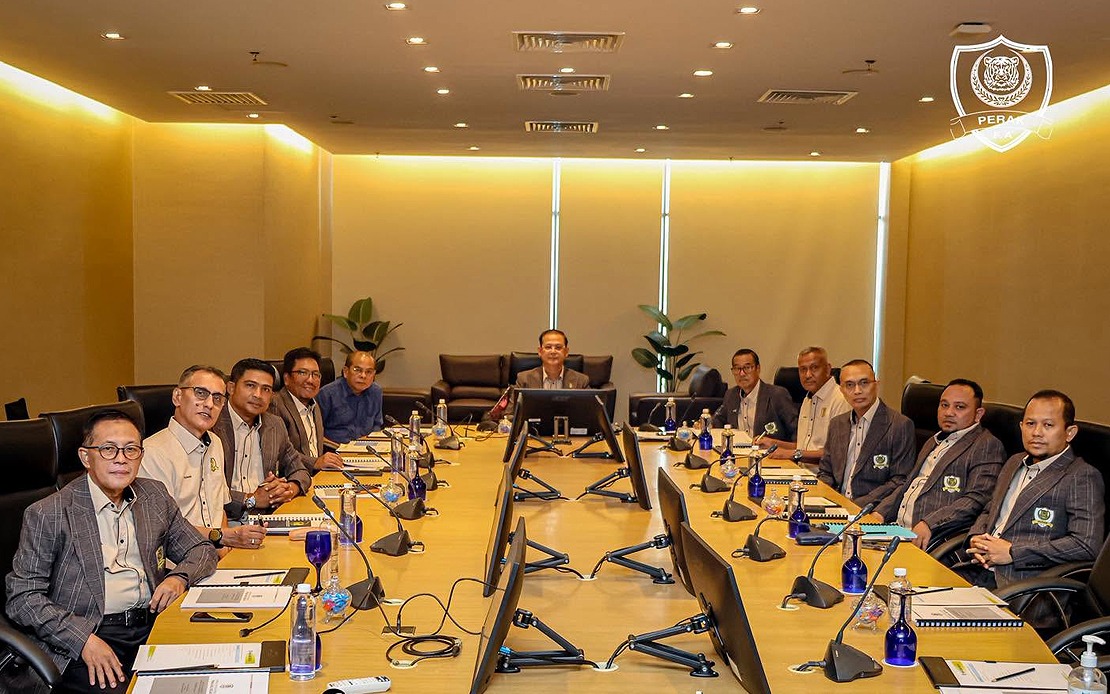
The Perak Football Association (PAFA) is moving ahead with plans to recruit a new head coach for the 2026-2027 Liga A1 Semi-Pro season, signalling a strategic shift in the state's football management approach. The decision comes as a direct response to new regulatory requirements imposed by the Amateur Football League (AFL), which now mandates that every participating team must have a head coach holding an AFC Pro Diploma Coaching License (Pro-A). This credential requirement represents a significant elevation in coaching standards across Malaysia's semi-professional football tier, reflecting the broader push to professionalise the sport at domestic level.
The PAFA's commitment to securing a qualified coach extends beyond mere regulatory compliance. The association has outlined specific criteria for the incoming head coach, emphasising the need for someone with substantial involvement in grassroots football development, exposure to modern coaching methodologies, and verifiable success at state, national, and international levels. This comprehensive approach indicates that PAFA recognises the role of technical leadership in building sustainable competitive advantage rather than pursuing short-term performance gains. The coaching appointment will also factor in alignment with Perak's broader football development roadmap, particularly the state's Perak Sejahtera 2030 Plan, which integrates sporting excellence with long-term institutional capacity building.
The previous season under Syamsul Saad, a former player who took charge of the squad, demonstrated respectable outcomes despite working within the existing structural constraints. Perak finished in fifth position in the league standings while simultaneously progressing to the semifinals of the MFL Challenge Cup and the quarterfinals of the Malaysia Cup. These results, while encouraging, apparently did not meet the federation's expectations for the trajectory the team should be following moving forward. The transition to a Pro-A licensed coach suggests PAFA believes the next phase of development requires both elevated technical expertise and institutional credibility that comes with formal international coaching credentials.
Crucially, PAFA has committed to preserving institutional continuity by retaining the existing coaching support staff rather than undertaking a wholesale overhaul. This measured approach allows the incoming head coach to work alongside coaches already familiar with the squad's capabilities, playing styles, and individual development trajectories. The integration strategy indicates that PAFA recognises the value of maintaining relationships and accumulated knowledge within the technical team while introducing fresh strategic direction. Rather than creating divisive change, the model pairs experienced local knowledge with elevated external expertise, potentially creating a more robust coaching structure than either element alone would provide.
The retention and contract renewal of players from the previous season will also follow a merit-based approach. PAFA stated that players who successfully completed performance evaluations will receive new contracts, formalising their status with the club for the forthcoming campaign. This transparent selection process communicates clearly to the squad that continued participation depends on meeting objective performance standards. For younger players in particular, this framework provides clarity about career pathway expectations and the standards required to maintain professional status within the state system.
Beyond the primary Liga A1 Semi-Pro commitment, PAFA has announced expanded participation across multiple competitions during the 2026-2027 season. The team will contest in both Liga A2 Amateur and the President's Cup, a strategic multi-tier engagement designed to distribute playing opportunities among a broader player pool and identify emerging talent from grassroots pipelines. This approach reflects growing sophistication in how Malaysian state associations are managing player development, moving away from single-competition focus toward integrated systems that maximise exposure for young players with potential.
The expanded competitive structure sits within a larger developmental ecosystem that encompasses participation in the Malaysia Games (SUKMA), Liga A1 Semi-Pro itself, and the Liga Perak Sejahtera 2030, a competition specifically designed to integrate state development planning with competitive football. Through coordinated programming across these three tiers, PAFA has reportedly cultivated approximately 70 players within the 18-24 age bracket. This talent pipeline represents significant human capital investment and suggests that the state's football system is beginning to generate internal developmental capacity rather than relying primarily on external recruitment or ad-hoc player acquisition.
The scale of this player development achievement carries implications beyond Perak's borders. In a country where player pathways from grassroots to professional level remain inconsistently developed across different states, Perak's success in systematically producing 70 youth players within a defined age range demonstrates that structured planning and resource commitment can generate measurable results. The replicability of this model across other Malaysian states could substantially improve the nation's overall player development standards and reduce the gap between domestic and regional football quality.
Menteri Besar Datuk Saarani Mohamad's continued support remains central to the execution of PAFA's strategic vision. The political backing ensures that football development considerations receive priority within state resource allocation processes and that coaching recruitment can proceed without budget constraints constraining the selection process. This alignment between state leadership and sporting institution objectives is essential for sustaining long-term development initiatives that require consistent funding and political protection across multiple electoral cycles.
The appointment of a Pro-A licensed head coach addresses a technical governance gap within Perak football while symbolising the state's commitment to bringing its competitive infrastructure in line with regional standards. As Malaysian football confronts increasing competition from Thailand, Vietnam, and other Southeast Asian neighbours whose state systems have substantially professionalised their grassroots-to-elite pipelines, states like Perak must ensure that technical leadership quality reflects international best practices. The new coaching appointment represents a concrete manifestation of this commitment, directly influencing daily training methodologies, tactical development, and the cultivation of technical literacy among emerging players who may eventually represent Malaysia in continental competitions.
The 2026-2027 season will thus serve as a significant test case for whether elevated coaching standards can translate into competitive improvements for a state system that has invested substantially in youth development infrastructure. Success would strengthen the argument for similar upgrades across other Malaysian states and demonstrate that professionalising technical leadership generates measurable returns on the long-term investments states make in grassroots football development programs.

