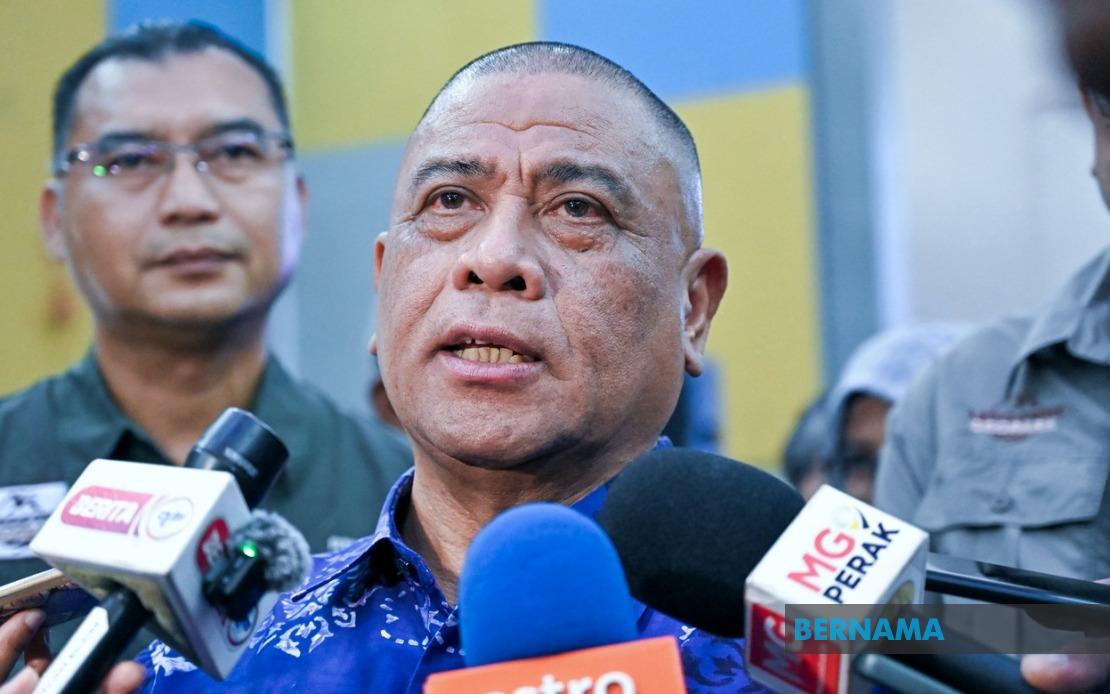
The Perak state government remains confident that the proliferation of unorthodox Islamic teachings within its boundaries is being effectively contained, though officials recognise that propagandists are increasingly exploiting online channels and operating across state lines to spread their message. Menteri Besar Datuk Seri Saarani Mohamad made the assertion while speaking to journalists in Ipoh, emphasising that monitoring mechanisms are firmly in place despite the evolving nature of the challenge posed by these doctrines.
Saarani's confidence rests on a multi-layered oversight structure that operates at both state and religious authority levels. The State Security Committee, which he chairs, maintains continuous vigilance over developments related to deviant teachings. This committee works in tandem with the Perak Islamic Religious Department and the Perak Mufti Department, creating an integrated information-sharing network designed to detect and respond to concerning teachings or practices swiftly. The involvement of Sultan Nazrin Shah, who holds the constitutional position of head of religion in Perak, underscores the seriousness with which the matter is being treated at the highest levels of state authority.
Recent briefings have kept the royal institution fully apprised of developments in this area. Both the Deputy Mufti, Datuk Zamri Hashim, and JAIPk Director Datuk Harith Fadzilah Abdul Halim have provided updates to His Royal Highness, ensuring that religious and state leadership operate from the same body of information. This coordination between civil administration and religious institutions reflects a broader recognition that combating heterodox teachings requires engagement across multiple governance domains.
The Perak government has established clear procedural pathways for addressing public concerns. When citizens report teachings or practices they believe deviate from authentic Islamic principles, the Perak Islamic Religious Department and Mufti's office investigate such complaints systematically. Investigations follow established protocols before enforcement measures are initiated, a process designed to ensure accuracy and fairness while preventing the spread of potentially damaging doctrines.
At the federal level, Minister in the Prime Minister's Department (Religious Affairs) Senator Datuk Zulkifli Hasan has articulated a broader strategic approach. The national government is implementing a whole-of-government strategy to combat deviant teachings, recognising that the challenge transcends state boundaries and administrative silos. The Department of Islamic Development Malaysia works collaboratively with state religious departments across the country, creating a coordinated framework for monitoring and enforcement that extends beyond Perak's jurisdiction.
However, officials candidly acknowledge that the operational environment has become substantially more difficult in recent years. The traditional methods of identifying and countering deviant teachings—focused on detecting clandestine physical meetings and secret gatherings—have proven inadequate against newer dissemination techniques. Social media platforms, messaging applications, and encrypted communication channels have become the primary conduits through which heterodox groups now communicate with potential followers and propagate their ideology.
The shift to digital dissemination has fundamentally altered the enforcement landscape. What were once contained, localised problems requiring targeted intervention have evolved into diffuse, transnational phenomena that exploit the borderless nature of the internet. Authorities must now contend with groups that deliberately obscure their true ideological intentions, operating ostensibly as self-help organisations, charitable entities, wellness programmes offering alternative therapies, or informal religious study circles. This masquerading makes initial identification more difficult and requires greater sophistication in investigative techniques.
For Malaysian policymakers and security officials, the challenge represents a persistent headache that defies easy solutions. The combination of geographic dispersion, digital ubiquity, and deliberate obfuscation means that traditional law enforcement and religious authority responses must continually adapt. The involvement of actors operating across international borders adds another layer of complexity, as does the reality that digital platforms operate according to their own governance rules that may not align with Malaysian regulatory frameworks.
The Perak situation exemplifies the broader struggle facing Malaysian religious authorities nationwide. While officials express confidence in their ability to manage and contain the threat within their respective jurisdictions, the structural features of the problem suggest that it will remain a persistent challenge requiring sustained vigilance, continued inter-agency coordination, and ongoing refinement of investigative and enforcement strategies. The transition from physical to digital spaces has fundamentally altered the nature of the threat, demanding new approaches to an old problem of religious heterodoxy.

