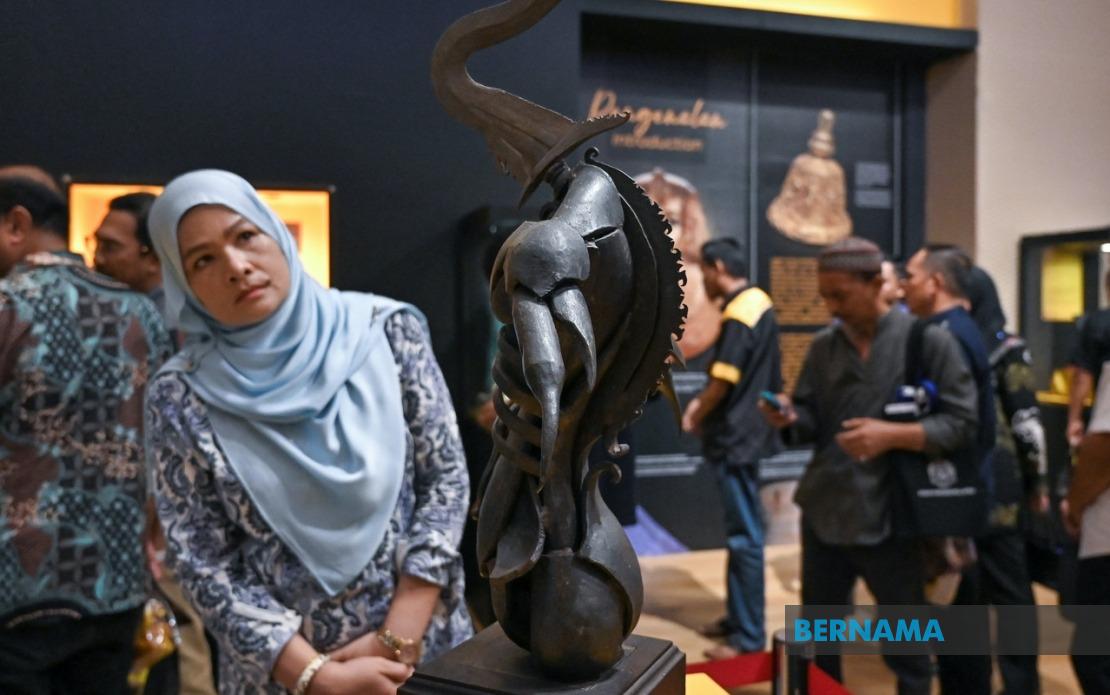
The Perak Museum in Taiping has opened a comprehensive exhibition featuring 140 metal artefacts of considerable historical and cultural importance, representing a significant milestone in Malaysia's efforts to preserve and celebrate indigenous heritage. Titled 'Magic and Metal: Spirit, Power and Art,' the showcase brings together treasures spanning centuries of Malay metalworking traditions and their profound symbolic meanings within the broader Southeast Asian context. The exhibition, which commenced on June 1 and will run through December 31, has already attracted nearly 20,000 visitors, with museum officials targeting 100,000 attendances by its conclusion.
Museum director Mohd Nasrulamiazam Mohd Nasir explained that the exhibition's conceptual framework rests on three interconnected themes—spirit, power, and art—each reflecting different dimensions of how metal has functioned within Malay society. Rather than presenting artefacts as mere historical objects, the curators have positioned metal as a medium through which communities expressed their understanding of the supernatural, demonstrated authority, and achieved aesthetic excellence. This interpretive approach aligns with contemporary museum practice, which emphasizes the agency and meaning embedded in cultural objects beyond their physical properties.
What distinguishes this exhibition from previous efforts is its unprecedented scale in bringing together the Perak Museum's own early metal-based collections alongside carefully selected pieces from private collectors and cultural institutions. The inclusion of sculpture works by Raja Syahriman Raja Aziddin, silver ornaments curated by Yayasan Al-Amin, and significant weaponry belonging to Nor Azahar Ibrahim demonstrates how contemporary custodians of heritage have collaborated to create a more comprehensive narrative. This collaborative model reflects emerging trends in Malaysian museum work, where institutional boundaries become more porous to serve the broader goal of heritage preservation and public education.
Among the exhibition's highlights is a 19th-century Malay traditional weapon featuring an ornate snail-shell hilt that once belonged to Sultan Abdullah Muhammad Shah II, the 26th Sultan of Perak. Such royal pieces carry layered significance, functioning simultaneously as instruments of power, artistic statements, and repositories of family history. The inclusion of 18th-century Bugis warrior armor extends the exhibition's geographical and cultural reach beyond the Malay peninsula, acknowledging the interconnected maritime networks that shaped Southeast Asian metalworking traditions and cultural exchange.
Equally noteworthy is the spoon and fork set displayed from the collection of Raja Laut Ibni Sultan Muhammad Shah, the second son of Selangor's third sultan. Such domestic metalwork pieces often receive less scholarly attention than weapons or ceremonial objects, yet they reveal how craftsmanship and aesthetic principles permeated everyday life among the nobility. The inclusion of such items suggests the curators are deliberately broadening the definition of significant heritage beyond the traditionally dramatic or militarily functional.
The exhibition's opening was officially marked by Datuk Kamarul Baharin A. Kasim, director-general of the Department of Museums Malaysia, signaling the national significance attributed to this initiative. This institutional endorsement reflects broader government commitment to positioning museums as vital cultural institutions rather than peripheral repositories. The Department of Museums Malaysia has explicitly framed such exhibitions as part of a strategic agenda to reinforce museums' roles as centers of knowledge production, academic research, and heritage conservation for contemporary and future generations.
For Malaysian readers, this exhibition offers valuable context in understanding how material culture encodes historical narratives often obscured by conventional textual sources. Metal artefacts, through their durability and the specialized knowledge required for their production, provide unique windows into pre-modern societies' technological capabilities, artistic sensibilities, and belief systems. By making these connections visible to public audiences, the museum serves an educational function that extends beyond academic circles.
The timing of this exhibition also merits consideration within Malaysia's broader cultural and political landscape. As Southeast Asian nations increasingly emphasize heritage preservation as a component of national identity and regional soft power, museums like Perak take on heightened importance. The exhibition demonstrates how local institutions can mount internationally-caliber cultural programming that attracts both domestic and regional visitors, generating economic benefits while fostering deeper understanding of shared heritage.
The targeting of 100,000 visitors suggests confidence in public interest and reflects museums' evolving role in leisure and education. The exhibition's extended timeline through year-end allows multiple cohorts of visitors—school groups, families, scholars, tourists—to experience these collections under varying circumstances. Such extended runs have become increasingly common in Malaysian museums, recognizing that heritage appreciation requires sustained engagement rather than brief encounters.
The collaborative partnerships enabling this exhibition point to an understudied aspect of heritage work: the role of private collectors and foundations in preserving and presenting cultural materials. Individuals like Raja Syahriman Raja Aziddin and Nor Azahar Ibrahim function as de facto curators and conservators, maintaining collections that might otherwise be dispersed or lost. By incorporating such private holdings into major exhibitions, museums validate these custodial roles while expanding their own capacity to tell comprehensive stories.
The exhibition ultimately reflects evolving understandings of what constitutes heritage worth preserving and displaying in the 21st century. By emphasizing the spiritual and artistic dimensions of metalwork alongside its historical significance, curators invite visitors to appreciate these objects as more than antiquarian curiosities—they are expressions of human creativity and cultural values that continue resonating with contemporary audiences seeking connection to ancestral wisdom and aesthetic traditions.

