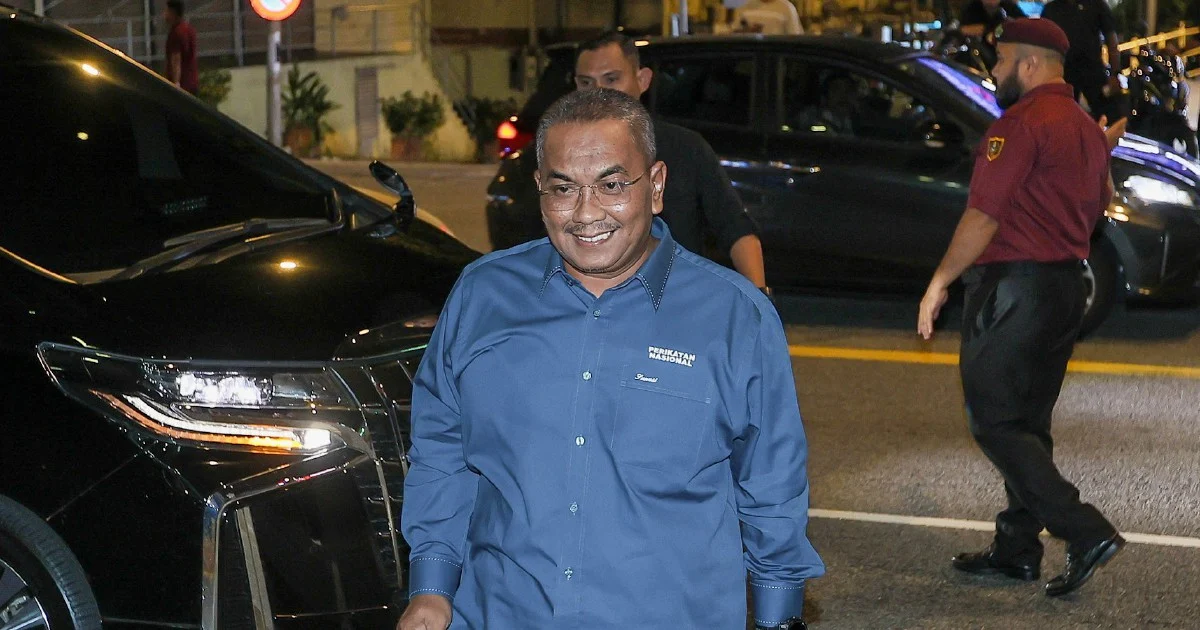
Perikatan Nasional has moved decisively to quash mounting speculation about its electoral strategy for the forthcoming Johor state election, with the coalition's election director explicitly confirming that the party will proceed under its own distinctive logo rather than adopting the Barisan Nasional banner. Datuk Seri Muhammad Sanusi Md Nor, speaking in his capacity as PN's chief strategist for the polls, dismissed persistent rumours suggesting a tactical alliance that would see the coalition shelve its own identity in favour of the established BN branding.
The clarification represents a significant statement of intent from PN as it approaches what may prove a defining contest in Peninsular Malaysia's political landscape. For months, political observers and opposition figures had speculated whether the coalition might seek to leverage BN's traditional voter base and organisational machinery by contesting under the older coalition's historical symbol. Such moves have precedent in Malaysian electoral politics, where partnerships between established parties sometimes involve strategic rebranding or logo-sharing arrangements designed to maximise voter familiarity and cross-party support.
Sanusi's unambiguous declaration puts paid to such conjecture, signalling that PN intends to build its Johor campaign on the foundation of its own political identity and brand recognition. This decision carries profound implications for how the party positions itself within the broader Malaysian political ecosystem. By insisting on its own logo, PN demonstrates confidence in its ability to mobilise voters without relying on the symbolic weight of Barisan Nasional, a coalition that has dominated Malaysian politics for decades but has faced considerable erosion of its support base in recent electoral cycles.
The PN approach reflects a fundamental strategic calculation about the current state of Malaysian politics. Rather than attempting to ride on BN's historical legitimacy, the coalition appears committed to staking its own claim on voter attention and resources. This stands in sharp contrast to the fragmentation that has characterised Malaysian electoral competition since the 2018 general election, when traditional coalitions fractured and reformed in unexpected configurations. For PN, maintaining organisational coherence and distinct party identity may be viewed as essential to consolidating its political base and preventing the kind of strategic confusion that emerges when multiple brands compete simultaneously.
From a voter perspective, the decision to maintain PN's branding ensures clarity about what the coalition represents and who stands behind it. Malaysian voters have become increasingly sophisticated in their electoral choices, often punishing parties perceived as opportunistic or excessively pragmatic in pursuit of power. By committing to campaign under its own identity, PN signals that it has developed a substantive platform and policy agenda worthy of voter consideration on its own merits, rather than merely seeking to benefit from residual goodwill toward established political institutions.
The clarification also removes a potential source of internal coalition tension. Perikatan Nasional comprises multiple parties with distinct identities and constituencies, including Parti Islam Se-Malaysia, Gabungan Parti Sarawak, and others. Adopting the BN logo might have generated friction between coalition partners, some of whom may harbour reservations about subordinating their own identity to a broader historic brand. By proceeding under the PN banner, the coalition maintains a unified front while respecting the autonomy and visibility of constituent parties.
For Barisan Nasional, the PN decision effectively forecloses a potential avenue for rehabilitation and revival. BN has grappled with declining electoral fortunes and internal instability since 2018, losing its parliamentary majority and facing challenges to its traditional dominance in state politics. Some within BN circles may have hoped that allying with PN under combined branding could revitalise the older coalition's appeal, particularly among voters nostalgic for the political stability that BN's long tenure allegedly provided. Sanusi's announcement eliminates that possibility.
The Johor election takes on heightened significance within this context. As Malaysia's most populous state and home to significant UMNO strongholds, Johor represents crucial electoral territory for any coalition seeking to expand its parliamentary and state-level footprint. PN's insistence on contesting under its own colours suggests the party believes it can build a winning coalition in Johor based on its own appeal rather than through tactical absorption of BN's institutional machinery or symbolic resources.
Looking ahead, this decision may establish a template for how PN approaches other future electoral contests. Rather than evolving into merely another vehicle for BN restoration, the coalition appears determined to carve out its own distinct space within Malaysian politics. This positioning carries risks, particularly if PN struggles to convert its separate identity into actual electoral victories. However, it also provides the coalition with a clearer political identity and reduces the risk that PN becomes absorbed into larger, more established structures that might dilute its message or constrain its autonomy.
The broader implication for Malaysian politics concerns the ongoing restructuring of the nation's coalition landscape. The period of BN hegemony has definitively passed, and Sanusi's statement reflects PN's confidence that it represents a viable alternative capable of governing without borrowing the symbolic legitimacy of its predecessors. Whether voters ultimately embrace that vision will become apparent when Johor goes to the polls.