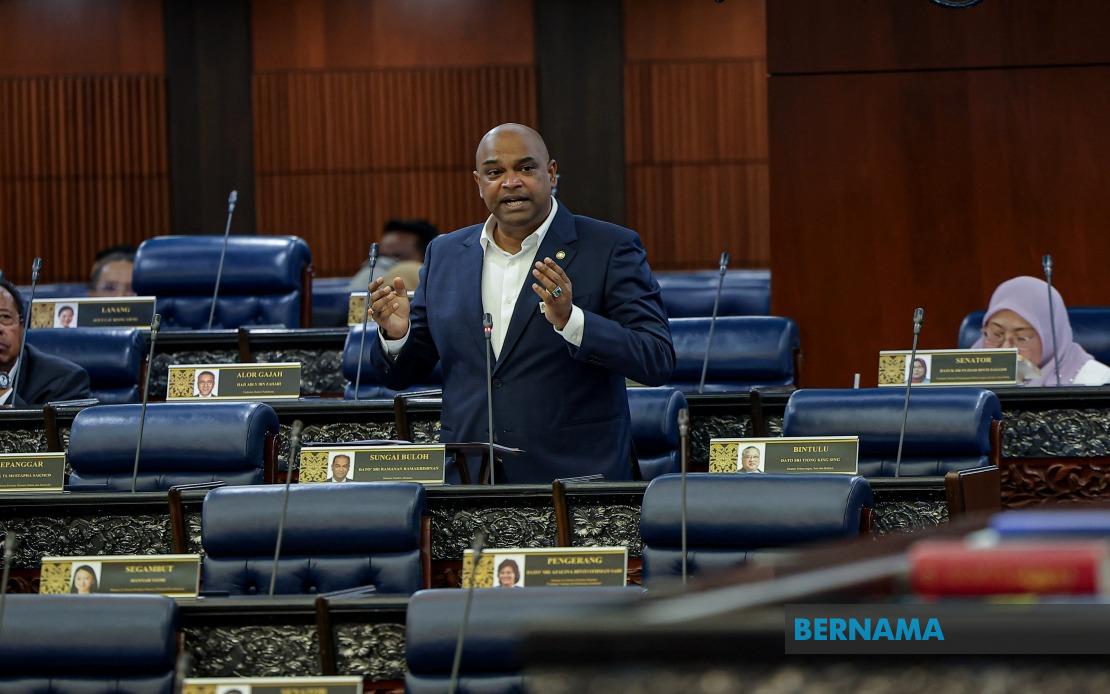
The Social Security Organisation (PERKESO) has demonstrated robust operational performance by maintaining a claims processing compliance rate exceeding 96 per cent throughout the previous financial year, according to statements made by Human Resources Minister Datuk Seri R. Ramanan in Parliament. This achievement underscores the organisation's commitment to delivering timely and reliable benefit administration for Malaysia's workforce and self-employed contributors.
Ramanan highlighted that PERKESO strengthened its service commitments by adopting more demanding Customer Charter standards beginning last year. These revised benchmarks apply comprehensively across the LINDUNG Pekerja, LINDUNG Kendiri and LINDUNG Kasih schemes, establishing clear timelines once applicants have submitted all required documentation. The new framework represents a measurable shift toward greater accountability and predictability in service delivery.
Processing timeframes have been differentiated according to claim complexity. Funeral Benefit and Temporary Disablement Benefit applications must now be resolved within two working days of complete submission, whereas claims involving Permanent Disablement Benefit, Invalidity Pension, Survivor's Pension and Dependant's Benefit allow three working days. These structured timelines create certainty for contributors during vulnerable periods when they depend on rapid benefit disbursement.
The LINDUNG Kerjaya scheme, a more recent addition to PERKESO's portfolio, has achieved particularly impressive outcomes. Under its 2025 Customer Charter, all benefits are promised within two days of receiving a complete application. Remarkably, actual performance under this scheme reached 99.68 per cent compliance—suggesting the organisation has exceeded even its own ambitious targets in this category. Such precision in meeting commitments indicates both systematic process management and adequate resource allocation.
Digitalisation has emerged as the cornerstone of PERKESO's efficiency improvements. The organisation operates the LINDUNG Faedah PERKESO portal, which streamlines how contributors submit claims and track their progress. Complementing this online infrastructure, PERKESO has rolled out the 1Best system throughout its internal operations this year, fundamentally modernising how benefit assessments are conducted and recorded. These technology investments directly translate into faster claim adjudication without requiring additional human processing capacity.
To enhance contributor experience beyond technical systems, PERKESO introduced the PRIHATIN application, providing members with seamless access to information regarding available services, eligibility criteria and claims procedures. This self-service capability reduces friction in the claims journey and empowers contributors to understand their entitlements independently. Additionally, the organisation established the Prihatin Squad, a dedicated advisory unit offering personalised guidance to contributors, beneficiaries and insured persons navigating the claims process—representing a hybrid approach combining technology with human support.
Accident claims receive particular attention through the INSPIRE System, which creates direct digital linkages between hospitals and PERKESO. This integration enables healthcare facilities to transmit incident information immediately rather than relying on postal mail or manual reporting, substantially accelerating the claims pipeline. Emergency situations benefit from further simplified procedures, with critical assessments completed within 24 hours—recognising that accident victims and their families face pressing financial needs during recovery periods.
Fraud prevention remains integral to PERKESO's claims management philosophy. The organisation employs a multi-tiered verification framework where artificial intelligence conducts preliminary screening to identify potentially anomalous claims patterns. However, rather than relying solely on algorithmic assessment, PERKESO retains mandatory manual verification as a secondary safeguard. This dual-layer approach balances the speed advantages of automation against the nuance that human investigators bring when examining borderline or unusual circumstances.
For Malaysian workers and self-employed individuals, these developments carry significant practical implications. The enhanced processing speeds and digital accessibility reduce the vulnerability period when injured or disabled contributors await financial support. The multi-scheme architecture—LINDUNG Pekerja for employees, LINDUNG Kendiri for self-employed persons, and LINDUNG Kasih for voluntary members—ensures that benefit structures accommodate Malaysia's increasingly diverse employment landscape. Small business owners and gig economy participants now receive protection mechanisms previously available mainly to formal sector workers.
Regionally, PERKESO's integration of digital infrastructure with fraud detection represents a model relevant to Southeast Asian social security systems facing similar pressures. As workforce demographics shift toward greater mobility and informal employment, maintaining high processing compliance while controlling costs becomes increasingly challenging. PERKESO's demonstrated capacity to sustain 96-99 per cent compliance rates suggests that structured digitalisation combined with targeted customer service enhancements can achieve these objectives without compromising claim authenticity verification.
The organisation's performance metrics also reflect broader Malaysian policy objectives around social protection adequacy. By consistently meeting or exceeding processing timelines, PERKESO reinforces the value proposition of formal social insurance participation. Workers who contribute regularly can expect rapid benefit delivery when needed, strengthening incentives for participation in the scheme and reducing pressure on other government assistance programmes.
Moving forward, PERKESO's continued refinement of its charter standards and system capabilities will remain critical as Malaysia's employment environment continues evolving. The organisation's track record of achieving exceptional compliance rates while simultaneously expanding scheme coverage and introducing new digital tools suggests institutional capacity to manage growing demand. Contributor feedback mechanisms, through surveys and engagement with the Prihatin Squad, will provide ongoing intelligence for further service improvements.

