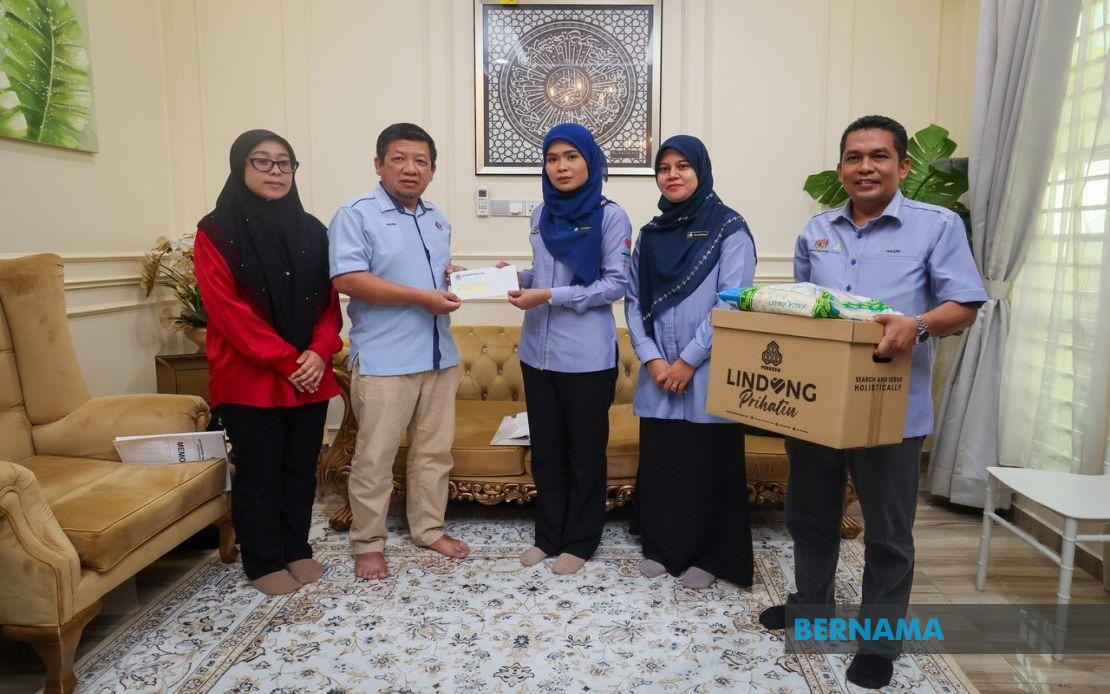
The Social Security Organisation, locally known as PERKESO, has rolled out nearly RM3.5 million in welfare support to workers and their dependants across Kelantan during the first half of 2024, underscoring the vital safety net that Malaysia's mandatory employment injury scheme provides to the workforce. According to Nor Aziemah Ismail, the organisation's deputy director for the state, the distribution reflects ongoing efforts to ensure that contributors facing hardship due to workplace incidents receive timely financial assistance to sustain themselves and their families through difficult periods.
The largest portion of these payouts came through the Temporary Disablement Benefit scheme, which operates under the Employees' Social Security Act 1969. Nearly RM2.388 million was disbursed under this mechanism to workers whose employment-related injuries have temporarily rendered them unable to perform their regular duties. This benefit category represents the core of PERKESO's social protection function, providing income replacement during recovery periods when injured workers cannot generate wages through normal employment. For many contributors in Kelantan's manufacturing, agriculture, and construction sectors, such benefits can mean the difference between financial stability and crisis during rehabilitation.
Beyond temporary disablement support, PERKESO channeled RM73,000 in Dependants' Benefits to the surviving families of workers who died from employment-related accidents during the six-month period. This segment of the social security framework recognises that workplace fatalities extend financial devastation to entire households dependent on the deceased worker's income. The relatively modest figure highlights both the ongoing effectiveness of workplace safety measures in Kelantan and the tragic reality that each claim represents a permanent loss for a family unit.
Funeral assistance constituted another significant component of the benefit distribution, with nearly RM1 million allocated to help families manage the immediate expenses associated with workplace-related deaths. Each eligible family receives a standardised payment of RM3,000, with PERKESO prioritising approval within 24 hours when complete documentation is submitted. This accelerated processing reflects organisational recognition that families facing a sudden loss require immediate financial relief to arrange dignified funeral rites without delay. The swift turnaround demonstrates how bureaucratic efficiency can genuinely serve vulnerable populations during their most urgent moments of need.
A more recently introduced protection mechanism, the 24-Hour Employment Injury Scheme, has begun establishing its footprint in Kelantan's social security landscape. Unlike traditional schemes that typically cover only work-related incidents occurring during scheduled employment, this broader framework extends protection to contributors even when accidents happen outside normal working hours or workplace premises. The scheme acknowledges the reality that modern employment often involves unpredictable circumstances—commuting arrangements, personal errands, or informal work-related activities—that should logically remain within the scope of occupational protection yet historically fell into coverage gaps.
During the review period, PERKESO's Kelantan office approved nine claims under this expanded scheme, disbursing RM1,300 in sick leave benefits to eligible recipients. The approved cases paint a practical picture of the scheme's breadth: one accident occurred during a motorcycle convoy event, while another involved a worker transporting a child to tuition classes—circumstances that would previously have fallen outside employment injury protection yet reasonably relate to work-life balance pressures affecting the modern Malaysian workforce. These decisions represent a philosophical shift toward recognising that worker protection extends beyond the factory floor or office cubicle.
The Kelantan distribution figures form part of a broader national pattern of PERKESO operations, though the state's experience provides particular relevance for the region. As a state with significant informal employment, agricultural work, and small-scale manufacturing enterprises, Kelantan's benefit distribution reflects how Malaysia's mandatory social security system functions across diverse economic settings. The organisation's willingness to process funeral claims within 24 hours and to approve claims under modern schemes demonstrates institutional adaptation to contemporary worker needs and family circumstances.
These benefit flows also carry macroeconomic significance for Kelantan households and the broader state economy. When workers receive timely disablement payments or families obtain funeral assistance, these funds circulate through local economies, supporting vendors, service providers, and community members. During periods when workers face injury-related income loss, PERKESO benefits help sustain domestic consumption and prevent financial distress from cascading through family networks and into broader credit markets. From a human development perspective, the safety net function prevents workplace injuries from permanently impoverishing worker households or forcing children out of school due to parental incapacity.
The organisation's operational performance in Kelantan also reflects Malaysia's broader commitment to mandatory workplace protections, distinguishing the country from neighbouring jurisdictions with weaker or more fragmented social security systems. While gaps and coverage limitations certainly exist within the current framework, the institutional capacity to distribute millions of ringgit to affected workers and dependants within a six-month cycle demonstrates meaningful social protection infrastructure. For Malaysian workers, particularly those in hazardous occupations, this administrative machinery represents crucial insurance against the financial consequences of workplace misfortune.
Looking forward, the expansion of schemes like the 24-Hour Employment Injury mechanism suggests that PERKESO continues evolving to address changing employment patterns and worker vulnerabilities. As the Malaysian economy increasingly incorporates flexible work arrangements, gig economy participation, and non-traditional employment relationships, social security frameworks face pressure to adapt their coverage and delivery models. Kelantan's experience with nine approved claims under the newer scheme, though modest in absolute terms, indicates that workers and their representatives are increasingly aware of expanded protections and willing to pursue claims under these mechanisms.
The near-RM3.5 million distribution to Kelantan during just six months also underscores the ongoing prevalence of workplace injuries across Malaysian industries despite safety improvements. Each claim processed represents an individual's health crisis or a family's bereavement, reminding policymakers and employers that occupational safety remains an urgent priority. While PERKESO's benefit payments provide crucial financial relief, prevention through enhanced workplace safety practices ultimately offers superior protection compared to compensation mechanisms that address injuries after they occur.
For Malaysian readers, particularly those in Kelantan and other states with similar economic profiles, these benefit statistics represent tangible evidence that their mandatory social security contributions fund functioning safety nets. The transparency with which PERKESO reports distribution figures also provides accountability assurance—workers can verify that their contributions translate into actual support for injured colleagues and bereaved families rather than disappearing into bureaucratic overhead. This institutional credibility remains essential for maintaining public confidence in mandatory social security systems.

