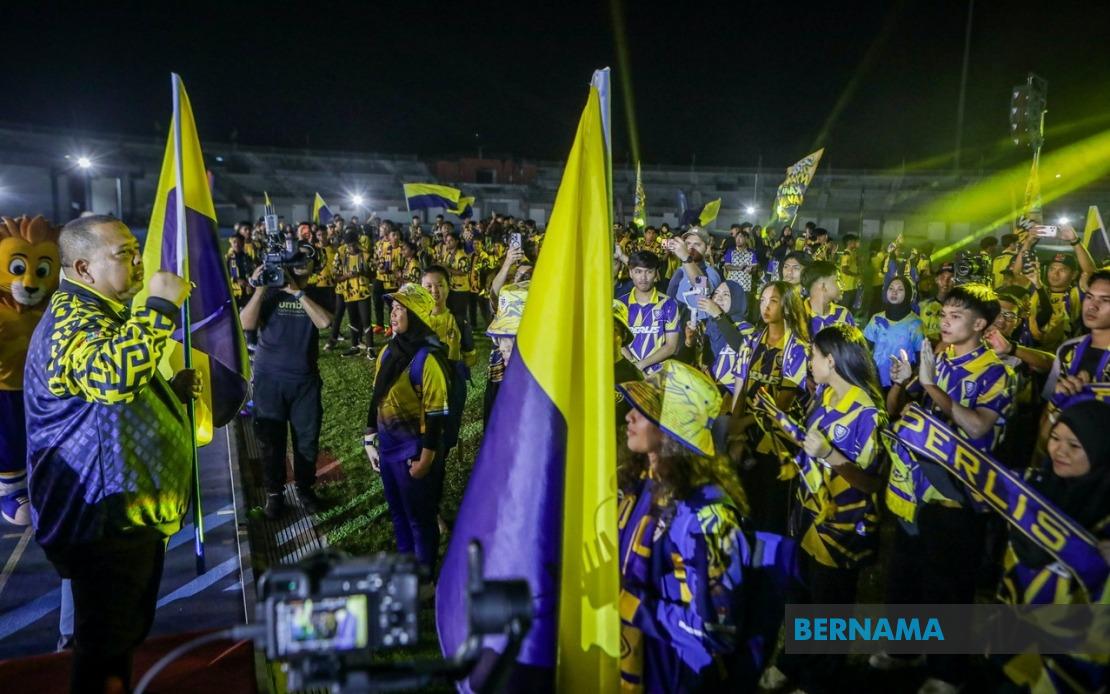
Perlis has marked a watershed moment in its sporting history by delivering its finest performance at SUKMA 2026, the biennial national multisport championships hosted this year by Selangor. The northern state's contingent clinched 17 gold medals—surpassing all previous efforts—alongside seven silver and 18 bronze medals for a combined total of 42, signalling a significant upturn in the state's competitive capacity across multiple disciplines.
Menteri Besar Abu Bakar Hamzah attributed the breakthrough to systematic investment and collaboration spanning athletes, coaching staff, sporting bodies, and the State Sports Council. Speaking at an Exco meeting in Kangar on August 26, he framed the result as validation of Perlis's long-term sports development strategy, one that has prioritised institutional strengthening alongside individual athlete excellence. The accomplishment underscores how smaller states can compete effectively when governance, resources, and expertise align behind a coherent vision.
Among the standout performances, Perlis athletes rewrote the SUKMA record book in the shot put event, demonstrating technical mastery at the national level. Equally significant was the state's weightlifting contingent's sweep of the overall championship title in their discipline—a feat requiring depth of talent and consistency across weight categories. These victories signal strength in technical athletics rather than reliance on a handful of standout performers, suggesting institutional resilience.
For a state with Perlis's geographical and demographic constraints, such achievements carry amplified meaning. With a population of roughly 260,000, the state punches notably above its weight in national sporting competition. The medal haul reflects deliberate choices about where to concentrate coaching expertise and facility development, and suggests that targeted programmes in specific sports can yield disproportionate returns even in resource-constrained environments—a lesson potentially valuable for other smaller Malaysian states.
The state government's commitment extends beyond one games cycle. Abu Bakar signalled continued prioritisation of talent identification and development pipelines, high-performance training regimes, coaching quality, sports science support, and athlete welfare. These foundational elements take years to establish and require sustained budgeting amid competing demands. The fact that a state government is publicly committing to such long-term investment signals maturity in approaching sports as a development asset rather than an occasional showcase.
Perlis's performance also reflects shifts in Malaysian sports architecture over recent years. The expansion of SUKMA participation, improved coordination between state agencies, and better athlete support systems have democratised elite sporting achievement beyond traditionally dominant states. When a northern state can field competitive teams across multiple disciplines, it reflects broader system improvements benefiting the entire federation.
The state is currently finalising incentive packages for medal-winning athletes, with award ceremonies planned after the conclusion of Para SUKMA Selangor 2026. Recognition and reward systems reinforce the message that sporting excellence matters at the state level, and help secure athlete retention and motivation for future competitions. Such gesture politics, when backed by substantive support, can accelerate programme growth.
Perlis's result comes amid broader conversations about Olympic and major competition preparation across Southeast Asia. As the region's economies develop and sports infrastructure improves, competitiveness across disciplines has intensified. Perlis's breakthrough suggests that systematic approaches, rather than raw spending alone, can narrow performance gaps—a principle relevant to both established and emerging sporting powers in the region.
The state faces the challenge of sustaining momentum. First-time peaks often prove difficult to maintain, as athletes age out and psychological pressure intensifies. Consolidation will require Perlis to translate one successful cycle into institutional practices that embed excellence across generations of competitors. How the state manages this transition over the next two years, leading into SUKMA 2028, will reveal whether this represents genuine transformation or a cyclical high point.
For Malaysian sports broadly, Perlis's success underscores that geographic peripherality and resource constraints need not limit achievement when strategy, governance, and persistence combine effectively. The state's model of targeted investment in specific disciplines and sustained athlete support offers a template other states might examine. As SUKMA continues to evolve and competition intensifies, performances like Perlis's demonstrate that the games remain genuinely competitive and that sporting surprise—the capacity of smaller players to surge ahead—retains value in motivating national engagement with grassroots talent development.

