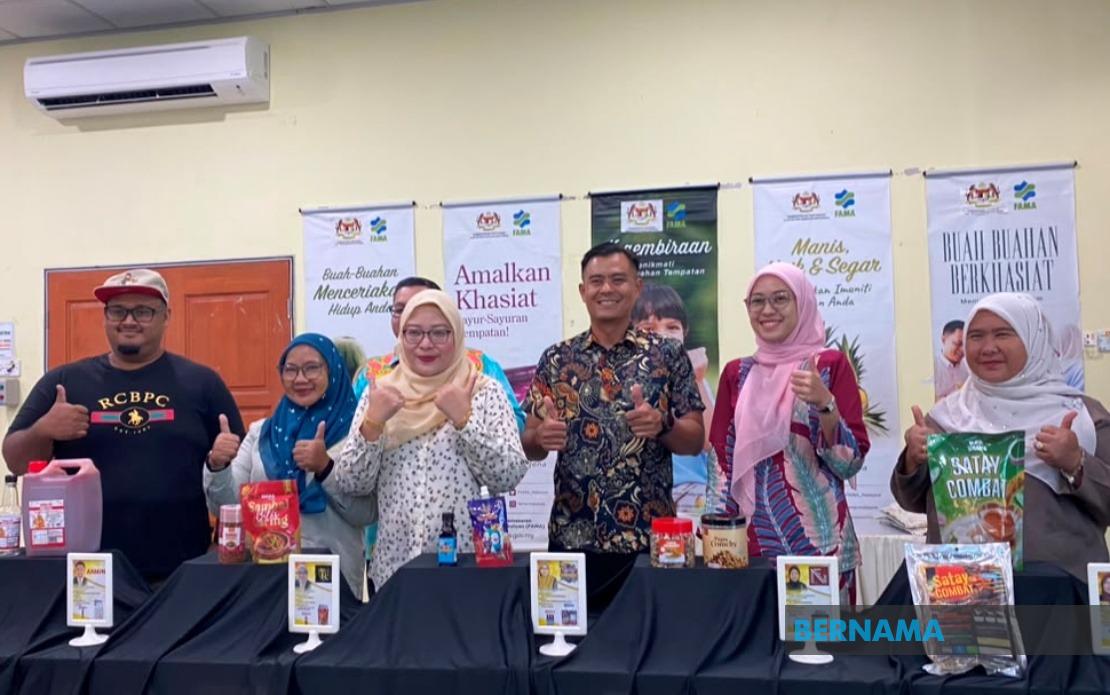
The Perlis branch of the Federal Agricultural Marketing Authority (FAMA) has rolled out a substantial support package for local agro-food entrepreneurs, distributing RM510,500 in grants across nine businesses as part of efforts to strengthen the sector's competitive standing and expand commercial opportunities within the state. The distribution reflects FAMA's broader strategy to build a more resilient and dynamic agro-food industry in Malaysia's northernmost peninsular state, where agricultural heritage remains economically significant despite broader economic diversification.
According to FAMA Perlis director Mohd Anzara Azizan, the funding allocations were structured across four distinct grant categories designed to address different aspects of business development. The largest component, RM392,000, was dedicated to Agro-Tourism Grant support, recognizing the growing potential of farm-based tourism experiences as a complementary revenue stream for agricultural producers. The remaining allocation comprised RM83,500 for Product Image and Packaging Improvement Grant schemes, RM25,000 for the KSHOPPE Outlet Improvement Grant, and RM10,000 in Marketing Equipment Support Grant funding.
This tiered approach reflects recognition that emerging food and agricultural enterprises require multifaceted support beyond simple capital injections. The Product Image and Packaging Improvement Grant, for instance, operates under the broader IMAT Market Development and Product Matching Project framework, specifically targeting small and medium enterprises in their early to intermediate developmental stages. By focusing on presentation and market positioning rather than solely production capacity, FAMA addresses a critical gap where capable producers often struggle due to inadequate branding or packaging that fails to communicate product quality to consumers.
The agro-tourism component of the grant program proves particularly strategic for Perlis, a state with significant agricultural production capabilities but limited tourism infrastructure compared to other Malaysian regions. Agro-tourism ventures create diversified income streams while simultaneously promoting local products and agricultural practices to visiting consumers, generating awareness that can translate into ongoing commercial relationships. This approach helps mitigate the vulnerability that commodity-dependent agricultural communities face from price fluctuations and market saturation.
Performance metrics suggest these interventions are generating meaningful impact. Data presented by Mohd Anzara indicated that 319 IMAT entrepreneurs operating across Perlis achieved cumulative sales of RM4.8 million as of the grant distribution date, representing a 30 percent year-on-year increase. While aggregate figures require contextual interpretation regarding baseline conditions and inflation effects, the trajectory indicates that FAMA's combined support mechanisms—comprising both financial grants and complementary advisory services—are achieving their intended outcomes of enhancing market competitiveness and expanding revenue bases for participating enterprises.
Beyond direct financial disbursement, FAMA provides ongoing operational oversight that extends to market monitoring and pricing guidance. This supervisory function serves quality assurance purposes while ensuring entrepreneurs maintain competitive pricing strategies that balance profitability with market penetration objectives. For a relatively nascent sector in Perlis, such external guidance provides valuable benchmarking data that entrepreneurs might otherwise lack access to, particularly in evaluating pricing elasticity and customer segments.
The portfolio of nearly nine distinct grant and support service categories available to IMAT entrepreneurs suggests FAMA recognizes that sustainable business development requires customized interventions rather than standardized solutions. Different enterprises face distinct constraints—some requiring physical infrastructure investment, others needing technical capacity building or market access facilitation. By offering multiple pathways, FAMA increases the probability that entrepreneurs can identify solutions aligned with their specific circumstances and growth aspirations.
For Malaysian policymakers and regional observers, the Perlis initiative illustrates an important trend in agricultural development strategy. Rather than attempting to revitalize traditional commodity agriculture through production-focused subsidies, contemporary approaches emphasize value addition, direct-to-consumer marketing, and experience-based revenue streams. This reflects broader global agricultural trends where developed economies increasingly compete on differentiation and brand positioning rather than volume production.
The emphasis on packaging and product image improvements acknowledges that market access increasingly depends on consumer perception and aesthetic presentation, particularly as Malaysian consumers' purchasing behaviors become more influenced by social media and digital commerce platforms. An agro-food product with superior packaging and cohesive branding narrative enjoys exponentially greater prospects in competitive retail environments than functionally identical products with generic presentation.
For Perlis specifically, success in developing a robust agro-food entrepreneurship ecosystem carries strategic implications beyond immediate economic returns. A thriving local food sector strengthens rural employment prospects, potentially moderating urban migration pressures that plague many Malaysian states. Additionally, establishing distinctive local food brands creates cultural identity anchors that support broader tourism development objectives and enhance regional reputation.
The relatively modest grant sizes—averaging approximately RM57,000 per entrepreneur—suggest these funds function as catalytic capital requiring complementary private investment and sweat equity from beneficiaries rather than comprehensive financing solutions. This structure encourages genuine commitment from entrepreneurs while ensuring public resources achieve maximum leverage effects through private sector mobilization.
Moving forward, the critical metric will involve tracking whether grant recipients achieve sustainable business expansion beyond the immediate post-grant period, whether they successfully retain new market share gains, and whether initial performance improvements compound into systemic competitive advantages. FAMA's ongoing monitoring and support mechanisms position the authority to gather such longitudinal data, potentially enabling evidence-based refinement of future intervention approaches.
The Perlis FAMA initiative ultimately represents incremental but significant progress in Malaysia's agricultural modernization agenda, demonstrating how strategic targeted support can catalyze entrepreneurial activity within traditional sectors. As the state continues developing its agro-food capabilities, sustained investment in both financial and advisory support will likely prove essential to maintaining momentum and ensuring that emerging businesses achieve the scale and sophistication required for long-term competitive viability in increasingly demanding domestic and regional markets.

