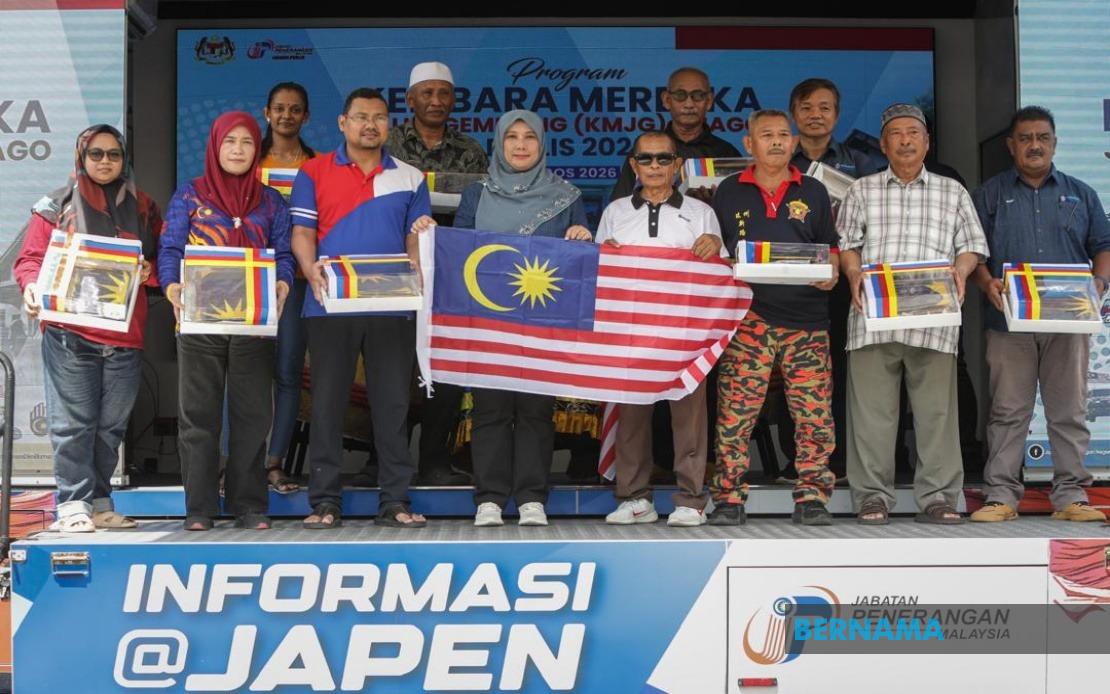
The Perlis Information Department (JAPEN) is ramping up efforts to mobilise communities across the state to display the Malaysian flag more prominently in homes, businesses, and public spaces. The push forms part of a broader national initiative launched by Prime Minister Datuk Seri Anwar Ibrahim on July 19 in Perak, which seeks to infuse the 2026 National Day and Malaysia Day (HKHM 2026) festivities with deeper patriotic sentiment. The campaign, themed 'Malaysia MADANI: Kesejahteraan Dinikmati' (Malaysia MADANI: Shared Prosperity), reflects the government's vision of building national unity around shared economic and social progress.
State Information Director Aidatul Shima Che Hassan announced the escalated campaign during the launch of the Kembara Merdeka Jalur Gemilang (KMJG) X JAPEN Arena Penggerak Komuniti (JAGO) 2026 programme in Kampung Pauh Setia. She emphasised that Perlis, as the first state to formally introduce the KMJG programme this year, is taking a lead role in the national patriotic drive. The initiative represents a strategic shift in how authorities are approaching nation-building—moving beyond top-down directives to engage grassroots communities as active participants in fostering national pride.
Central to the implementation strategy is the mobilisation of all 45 MADANI Communities across Perlis. These community organisations serve as crucial intermediaries between government messaging and ordinary citizens, enabling the department to organise nation-building programmes at the neighbourhood level. By channelling efforts through these existing community networks, JAPEN hopes to create sustained engagement rather than ephemeral publicity stunts. This decentralised approach reflects recognition that patriotic sentiment develops through repeated community interaction and collective action rather than isolated government announcements.
The campaign communication strategy leverages multiple platforms to ensure saturation coverage across the state. Besides physical flag installations throughout Bangunan Tun Haji Abdul Razak in Kangar, the department is using PERLISfm radio and social media channels to reach diverse demographic groups. This multi-channel approach acknowledges that modern patriotism must be reinforced through channels where Perlis residents actually spend their attention—whether traditional media, digital platforms, or public spaces. The emphasis on proper flag maintenance, including replacing worn or tattered flags, signals that the campaign views flag display as an expression of respect rather than mere decoration.
Aidatul Shima's public call for citizens to ensure the Jalur Gemilang flies on homes, vehicles, government buildings, and private sector premises reflects an understanding that patriotism becomes tangible when visible in everyday spaces. The plea to display flags properly carries implicit meaning about standards and dignity—a flag left to fade and tear sends a different message than one freshly installed and maintained. This nuanced messaging distinguishes the campaign from purely symbolic exercises, framing flag display as an ongoing commitment to national pride rather than a one-time gesture.
The governmental machinery supporting the campaign is substantial, underscoring the authorities' seriousness about the initiative. The Perlis Federal Development Office, Perlis Broadcasting Department, Malaysian Communications and Multimedia Commission (MCMC), Pos Malaysia, and the Perlis Civil Defence Force all participate in convoy activities promoting the programme. The Royal Malaysia Police (PDRM) Perlis contingent provides logistical support. This inter-agency coordination demonstrates how patriotic campaigns function as administrative exercises binding multiple government bodies around a shared national objective.
For Malaysian readers, particularly those in Perlis and neighbouring states, the campaign carries practical implications. Residents considering flag display now benefit from increased awareness and community encouragement. Businesses may find enhanced justification for patriotic decorations that simultaneously serve marketing purposes. Schools and civic organisations can leverage the formal campaign to integrate flag-hoisting and patriotic education into their programmes. The campaign essentially creates social infrastructure supporting patriotic expression.
The timing of the campaign—more than eighteen months before the 2026 celebrations—suggests authorities are planning an extended mobilisation period rather than a rushed final push. This extended timeline allows communities to absorb messaging, participate in multiple activities, and develop genuine emotional investment in the patriotic narrative. Previous experience with national campaigns in Malaysia demonstrates that sustained engagement produces more authentic participation than compressed timeframes.
The HKHM 2026 celebrations themselves represent a moment when Malaysia's diverse population collectively commemorates shared national identity. By beginning mobilisation now, JAPEN and allied agencies are betting that communities given adequate time and platforms will organise more vibrant, meaningful celebrations. The campaign implicitly trusts that Malaysians, given proper channels and encouragement, naturally wish to express patriotic sentiment. This stands in contrast to cynical interpretations suggesting forced flag displays merely constitute symbolic theatre.
Perlis's pioneering role as the first state to launch the KMJG programme this year positions the state as a testing ground for national patriotic initiatives. Success metrics—whether measured in flag displays, community participation, or media engagement—will likely inform how other states approach similar campaigns. Malaysian federalism increasingly relies on states showcasing model programmes that the national government can then encourage other states to emulate. Perlis's performance thus carries implications extending beyond the state's borders.
The campaign's emphasis on holistic community participation aligns with contemporary Malaysian governance trends emphasising civic engagement and bottom-up nation-building. Rather than patriotism imposed through state machinery alone, the initiative seeks to create conditions where patriotic expression emerges from community initiative. This philosophical shift reflects broader recognition that sustainable national unity depends on citizens internalising patriotic values rather than merely complying with them.
For Southeast Asian observers, the Perlis campaign illustrates how Malaysia approaches patriotic mobilisation in a diverse, federal context. Unlike more centralised neighbours, Malaysian patriotic campaigns operate through networks of communities and states, each adapting national themes to local contexts. This distributed model allows flexibility but requires coordination and consistent messaging from federal authorities. The Prime Minister's initial July launch in Perak and subsequent state-level implementation across Perlis exemplifies this cascading approach to national consciousness-building.

