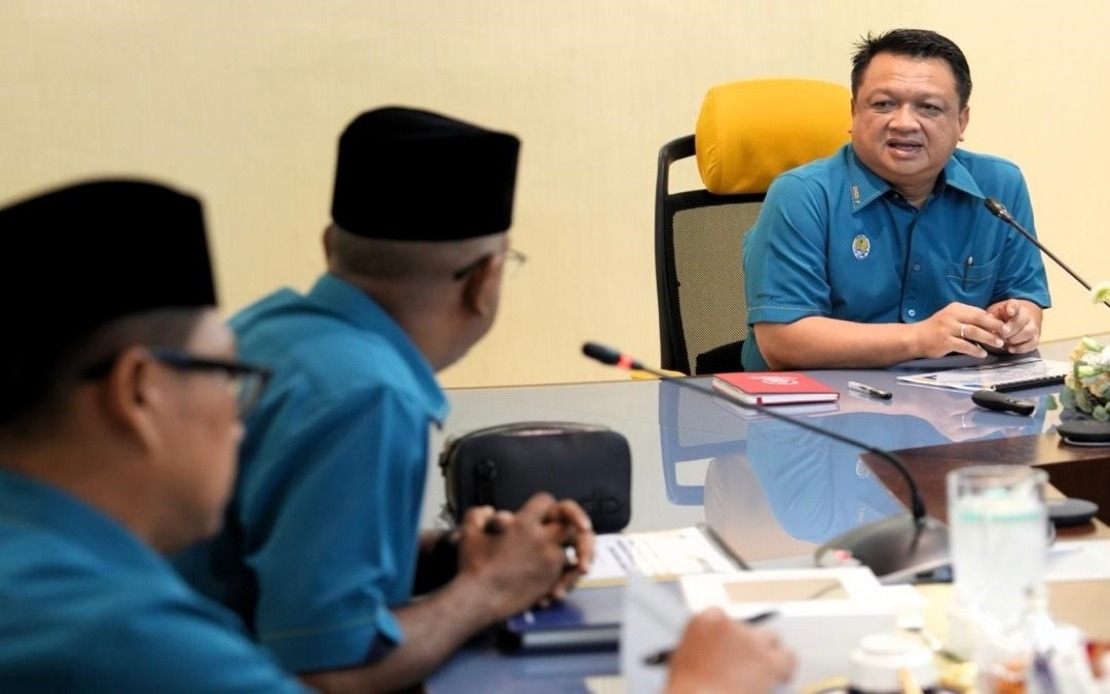
The Raja Muda of Perlis, Tuanku Syed Faizuddin Putra Jamalullail, has articulated an ambitious vision positioning the northern state as a pilot laboratory for Malaysia's emerging sustainability policies. His proposal stems from a conviction that Perlis's manageable geographic scale and population base offer distinct advantages in testing and refining climate-resilient development models that could subsequently be scaled across the nation. The concept envisions transforming Perlis into a 'Green Smart State' through systematic deployment of renewable energy infrastructure and advanced resource management systems, thereby demonstrating that even smaller Malaysian states can contribute meaningfully to national and global climate commitments.
The Raja Muda articulated this proposal during a formal audience with representatives from the Kangar Municipal Council, underscoring the importance of leveraging renewable energy sources—particularly solar and biomass technologies—as foundational pillars of the state's energy transition strategy. His emphasis on achieving zero-carbon status reflects growing recognition among Malaysia's institutional leadership that climate action requires concrete, measurable targets rather than aspirational rhetoric. Should Perlis successfully implement this transition, the state would effectively showcase Malaysia's capacity to align regional development with international climate frameworks, thereby enhancing the nation's credibility in global sustainability discourse.
The practical roadmap for this transformation centres on the Green City Action Plan, a comprehensive strategic document developed through collaborative effort involving the Ministry of Economy, the IMT-GT Joint Business Council, ICLEI—Local Governments for Sustainability, and the Asian Development Bank. This multi-stakeholder approach reflects contemporary best practices in urban sustainability governance, where technical expertise, financial resources, and institutional coordination converge to translate policy ambitions into operational reality. The GCAP received formal approval from the Kangar Municipal Council in February, establishing the document as the authoritative reference framework for implementing green city initiatives throughout Perlis.
Central to the GCAP implementation are five priority projects specifically engineered to catalyse Perlis's structural transformation. The first initiative involves systematic installation of solar photovoltaic systems across government facilities, public institutions, and private sector buildings, thereby creating a distributed renewable generation network that reduces dependence on conventional grid power. This approach simultaneously addresses electricity cost pressures confronting both public budgets and commercial enterprises across Southeast Asia, where rising energy prices constitute a significant operational burden. The solar deployment strategy acknowledges that Perlis's equatorial climate provides consistent solar insolation suitable for year-round photovoltaic generation.
Transportation represents another critical intervention area within the GCAP framework. The Low Carbon Transport Plan directly addresses urban mobility patterns, which constitute substantial contributors to greenhouse gas emissions across Malaysian cities. Complementary initiatives focusing on Micro-Mobility Zones and Non-Motorised Transport facilities represent a paradigm shift toward pedestrian-friendly urban design and last-mile connectivity solutions. These interventions address not merely environmental objectives but also public health considerations, as reduced vehicular traffic decreases air pollution exposure whilst promoting physical activity through walking and cycling. For Malaysian cities grappling with congestion and air quality challenges, Perlis's transport initiatives offer a testable alternative development model.
The waste management dimension of the GCAP introduces an 80-tonne-per-day Material Recovery Facility designed to substantially enhance Perlis's recycling capacity and divert waste from landfill disposal. This infrastructure investment addresses Malaysia's mounting waste management pressures, wherein municipal waste generation continues expanding faster than disposal infrastructure can accommodate. The MRF represents technological investment in circular economy principles, transforming waste streams into recoverable resource inputs rather than treating waste as terminal byproducts. Enhanced recycling rates simultaneously reduce environmental contamination whilst creating potential economic value through recovered material sales.
Water security receives dedicated attention through comprehensive rainwater harvesting systems proposed for deployment throughout the state. This initiative demonstrates particular relevance for Malaysia's tropical climate context, where intense seasonal precipitation patterns create both flooding risks and potential water supply augmentation opportunities. Rainwater harvesting infrastructure transforms precipitation from a hazard requiring management into a valuable resource, thereby enhancing supply diversity whilst reducing pressure on conventional groundwater and surface water sources. The approach particularly benefits rural and suburban areas where conventional water supply infrastructure remains incomplete or inefficient.
Disaster resilience forms an integral component of the sustainability framework, reflecting recognition that climate change intensifies meteorological hazards affecting coastal and low-lying areas. The proposed Perlis State Disaster Management Plan and strengthening of the Perlis Integrated Command Centre acknowledge that sustainable development requires simultaneous attention to both mitigation and adaptation imperatives. Enhanced disaster preparedness protects accumulated development gains against climate-driven hazards whilst ensuring continuity of essential services during extreme weather events. This integrated approach recognises that long-term sustainability cannot be achieved through environmental management alone but requires institutional capacity for crisis response.
The GCAP's explicit alignment with Malaysia's national sustainable development goals and the country's commitment to greenhouse gas emissions reduction demonstrates how subnational initiatives connect with federal policy frameworks. Perlis's transformation becomes not an isolated provincial experiment but rather a tangible demonstration of how Malaysia operationalises its international climate commitments at municipal and state levels. This nested governance approach—wherein local action implements national policy—provides mechanisms for accountability and progress tracking across governance tiers. For other Malaysian states and municipalities, Perlis's systematic implementation of the GCAP offers benchmarking opportunities and transferable lessons.
The multi-sectoral composition of the GCAP—encompassing energy, transport, waste, water, and disaster management—reflects contemporary understanding that sustainability requires integrated intervention across multiple systems rather than isolated sectoral initiatives. This holistic approach acknowledges that environmental objectives interrelate with economic development and social wellbeing considerations. Kangar Municipal Council's emphasis on balancing economic, social, and environmental dimensions positions sustainability not as constraint on development but as framework for inclusive, durable prosperity. For Malaysian policymakers considering sustainability transitions, this integrated model offers guidance on avoiding siloed approaches that frequently produce suboptimal outcomes.
The involvement of international institutions—particularly the Asian Development Bank and ICLEI—localizes global sustainability expertise within Perlis's institutional context whilst providing technical capacity that might otherwise exceed municipal resources. This knowledge transfer mechanism enables smaller Malaysian states to access world-class technical assistance in green infrastructure planning and implementation. Furthermore, international partnership arrangements frequently unlock development financing mechanisms unavailable through domestic channels alone, thereby expanding the resource envelope available for sustainability investments. Perlis's experience consequently illustrates how strategic international engagement enables accelerated sustainability transitions in resource-constrained contexts.
Looking forward, successful GCAP implementation would position Perlis as a replicable model for sustainability governance across Southeast Asia's smaller states and municipalities. The measurable outcomes—renewable energy generation volumes, recycling rates, transport modal shifts, disaster response improvements—would provide empirical foundation for demonstrating that low-carbon development is technically feasible and economically beneficial. For Malaysian investors and private sector actors, Perlis's trajectory offers early access to emerging green industries and technologies. The state's transformation from sustainability testing ground into operational reality would validate investment confidence in Southeast Asia's broader sustainability transition, potentially unlocking substantial private capital flows toward green infrastructure development across the region.

