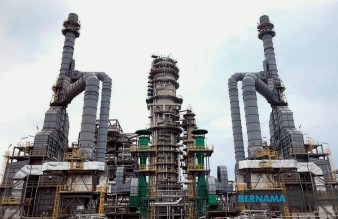
Malaysia's plan to establish a petroleum reserve in response to global supply disruptions and geopolitical tensions requires far more strategic thinking than simply stockpiling barrels, according to investment sector analysis. The proposed initiative, which Prime Minister Datuk Seri Anwar Ibrahim has proposed studying, should serve as one pillar within a much larger framework designed to fortify the nation's economic resilience across interconnected sectors that are equally vulnerable to international shocks.
Mohd Sedek Jantan, director of investment strategy and country economist at IPPFA Sdn Bhd, emphasises that the modern threat landscape extends well beyond energy markets. Economic disruptions increasingly emanate from multiple points of vulnerability simultaneously, meaning that focusing exclusively on petroleum security leaves Malaysia exposed elsewhere. Food security, access to critical minerals, semiconductor supply chains and digital infrastructure represent equally consequential dependencies that merit integrated planning and protective measures.
The fundamental premise underlying this approach rests on a critical distinction between stockpiling and genuine resilience. Merely accumulating petroleum reserves without embedding them within broader risk management systems creates a false sense of security whilst leaving other economic arteries unprotected. This lesson has emerged from global experience with commodity shocks, supply chain breakdowns and geopolitical contestation over strategic resources. The measure of success should not be volumetric—how many barrels sit in storage—but rather systemic: whether Malaysia can effectively absorb and recover from multiple simultaneous disruptions to its economic functioning.
Food security deserves particular attention in Malaysia's planning framework, given the country's substantial reliance on imports for essential staple products. Any significant disruption to global food supplies carries immediate consequences for domestic inflation, household purchasing power and ultimately social stability. These impacts ripple through the entire economy far more visibly than energy price fluctuations, as food represents a non-negotiable household expense. The vulnerability compounds during periods of geopolitical tension when suppliers prioritise domestic demand or when logistics corridors experience disruption. Unlike petroleum, which has substitutes and can be rationed, food security strikes at the foundation of social cohesion.
Energy supply continuity remains undeniably critical to manufacturing competitiveness, transportation networks and industrial production across Malaysia's economy. Reliable and affordable electricity and fuel enable the supply chains and manufacturing ecosystems that generate employment and export revenue. However, this importance does not justify treating energy security in isolation from other strategic dependencies. The economist's argument essentially contends that policymakers must resist the temptation to solve each crisis as it emerges, instead developing systematic frameworks that address multiple vulnerabilities simultaneously.
The geopolitical environment reinforces this perspective. Great power competition increasingly weaponises control over strategic commodities and supply chains. Critical minerals essential for battery production, semiconductors critical for computing and artificial intelligence, agricultural products during regional conflicts—these represent contested resources where access cannot be guaranteed through market mechanisms alone. Malaysia's geographic position and economic openness mean it remains exposed to disruptions originating in distant regions. A petroleum reserve provides insurance against one category of shock whilst leaving the nation vulnerable to equally plausible scenarios involving food availability or semiconductor sourcing.
Implementing such an integrated strategy requires three foundational elements, according to the economist's framework. First, the government must articulate explicit purposes for each reserve or resilience mechanism, distinguishing between genuine supply security and short-term price manipulation. A strategic reserve exists to shield the economy during authentic supply emergencies, not to influence commodity prices or support particular industries. This clarity prevents mission creep and ensures accountability in resource allocation.
Second, Malaysia requires flexible governance architecture capable of evolving as threats emerge. Today's critical vulnerability may not constitute tomorrow's primary concern. The framework must incorporate mechanisms for identifying emerging risks, assessing their potential economic impact and mobilising responses proportionate to genuine threats. This adaptability proves more valuable than perfectly optimised solutions to yesterday's problems.
Third, any reserve system must satisfy commercial and fiscal sustainability criteria. Decisions regarding reserve size, financing mechanisms, storage facility requirements and governance structures should reflect rigorous cost-benefit analysis rather than political preferences or ideological commitments. Public resources directed toward strategic reserves represent opportunity costs—investments not made elsewhere in the economy. These allocations demand justification based on measurable economic benefits.
International examples offer instructive lessons for Malaysian policymakers. Japan has developed sophisticated approaches to economic security by integrating strategic reserves with diversified supplier relationships, resilient logistics networks and strong coordination between government agencies and private enterprises. This multi-layered approach provides more effective protection than any single reserve could achieve. Japan recognises that security emerges from redundancy, diversification and relationships rather than from sheer accumulation of stockpiles.
The timing of this discussion proves fortuitous, as Malaysia can design comprehensive frameworks from inception rather than retrofitting protections onto existing piecemeal approaches. Energy security unquestionably deserves elevated priority within long-term economic strategy, but this elevation should drive integrated thinking rather than narrow sectoral focus. The next economic crisis may originate from food systems, critical minerals access, semiconductor shortages or digital infrastructure vulnerabilities rather than petroleum supplies. Malaysia should therefore construct economic security strategies that systematically strengthen resilience across all strategically significant sectors.
Ultimately, the economist's intervention suggests that policymakers should resist viewing the petroleum reserve proposal in isolation. Rather, this initiative should catalyse broader strategic planning that addresses the full spectrum of economic vulnerabilities facing a modern, import-dependent nation. Success should be measured not by the barrels stored but by whether Malaysia emerges more capable of absorbing and recovering from the multifaceted shocks characterising the contemporary international economic environment.

