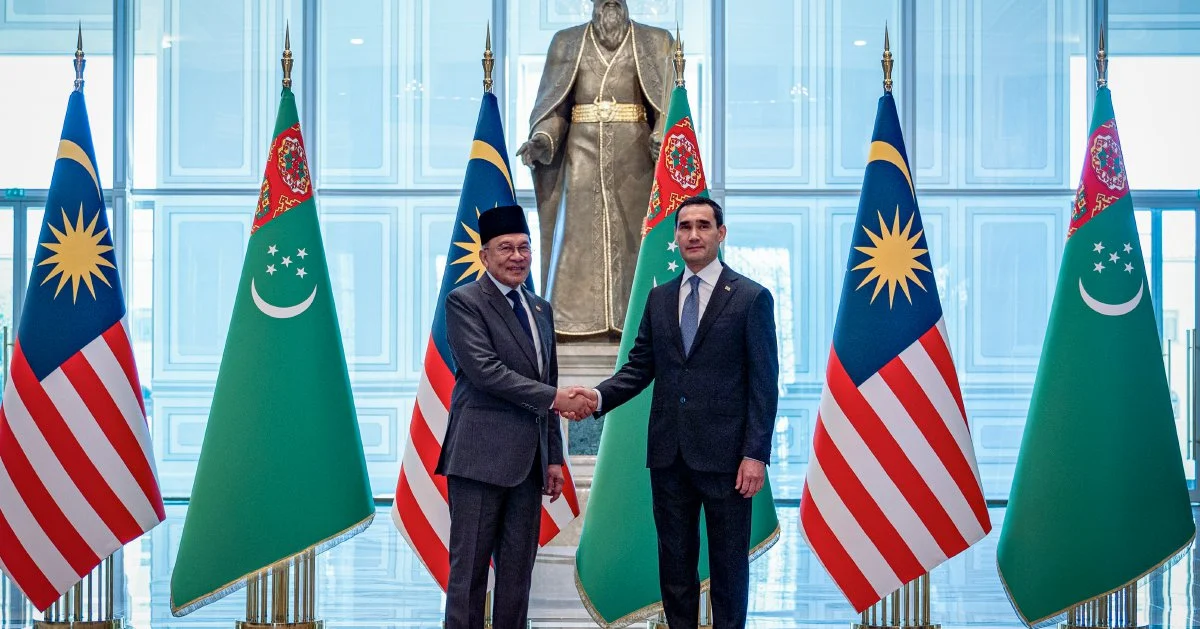
Petroliam Nasional Bhd's strategic operations in Turkmenistan have become instrumental in revitalising the broader relationship between Malaysia and the resource-rich Central Asian republic, particularly following Prime Minister Datuk Seri Anwar Ibrahim's recent official visit to the country. The national oil and gas champion's long-term commitment in Turkmenistan extends beyond commercial interests, functioning as a tangible expression of Malaysia's intent to cultivate deeper ties across the Eurasian region and position itself as a reliable partner in global energy markets.
Turkmenistan's hydrocarbon wealth has made it an increasingly attractive destination for international energy companies, and Petronas's established operations there provide Malaysia with a strategic advantage in competing for larger infrastructure and development projects. The nation sits atop vast natural gas reserves, ranking among the world's top producers, and controlling critical transportation corridors that influence energy flows to multiple regions. For Petronas, this presence translates into direct access to upstream opportunities and the chance to participate in downstream developments that could reshape regional energy dynamics for decades.
Prime Minister Anwar's visit represented a watershed moment in bilateral engagement, signalling the Malaysian government's commitment to elevating relations beyond ceremonial exchanges into substantive partnerships. His presence in Ashgabat underscored recognition that Central Asia, historically viewed through the lens of great power competition, offers genuine economic opportunities for middle-income nations with the expertise and capital to invest. Petronas's expanded footprint provides a foundation upon which diplomatic efforts can build, creating channels for dialogue between senior officials and opening doors for broader commercial engagement across multiple sectors.
The timing of renewed engagement is strategically significant given global energy market volatility and the transition towards cleaner fuels. Turkmenistan, like many hydrocarbon-dependent economies, faces the challenge of diversifying revenues while maximising returns from existing reserves during a period of uncertain demand. Malaysia's experience navigating this balance—through Petronas's investments in liquefied natural gas, renewables, and downstream manufacturing—positions the country as a valuable knowledge partner, potentially attracting consultancy opportunities and joint venture possibilities that extend beyond simple resource extraction.
From Malaysia's perspective, deepening ties with Turkmenistan addresses several strategic imperatives. First, it diversifies the nation's international business relationships, reducing dependence on traditional Western markets and creating stability through geographic and economic diversification. Second, it strengthens Malaysia's credentials as an emerging market capable of partnering with non-aligned nations, enhancing diplomatic soft power in a multipolar world. Third, Petronas's operations generate valuable foreign exchange earnings and technology transfer opportunities that benefit Malaysia's domestic energy sector and engineering capabilities.
The energy sector serves as the obvious entry point for Malaysia-Turkmenistan cooperation, yet the relationship's potential extends substantially further. Trading relationships, particularly in manufactured goods and consumer products, could expand as Malaysian businesses recognise opportunities in Central Asian markets. Financial services, including Islamic banking expertise—an area where Malaysia holds considerable advantage—could attract Turkmen interest as the nation seeks to develop sophisticated financial infrastructure. Educational exchanges and human capital development programmes could foster generational bonds between the two countries, creating networks that sustain cooperation beyond any single business cycle.
Petronas's role in this broader framework reflects a evolution in how national oil and gas companies function in modern geopolitics. Rather than operating purely as commercial entities insulated from foreign policy considerations, companies like Petronas increasingly serve as instruments of statecraft, their decisions and expansion plans weaving together economic and diplomatic objectives. This symbiotic relationship benefits both parties: the government gains a powerful tool for advancing strategic interests, while Petronas benefits from official support, preferential access to opportunities, and protection for investments in challenging operating environments.
The Central Asian energy landscape remains competitive, with Chinese, Russian, and European companies all maintaining significant presence and influence. Malaysia's entry into deeper engagement with Turkmenistan, therefore, represents a determined effort to secure a meaningful position in a region where influence is contested. Petronas's competitive advantages—technical expertise in offshore operations, experience developing marginal fields cost-effectively, and institutional knowledge of managing operations in challenging geographies—provide genuine competitive advantages against rival bidders for major projects.
Looking forward, observers should monitor several developments closely. Expansion of existing Petronas operations would signal genuine momentum and provide tangible evidence of deepened cooperation. Progress on new joint ventures or exploration partnerships would demonstrate willingness by both parties to share risk and reward in ambitious undertakings. Growth in non-energy trade and investment flows would indicate whether the relationship extends beyond the energy sector into broader commercial territory. Finally, people-to-people exchanges, including scholarship programmes and professional networks, would reveal commitment to building lasting institutional relationships rather than pursuing transactional encounters.
For Malaysian policymakers, Petronas's successful operations in Turkmenistan illustrate how national champions can advance geopolitical objectives while generating commercial returns. For Petronas shareholders, the company's expanding role in Central Asia diversifies asset base and revenue streams. For both Malaysia and Turkmenistan, the deepening partnership suggests recognition that cooperation on energy development creates shared prosperity and mutual benefit in an increasingly multipolar global economy where smaller nations must actively cultivate relationships to secure influence and opportunity.

