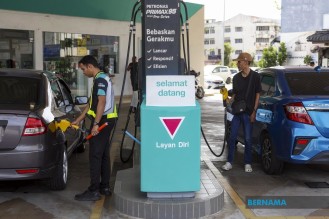
Malaysia's fuel supply outlook has been stabilised with assurances that the nationwide Petronas petrol station network will maintain adequate stocks through August, according to a statement from Datuk Seri Azalina Othman Said, Minister in the Prime Minister's Department (Law and Institutional Reform). The confirmation emerged during proceedings of the National Economic Action Council (MTEN) and represents a significant reassurance for consumers and businesses concerned about energy security amid volatile global markets.
The Petronas network, operated through its publicly listed subsidiary Petronas Dagangan Bhd, represents a critical component of Malaysia's energy infrastructure by supplying approximately 50 percent of the nation's domestic fuel requirements. This dominant market position underscores the importance of maintaining consistent supply levels across the network's numerous service stations nationwide. The minister's statement directly addressed concerns raised about previous assurances that had specified guarantees only through June 2026, prompting questions about the government's preparedness for potential disruptions.
Geopolitical tensions in West Asia have created unprecedented pressures on global energy markets, prompting Malaysia to take a more proactive stance on supply security. In response to these challenges, the government has established a dedicated Crisis Management Task Force (PPPK) operating under the auspices of MTEN. This coordinated mechanism reflects the seriousness with which policymakers view the intersection of global energy volatility and domestic economic stability, particularly given Malaysia's status as both an energy producer and consumer in a region prone to supply disruptions.
The task force has been granted comprehensive responsibilities that extend well beyond simple monitoring. It continuously tracks the nation's fuel, petroleum, and energy supply situation with the dual mandate of ensuring supply security in the coming months while simultaneously controlling consumer prices and preventing illicit activities such as fuel smuggling and black market operations. This balanced approach recognises that energy security is not merely about availability but also about affordability and market integrity, three factors that interact dynamically in developing economies like Malaysia's.
Diversification of crude oil sourcing represents a cornerstone of the government's forward-looking strategy to reduce vulnerability to West Asian supply disruptions. Officials are actively pursuing arrangements to secure crude oil from alternative exporters located in West Africa and the Americas. This strategic pivot acknowledges that over-reliance on any single geographic region for critical commodities creates systemic risk, a lesson reinforced repeatedly by recent global supply chain disruptions. However, the government notes that such arrangements remain conditional on crude oil specifications matching Malaysia's refining capabilities and commercial terms proving competitive and sustainable.
For Malaysian businesses and consumers, the extended timeline through August provides a window of operational certainty that should facilitate better planning and budgeting decisions. Industries heavily dependent on fuel costs, particularly transportation, manufacturing, and logistics sectors, benefit from this visibility. The assurance also reduces pressure on household budgets for those dependent on vehicle transportation, a critical consideration in a country where private vehicle ownership remains central to urban and suburban mobility patterns.
The emphasis placed on preventing smuggling and irregular fuel activities reflects a persistent challenge within Malaysia's energy market. Fuel price differentials between Malaysia and neighbouring countries create incentives for cross-border smuggling, particularly through maritime routes in the northern states. The crisis task force's involvement in these enforcement efforts signals recognition that supply security encompasses not only sourcing and refining capacity but also market policing to ensure that legitimate domestic demand receives priority allocation.
Regional implications of Malaysia's energy security measures extend beyond national borders. As a major Southeast Asian economy and a significant energy player within ASEAN, Malaysia's fuel security directly influences regional energy prices and supply dynamics. Neighbouring countries monitor Malaysian supply decisions closely, particularly Singapore and Thailand, which maintain interdependent energy relationships with Malaysia. The government's proactive crisis management approach therefore carries implications for broader regional energy cooperation and stability.
Looking ahead, the sustainability of fuel supplies beyond August remains contingent on both global market developments and Malaysia's success in diversifying sourcing arrangements. The government's willingness to explore West African and American crude supplies demonstrates a recognition that geopolitical risks require geographic dispersion of suppliers. However, such diversification requires time to negotiate contracts, arrange logistics, and potentially adjust refining operations to accommodate different crude grades. The August timeline appears calibrated to provide sufficient runway for such adjustments while maintaining domestic supply continuity.
The role of Petronas as both a government-linked company and a publicly listed entity adds complexity to supply management decisions. Commercial considerations must be balanced against national interest objectives, particularly during periods of global energy stress when profit margins may be squeezed. The government's crisis management framework appears designed to navigate this tension by providing ministerial oversight while respecting Petronas' operational autonomy.
Consumers and businesses should recognise that the August assurance, while reassuring, is not indefinite. The government's establishment of the crisis task force implies that energy security requires sustained vigilance and adaptive management rather than passive reliance on existing arrangements. Prudent planning would involve gradual adjustments to energy consumption patterns and business operations, taking advantage of the current stability window to build resilience against potential future disruptions.

