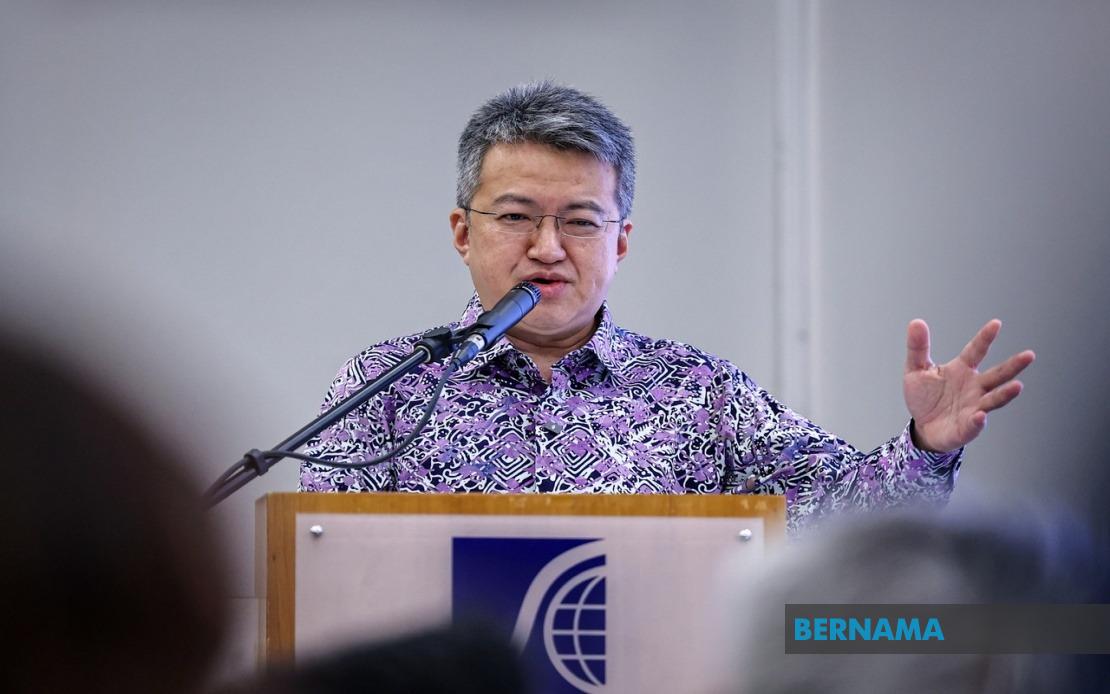
As Johor heads toward its state election on July 11, Pakatan Harapan finds itself navigating an unusual electoral landscape shaped by Perikatan Nasional's selective contest strategy. The opposition coalition's decision to leave 23 seats uncontested by PN has created a complex scenario that PH officials privately view with concern rather than optimism, despite the apparent vacuum of competition. DAP Strategic Director and Deputy Finance Minister Liew Chin Tong articulated this anxiety in recent comments, highlighting an arithmetic problem that could fundamentally reshape the election outcome across multiple constituencies.
The core issue centres on voter behaviour in these unchallenged seats. When a major political force withdraws from the contest, its supporters face a choice: remain loyal to their original party by spoiling their ballot or abstaining, migrate to an alternative option perceived as ideologically compatible, or cross over to another contender entirely. In Malaysia's fractured opposition landscape, where PN has cultivated a distinct identity distinct from both PH and Barisan Nasional, the destination of these floating votes carries enormous consequences. If PN's base gravitates toward Barisan Nasional, PH's candidates—particularly those from DAP—face arithmetic headwinds even in traditionally receptive constituencies. Conversely, if such voters abandon the opposition entirely, the overall anti-establishment coalition suffers erosion.
Liew's caution reflects understanding of election mechanics that raw seat counts often obscure. In a three-cornered contest, victory frequently accrues to the candidate whose support, while not commanding a majority, exceeds fractionalised opposition. The absence of PN from 23 seats effectively transforms these contests from what might have been four or five-way races into tighter competitions where vote efficiency determines outcomes. PH's calculation must therefore account not just for its own consolidation, but for how opposition supporters previously scattered across multiple banners will reorganise themselves. This unpredictability distinguishes the 2024 Johor contest from previous cycles and explains PH's defensive posture despite initially facing a diminished PN threat.
The Deputy Finance Minister's prescription for managing this risk combines campaign discipline with voter engagement. His emphasis on vigilance, persistent campaigning, and presenting fresh ideas reflects an acknowledgment that the election will be won not on the back of PN's absence, but through PH's affirmative case to voters. This reframes the contest from a negative arithmetic exercise—where parties hope rivals implode—toward a positive competition where policy platforms and candidate credibility prove decisive. For DAP and its PH partners, this approach suggests that the coalition cannot rely on administrative advantages or structural factors, requiring instead a ground-up mobilisation focused on persuasion rather than presumption.
DAP's strategy for candidate selection reinforces this intensity. The coalition fielded what Liew characterised as young and credible candidates tailored to constituency demographics and concerns. This deliberate approach signals recognition that the party cannot merely parachute established figures into contested seats and expect outcomes to mirror previous cycles. The bench-strengthening also reflects longer-term institutional considerations: DAP's stated principle against simultaneous parliamentary and state assembly representation forces rotation of cadre, creating opportunities for emerging leaders while preventing power concentration. For voters watching these internal decisions, they signal organisational discipline and commitment to renewal.
Liew's own withdrawal from the Perling seat exemplifies these principles in action. The incumbent opted not to defend a seat he won in 2022, instead handing the candidacy to Alan Tee Boon Tsong, a former Senai assemblyman returning to electoral politics. This move satisfies DAP's ethical guidelines while creating space for leadership regeneration. For Perling voters, it represents continuity through successor rather than incumbent retention—a qualitative difference that requires Tee to establish independent standing rather than riding Liew's established reputation. The Perling contest itself reflects the broader Johor dynamic: a three-cornered affair involving Tee for DAP-PH, Barisan Nasional's P. Pannir Selvam, and Bersama's Boo Wei Han, with 109,992 registered voters deciding among distinct alternatives.
The timing of Johor's election within Malaysia's broader political calendar carries additional weight. State elections increasingly function as barometers of federal coalition strength and internal cohesion. A decisive PH performance could strengthen Anwar Ibrahim's federal position and vindicate the coalition's direction; conversely, PN gains despite withdrawing from competitive seats might suggest the opposition alliance's fragility. For Malaysian observers tracking coalition dynamics, the Johor result will illuminate whether PN's uncontested seat strategy reflects confidence in its established strongholds or tactical retreat from winnable territory. The answer shapes calculations about whether PN can credibly threaten PH's federal incumbency in coming years or remains confined to territorial bases.
For the broader Southeast Asian context, Malaysia's state elections demonstrate how opposition coalitions navigate the perpetual tension between unified fronts and distinct party identities. PN's decision to concentrate resources reflects both strategic calculation and the strains of maintaining opposition unity without clear agreed-upon leadership. PH's response—cautious rather than triumphant, intensive rather than casual—suggests mature political management by a coalition facing genuine uncertainty despite apparent advantages. These dynamics resonate across the region, where opposition forces constantly balance cooperation with autonomy, unity with differentiation.
The elections scheduled for July 11, with early voting on July 7, will test whether PH's cautious framework translates into resilience under pressure. The coalition's focus on candidate quality, campaign intensity, and voter persuasion rather than reliance on PN's absence represents a fundamentally sound approach to competitive politics. However, the acknowledgment of unpredictability and risks—Liew's frank discussion of potential vote transfers and unanticipated outcomes—reflects the realistic assessment that Malaysian electoral contests remain fluid despite structural patterns. For voters and political observers, the coming weeks will reveal whether this calibrated approach delivers the desired results or whether PN's uncontested strategy, intended as tactical modesty, instead becomes the pivot point determining the peninsula's state-level political alignment.

