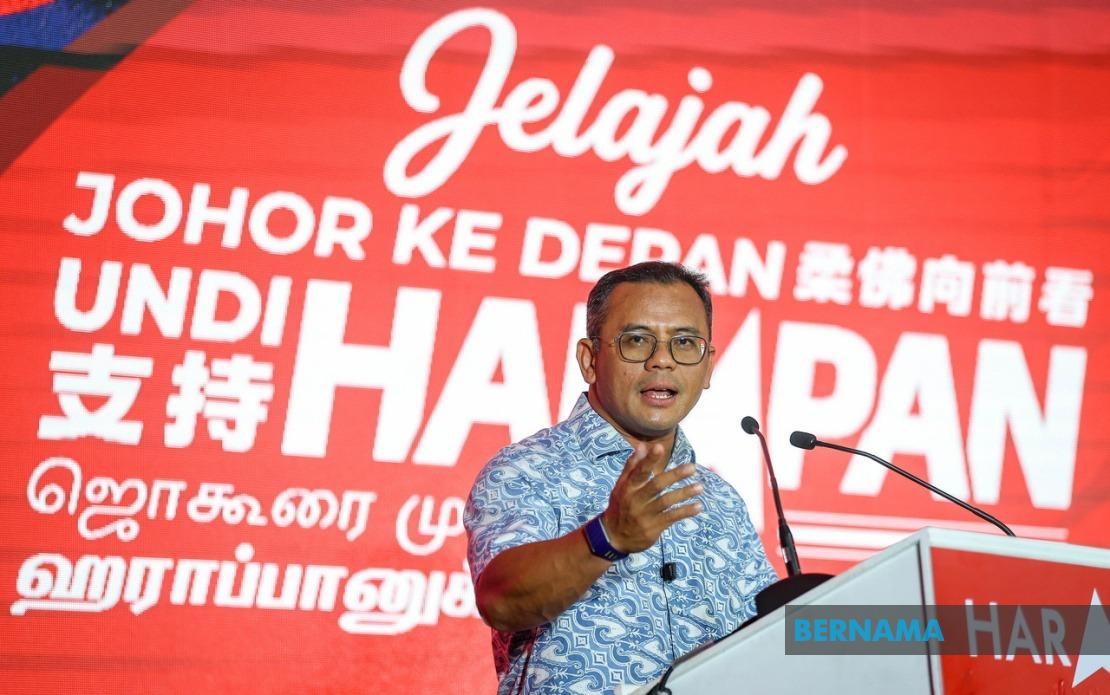
Pakatan Harapan is positioning its participation in Johor's forthcoming state election as a pathway to unlock untapped regional potential through equitable development rather than as a destabilizing force, according to senior coalition figures campaigning in the state. Speaking in Batu Pahat, PKR vice-president Datuk Seri Amirudin Shari, who doubles as Selangor's Menteri Besar and the opposition coalition's election director, argued that Johor possesses enormous economic capacity that remains constrained by administrative imbalances and concentrated investment patterns.
The core thrust of PH's Johor pitch centres on addressing what party strategists describe as a significant geographic inequality in prosperity and opportunity. Currently, the state's economic engine is predominantly housed within Johor Bahru, leaving the northern, eastern and western districts substantially disadvantaged. This concentration has created pronounced income disparities—exemplified by the wealth gap between Johor Bahru and Segamat—that the coalition contends reflect policy failures rather than inevitable economic geography. For Malaysian voters concerned about regional equity, this messaging resonates as particularly salient given ongoing debates about inequality and balanced national development.
Amirudin deployed comparative investment data to illustrate what he frames as inefficient capital deployment in the current administration. Johor attracted RM101 billion in investments over the past year, a figure substantially exceeding Selangor's RM83 billion. Yet despite this capital influx, the employment outcomes diverged dramatically. While Selangor generated 60,000 new positions, Johor's job creation languished below 40,000—and possibly lower still. This disparity, PH argues, indicates that existing state management has failed to convert capital inflows into meaningful economic participation for ordinary Johorians, particularly younger workers who currently face limited local opportunities.
The employment challenge carries particular significance for Southeast Asian migration patterns. Currently, Johor residents, especially professionals and skilled workers, routinely cross the border into Singapore for employment, commuting daily or maintaining transnational work arrangements. This brain drain and labour outflow represent both lost tax revenue and reduced consumer spending capacity within the state economy. PH promises to reverse this dynamic by ensuring that incoming investment translates into jobs offering competitive compensation that can retain talent domestically while simultaneously reducing cross-border dependency.
Central to PH's proposed solution is strategic alignment between state-level governance and federal-level infrastructure initiatives. The coalition specifically highlights the Johor-Singapore Special Economic Zone (JS-SEZ) as a vehicle for coordinated development. By ensuring that state administration actively facilitates rather than merely permits federal projects, PH contends it can unlock multiplier effects throughout the regional economy. This approach acknowledges that modern state competitiveness requires vertical policy coordination—a lesson underscored by regional development successes elsewhere in Malaysia.
The coalition's framing of Johor as Malaysia's "Jewel of the South" carries symbolic weight beyond mere campaign rhetoric. It positions the state not as peripheral to national narratives but as central to Malaysian identity and prosperity. This messaging particularly appeals to Johor residents who may harbour resentments about perceived neglect or underutilization of their state's resources. By tying state development to national pride and international competitiveness, PH attempts to elevate local election politics into a framework of national significance.
Amirudin's emphasis on "open leadership" further distinguishes PH's positioning from incumbent governance models. This phrase suggests transparency, consultation, and inclusive decision-making—qualities that resonate with urban and semi-urban voters increasingly skeptical of opaque administration. In contemporary Malaysian politics, where governance competency and ethical conduct have become voting priorities, this rhetorical emphasis addresses voter anxieties about how development resources are allocated and who benefits from state investment decisions.
The timing of these campaign messages reflects PH's strategic assessment that Johor represents winnable territory despite the state's historical alignment with UMNO-led coalitions. The July 11 polling date and concurrent early voting on July 7 represent a compressed campaign window requiring rapid message penetration. By leading with specific economic grievances and measurable comparative data, PH attempts to establish factual grounds for voter reconsideration rather than relying on personality-driven or identity-based appeals.
For Malaysian business observers and economists, PH's development platform raises substantive questions about investment efficiency and job quality that extend beyond partisan positioning. The gap between capital attraction and employment generation suggests either structural economic challenges within Johor's manufacturing and service sectors or administrative failures in facilitating productive capital deployment. Regardless of electoral outcomes, these underlying issues demand policy attention from whichever coalition assumes state governance.
The coalition's fielding of candidates across all 56 state seats underscores confidence in the campaign's resonance, though it simultaneously exposes PH to potential backlash if messaging fails to convince sufficient voters. Campaign momentum in regional elections often pivots on whether opposition narratives about incumbent failures gain sufficient traction to overcome incumbent advantages in machinery, resources, and established voter loyalty. Johor's electoral competitiveness will substantially depend on whether economic grievances about uneven development and employment gaps override other voting considerations among the state's diverse constituencies.
Aiding PH's campaign efforts is the visible participation of coalition partners such as Amanah, represented by deputy president Datuk Seri Dr Mujahid Yusof at the Batu Pahat event. This multi-party presence demonstrates coalition cohesion and broader opposition commitment to contesting the state seriously. Such unified positioning becomes particularly important in multi-cornered contests where fragmented opposition votes can benefit incumbent coalitions. Johor's voters will ultimately determine whether PH's development agenda and promises of balanced regional prosperity prove sufficiently compelling to alter the state's political trajectory.

