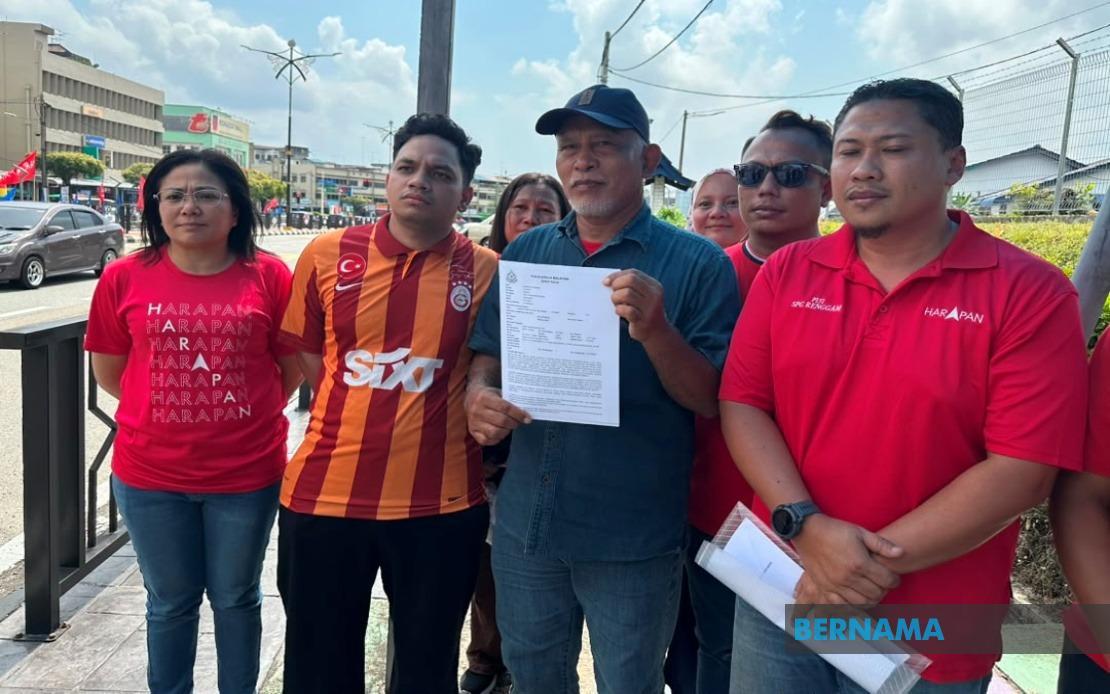
A representative of the Pakatan Harapan candidate contesting the Machap seat has made a formal police complaint against Johor Menteri Besar Datuk Onn Hafiz Ghazi, accusing him of improperly engaging vocational students in campaign activities ahead of the state election. The allegation centres on what PH characterises as a systematic campaign to marshal support from Technical and Vocational Education and Training (TVET) institutions for Barisan Nasional candidates, raising questions about the appropriate use of educational facilities during electoral periods.
Khiru Nasir Rohani, representing the PH's Machap hopeful and serving as deputy chief of the Simpang Renggam Amanah division, contended that state officials orchestrated a coordinated push to mobilise TVET learners for partisan purposes. Speaking at the Simpang Renggam district police station on July 9, he characterised the actions as a deliberate breach of electoral conduct standards. The complaint specifically targets the mobilisation of students from multiple vocational centres in the region, suggesting institutional resources were deployed in service of the ruling coalition's electoral objectives.
According to the complaint, students from various TVET institutions were allegedly summoned to attend a programme held in Kluang on July 4. Rather than serving educational purposes, Khiru Nasir argued that the gathering functioned as a platform for open political advocacy. The allegation implies that educational institutions and their administrative structures were repurposed to generate campaign momentum, potentially compromising the neutrality expected of state-funded institutions during election periods.
The representative framed the alleged misconduct as potentially violating multiple provisions of Malaysia's electoral framework. Specifically, he contended that the conduct breaches the Election Offences Act 1954, particularly sections governing undue influence and the misuse of official authority or institutional assets for campaigning. The characterisation suggests that senior state officials leveraged their positions and control over government resources to favour one political coalition, a practice election law is designed to prevent.
Khiru Nasir called upon three separate enforcement bodies to launch comprehensive investigations. The Malaysian Anti-Corruption Commission (MACC), the Election Commission (EC), and the Royal Malaysia Police collectively possess the authority and expertise to examine whether the allegations have merit. His appeal for coordinated scrutiny underscores the seriousness of the charge and the perception that maintaining electoral integrity requires the involvement of institutions specifically mandated to oversee different aspects of election administration and government conduct.
The timing of the complaint carries particular significance within the context of Johor's electoral calendar. With 172 candidates competing for 56 state assembly seats and polling scheduled for the following Saturday, the allegation emerged during the campaign's final phase. Such late-stage charges can influence electoral momentum and public perception of institutional impartiality, though they also raise questions about whether evidence was compiled in real time or retrospectively during the campaign sprint.
The Machap constituency represents one of many contests in what remains a competitively contested state. Johor's political complexion has shifted notably in recent years, with Pakatan Harapan making significant inroads in state politics. The filing of the report reflects broader tensions surrounding the deployment of government apparatus and the competing interpretations of what constitutes legitimate political activity versus improper use of official resources for electoral advantage.
Vocational education institutions occupy an increasingly prominent place in Malaysian political discourse, given their enrolment of younger citizens and the strategic importance of technical skill development to the nation's economic trajectory. Students from TVET institutions represent a constituency with political weight, and allegations that they were instrumentalised for campaign purposes touch upon broader concerns about the politicisation of educational spaces and the vulnerability of students to institutional pressure.
The distinction between permissible political engagement and improper coercion remains contestable in practice. While political parties legitimately seek to mobilise supporters across all demographic segments, the allegation that students were required or compelled to attend partisan events at state-organised gatherings introduces an element of institutional coercion. The claim of coordination and systematic mobilisation, if substantiated, would suggest planning at senior levels rather than grassroots enthusiasm.
Both Pakatan Harapan and Barisan Nasional have faced allegations regarding campaign conduct in recent electoral cycles across Malaysia. The pattern reflects intensifying competition and competing interpretations of how extensively ruling parties may leverage state machinery in their favour. These dynamics became particularly pronounced in Johor, where electoral margins have narrowed and voter allegiances have demonstrated greater fluidity compared to historical patterns.
The police complaint initiates an investigation process whose outcome remains uncertain. Even if authorities determine that rules were violated, enforcement during or immediately after an election can prove contentious, with opposing factions questioning the impartiality of investigative bodies. The visibility of the complaint, however, adds a measure of public accountability and places the allegations within the formal record.
For Malaysian voters observing the electoral process, the complaint exemplifies broader concerns about institutional neutrality during campaigns. The allegation that government-funded vocational institutions were enlisted for partisan purposes challenges the expectation that state machinery remain available to all political contestants on equal terms. Whether subsequent investigations validate or refute the charges, the complaint underscores the centrality of electoral integrity to Malaysia's democratic functioning.

