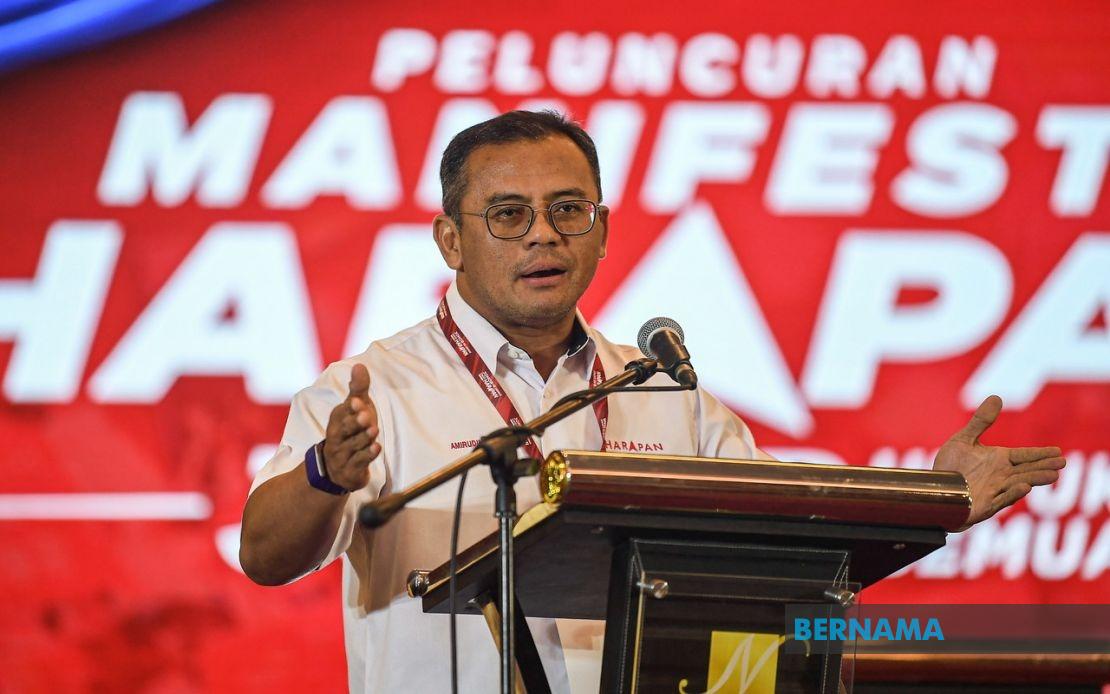
Pakatan Harapan is leaning heavily on economic performance as a campaign pillar for the upcoming Johor state election, with party officials emphasizing the coalition's track record of financial stability and growth since returning to federal power. Datuk Seri Amirudin Shari, the Selangor Menteri Besar and member of PH's Presidential Council, made the pitch at the launch of the coalition's "Johor for All" manifesto in Johor Bahru, arguing that the evidence of prosperity is visible in currency stability, investment inflows, and expanding state treasuries.
The ringgit's recovery to its strongest position in 16 years has become a central talking point for the MADANI Government led by Prime Minister Datuk Seri Anwar Ibrahim. Currency strength matters beyond symbolic value—it reflects investor confidence, reduces the cost of imported goods, and signals macroeconomic stability to international markets. For ordinary Malaysians, a stronger ringgit translates to cheaper imports and better purchasing power abroad, making it a tangible metric that resonates beyond headline figures.
Amirudin's claims about Selangor's economic trajectory underscore the competitive nature of Malaysia's subnational economies. The state's economic value expanded from RM432 billion to RM460 billion between assessments—a RM28 billion jump recorded in data released just days before the campaign event. To contextualize this growth, Amirudin noted that Selangor's economy is now twice the size of Johor's, a pointed comparison given that Johor is the target electorate.
The emphasis on Penang and Selangor's combined contribution of nearly 40 percent of Malaysia's national economy reflects a deliberate strategy to showcase PH-governed territories as engines of prosperity. Both states have historically been economic powerhouses, but linking their performance directly to PH governance frames economic management as a core campaign message rather than attributing success to geographic or structural advantages these states possessed beforehand.
Consistent GDP growth across the federation has been a marker of the administration's stewardship since taking office. Unlike previous cycles when Malaysia's growth rates fluctuated more dramatically, the current government has maintained steadier expansion, though global headwinds and regional competition remain persistent challenges. The ability to attract substantial foreign and domestic investment signals that multinational corporations and institutional investors maintain confidence in Malaysia's political stability and economic direction.
For Johor specifically, the manifesto launch represents PH's attempt to expand its presence in a state historically dominated by the ruling coalition's traditional supporters. Johor's voters will evaluate PH's pitch against the incumbent administration's own development record and promises. The economics message is particularly relevant because voter sentiment often reflects pocketbook concerns—employment, cost of living, wage growth, and access to opportunities—rather than abstract macroeconomic indicators.
The 16th Johor state election carries strategic importance beyond the state itself. Johor is Malaysia's second-largest state by population and economy, and its political direction influences the broader national balance of power. A strong PH performance would signal renewed momentum for the coalition, while an incumbent victory would consolidate opposition control in a key demographic and economic stronghold. The economic narrative thus serves multiple audiences: PH supporters seeking validation of their choice, swing voters weighing alternatives, and internal party morale ahead of a closely watched contest.
However, aggregate economic growth figures can mask uneven distribution of prosperity. Voters in smaller towns, rural areas, and outer suburbs may not experience gains equally with urban centers and major commercial zones. PH's manifesto will need to address how rising state GDP translates into job creation, wage improvements, and service delivery in constituencies beyond the Klang Valley or George Town. Economic statistics provide a foundation for campaigning, but tangible improvements in individual lives determine electoral outcomes.
The timing of these claims—anchored to recent data and specific figures—demonstrates PH's confidence in its economic record entering the campaign period. By contrasting Selangor's growth trajectory with Johor's smaller economy, the party signals that PH governance produces measurable results. Yet this approach also invites scrutiny: voters may ask why, if PH is so effective at managing growth, it lost federal power in 2022 or why certain regions remain economically disadvantaged despite national expansion.
Broader Southeast Asian context matters too. Malaysia competes regionally for investment and talent, and currency stability, GDP growth, and investor confidence are relative measures. Vietnam, Thailand, and Indonesia all compete in overlapping economic zones, and Malaysia's ability to maintain growth while managing inflation and maintaining fiscal discipline affects its regional standing and long-term competitiveness.

