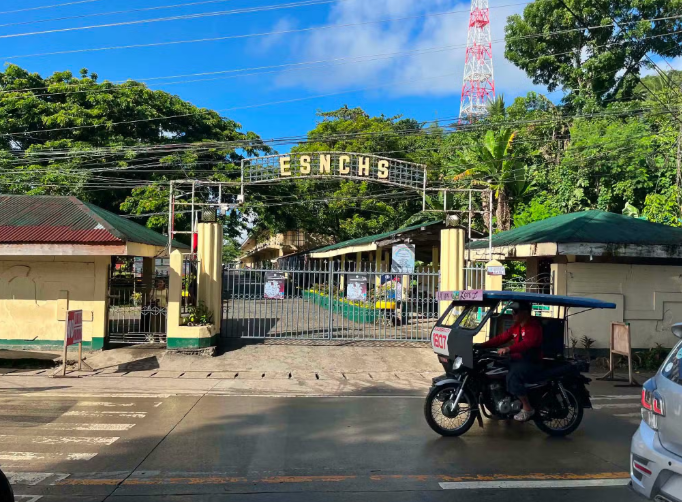
Eastern Samar National Comprehensive High School in Borongan City went into lockdown on Friday, July 3, after a threatening online post circulated among students sparked immediate intervention from law enforcement and school administrators. The apparent message, allegedly originating from Grade 11 Kitchen Operations students, prompted authorities to take the extreme precaution of closing the campus entirely while security personnel swept through the sprawling facility to ensure no actual danger existed on the grounds.
The decision to halt classes came swiftly following consultation between the school's leadership and the Borongan City Police Station, with the school's acting head Dean Ernest Paul Hermano ordering the suspension in coordination with the Department of Education's local division office. The move reflected heightened institutional anxiety over campus safety, as administrators balanced their duty to protect students against the risk of disrupting operations based on what proved to be an unverified digital threat. Police authorities recommended the closure, signalling that law enforcement took the matter seriously enough to warrant precautionary measures despite the online nature of the threat.
The timing of the incident underscored the raw nerves running through Philippine schools following a genuine tragedy just twelve days earlier. On June 22, a student at San Jose National High School in Tacloban City opened fire on campus, killing three fellow students and wounding twenty others in what became one of the country's deadliest school shooting incidents in recent memory. That attack had sent shockwaves through the Eastern Visayas region, prompting schools, local government officials, and parents to reassess their approach to campus security with new urgency and clarity.
In response to the Borongan threat, a Special Weapons and Tactics team deployed to the school and conducted a comprehensive sweep of areas where the threatening online photographs had allegedly been taken. This shows how seriously Philippine law enforcement has begun treating even unverified digital threats in the post-Tacloban environment. The operation proceeded methodically, with officers treating each suspicious location as a potential genuine threat until proven otherwise, reflecting evolving protocols for school security incidents.
By 8:35 a.m. on Friday, PLTCOL Silver Cabanillas, the acting chief of Borongan City Police, formally cleared the campus, declaring it free of any actual bombs or guns. This all-clear came after what authorities described as a thorough investigation of the premises, allowing school administrators to make an informed decision about whether operations could resume. The rapid clearing suggested that while the threat warranted serious investigation, physical evidence of danger appeared absent from the outset.
Despite the swift resolution, authorities have yet to identify who posted the threatening content or determine their motivations. This investigative gap leaves fundamental questions unanswered about whether the post represented a genuine threat, a prank that spiralled out of control through social media amplification, or something else entirely. The ongoing investigation highlights how digital threats in the school context now trigger full law enforcement responses, blurring the line between credible danger and attention-seeking behaviour that nonetheless demands official action.
The incident reveals how the Tacloban shooting has fundamentally altered threat assessment procedures across Eastern Visayas. Schools that might previously have handled such matters internally now immediately escalate to police, while administrators err on the side of caution rather than dismissing digital threats as mere schoolyard bravado. This cultural shift represents both heightened vigilance and institutional vulnerability to disruption through unverified claims.
Eastern Samar National Comprehensive High School, as the largest public secondary institution in the province and a flagship educational facility, serves thousands of students drawn from Borongan City and surrounding municipalities. The closure affected a substantial portion of the region's teenage population, demonstrating how security incidents at major institutions ripple through entire communities. The school's prominence made it both a natural target for those seeking attention and a priority for authorities concerned about protecting large student populations.
School officials issued a statement emphasising their commitment to investigating the incident thoroughly while maintaining a safe learning environment. The administration pledged full cooperation with law enforcement and noted that campus safety took precedence over operational continuity. This messaging attempted to reassure stakeholders while justifying the disruptive closure as a proportionate response to genuine uncertainty about student security.
The incident illustrates a broader pattern emerging across Eastern Visayas, where multiple school-related security incidents have occurred in recent days, stretching law enforcement resources and testing emergency protocols. Authorities have begun public campaigns urging citizens to report threats to police rather than sharing unverified information through social media, recognising how digital amplification of uncertain dangers can trigger panic and disruption beyond the original incident's actual scale.
For Malaysian observers, the Philippine situation offers troubling parallels and important distinctions regarding school security in Southeast Asia. While mass shooting incidents remain far less common in Malaysia, the vulnerability of large school campuses to threat-based disruptions through social media represents a universal concern. The Eastern Visayas experience suggests that regional schools increasingly face the challenge of distinguishing genuine threats from attention-seeking behaviour while maintaining student and staff safety—a delicate balance with no perfect solutions.
Looking forward, the incident at Eastern Samar National Comprehensive High School will likely accelerate adoption of stricter digital monitoring protocols and clearer threat assessment frameworks across the Philippine education system. Schools may implement systems for rapid verification of threats before initiating full closures, though the Tacloban precedent makes authorities reluctant to dismiss any threat as certainly harmless. The challenge remains how to maintain operational stability while taking student safety seriously in an era when anyone with internet access can disrupt hundreds of classrooms with a single post.

