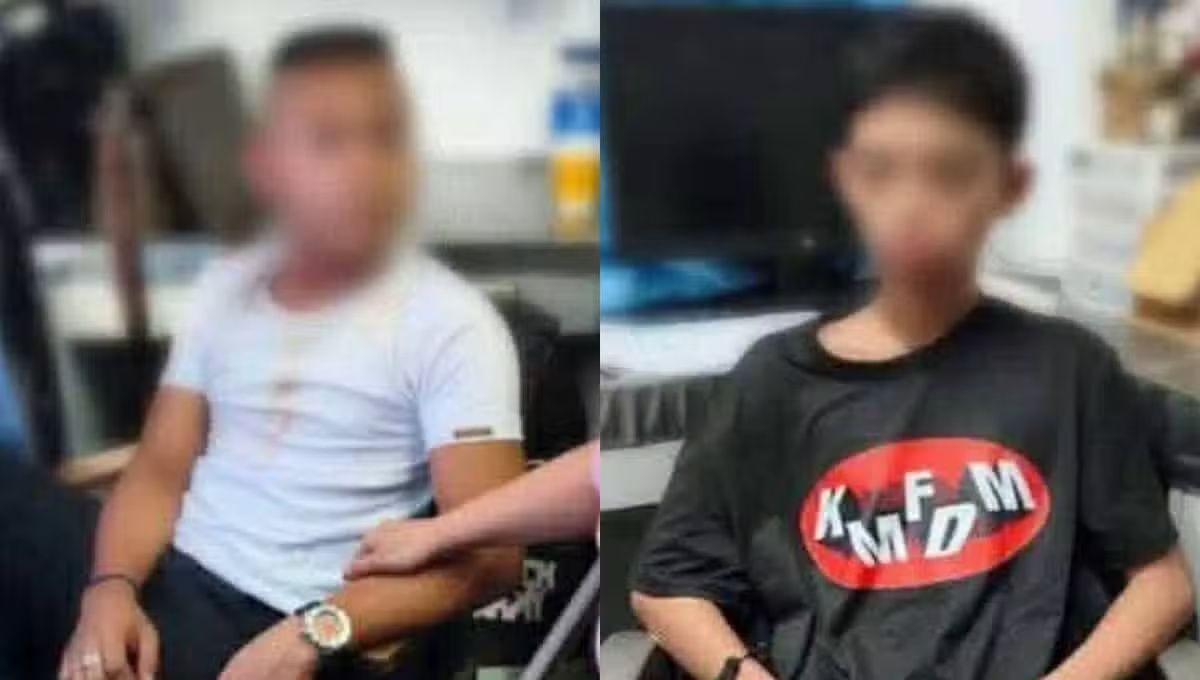
The Philippines confronted a grim reckoning on June 22 when two teenagers allegedly opened fire at San Jose National High School in Tacloban City, a coastal town in Leyte province, killing three classmates and wounding two dozen others. The assailants, boys aged 14 and 15 who reportedly endured years of bullying, discharged firearms in an attack that stands among the deadliest school shootings in a nation where such incidents remain uncommon. Yet their age has created a legal paradox that is now fracturing the country's criminal justice system and sparking calls for sweeping legislative change.
The tragic incident has exposed a fundamental fault line in Philippine law. The 15-year-old suspect faces prosecution on multiple murder charges, but his 14-year-old accomplice cannot be criminally charged at all under the Juvenile Justice and Welfare Act of 2006. Instead of standing trial, the younger boy will be directed toward a rehabilitation facility for minors in contact with the law, a path that has enraged grieving families. This distinction between the two perpetrators—based solely on crossing a birthday—has become the flashpoint for a national reckoning over whether the nation's approach to juvenile offenders serves justice or enables impunity.
The mothers of two murdered students have become unexpected advocates for legislative reform. Erbea Fabian, whose 15-year-old son Chris Lorenz was killed, revealed that the 14-year-old suspect actually fired most of the shots that morning, yet cannot face criminal prosecution. "While I am angry with the 15-year-old suspect, the other suspect should also be held liable," she told local media, her words capturing the anguish felt by families who see the law protecting the person whom investigators identified as the primary shooter. Jenny Baldoria, mother of 16-year-old victim Joyancee, echoed this sentiment with raw emotion: "How can I forgive him when he was the one who killed my Yancee?" Their testimonies have lent moral weight to proposals that were already circulating in Philippine political circles.
President Ferdinand Marcos Jr has signalled openness to lowering the age threshold for criminal responsibility, while police leadership has actively pushed for change. The Philippine National Police proposed setting a 12-year-old minimum, citing documented cases of children as young as nine engaging in criminal conduct. Interior Secretary Jonvic Remulla highlighted how criminal syndicates deliberately deploy minors as drug dealers precisely because existing law shields them from prosecution—a systemic exploitation that the current legal framework inadvertently enables. These arguments from security apparatus officials carry significant weight in policy discussions, as they frame the issue not merely as punishment but as addressing exploitation.
Senator Robin Padilla has emerged as a legislative champion of reform, filing a bill in July 2025 that would lower the threshold to 10 years old. Speaking directly to President Marcos on June 22, Padilla urged him to convene a special session of Congress to address what he characterised as an urgent security crisis mirroring the epidemic of school shootings in the United States. "If we are now mimicking America, where shootings are happening inside schools, then if we are truly serious about this, this is the kind of issue that warrants a special session," he told reporters, framing the legislative initiative as a response to a pattern of student violence that extends beyond this single incident.
Investigations have unveiled disturbing details about the suspects' digital lives that are amplifying calls for additional safeguards. Authorities discovered that the 14-year-old had been posting violent videos online and was deeply immersed in gaming content, particularly GoreBox, a first-person shooter game manufactured by German developer F2Games that features brutal combat and extensive weaponry. The discovery has catalysed demands for laws restricting minors' access to violent digital content, adding a new dimension to the legislative response beyond merely lowering the age of criminal responsibility. The government has temporarily blocked access to the game while investigators determine whether it contributed to the shooting.
The Philippines currently maintains one of Asia's most restrictive thresholds for criminal liability, substantially higher than most neighbouring nations. Indonesia sets its minimum at 12, Singapore at 10, and most other regional countries at 14. This comparative context shapes the reform debate, as policymakers cite regional norms to justify lowering the Philippine standard. However, the United Nations Committee on the Rights of the Child has issued clear guidance cautioning against raising thresholds above 14, and has declared any minimum below 12 to be internationally unacceptable. This tension between national security concerns and international human rights standards is shaping the contours of the debate, with reformers potentially vulnerable to criticism from rights advocates.
Opposition to lowering the age has crystallised around a sophisticated counterargument about root causes. Tricia Clare Oco, executive director of the Juvenile Justice and Welfare Council, contends that age-based reform addresses symptoms rather than underlying drivers of youth violence. Speaking to state media on June 24, she argued that lowering criminal liability will not make schools safer because it does not grapple with why children turn violent in the first place. Her statement, drawing parallels to American jurisdictions with stricter laws that have nonetheless experienced continued school violence, challenges the implicit assumption that harsher criminal sanctions will deter violent youth. She identifies family instability, interpersonal bullying, peer influence, and media normalisation of violence as the genuine culprits requiring systemic attention.
The existing legal framework, according to its defenders, already provides meaningful consequences without requiring criminal prosecution. The Juvenile Justice and Welfare Act permits courts to order involuntary commitment to rehabilitation facilities within 72 hours, with mandatory structured programming and parental civil liability. This approach aims to separate accountability from criminal punishment, treating young offenders as individuals whose behaviour can be reformed through intervention rather than incarceration. Oco's position reflects an international trajectory in juvenile justice toward rehabilitative rather than punitive approaches, yet it directly confronts the emotional demands of victims' families for criminal responsibility that matches perceived culpability.
The shooting has also triggered broader institutional scrutiny across multiple agencies. The Philippine Senate and the Commission on Human Rights have initiated independent investigations, signalling that the political and human rights establishment recognises the incident as a watershed moment requiring comprehensive analysis. The Commission on Human Rights issued a statement emphasising that addressing the tragedy demands "urgency, compassion and fidelity to human rights principles," framing the challenge as one requiring simultaneous attention to victims' needs and protection of vulnerable youth.
Beyond the Tacloban incident, the Philippines has experienced a surge of student-related violence that suggests systemic pressures on young people. Authorities prevented a potential mass shooting at another Leyte school days after the initial attack, and three separate stabbing incidents occurred on campuses across different regions within the same week. This clustering of incidents suggests that youth violence may reflect deeper social fractures rather than isolated criminal pathology, lending credence to arguments that punitive reform alone will prove insufficient.
The legislative battle that will unfold when Congress returns from its July 27 recess will ultimately reflect how the nation balances competing imperatives: acknowledging parental grief and demands for justice, respecting international human rights standards, and addressing the complex social factors that drive young people toward violence. The Tacloban shooting has crystallised a debate that extends far beyond criminal procedure, touching fundamental questions about childhood, accountability, and the social contract in an increasingly polarised society.

