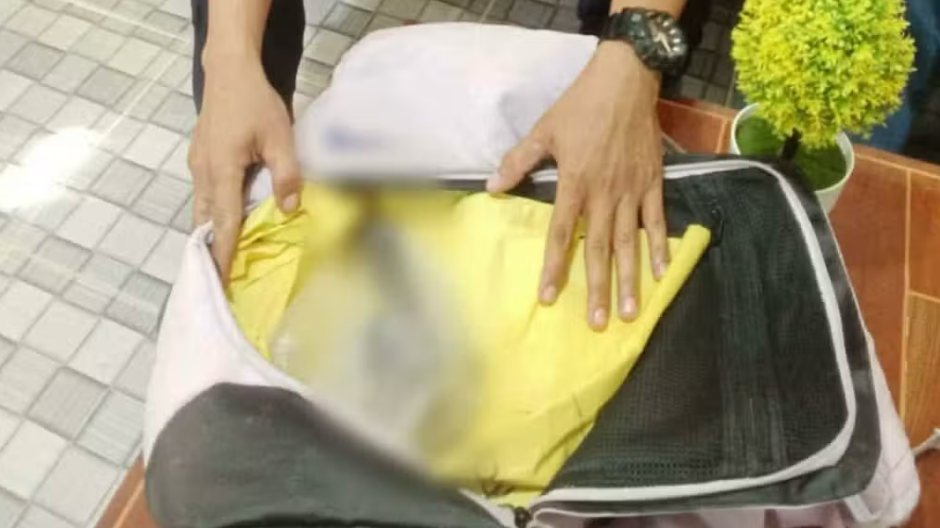
A teenager in Cebu, Philippines was apprehended after authorities discovered a loaded firearm hidden in his school bag during a routine inspection, raising fresh concerns about weapon access in households and school safety across the region. The discovery occurred at approximately 3.50pm on Thursday, Aug 20, when a teacher conducting a precautionary check of student belongings found a .357 Smith & Wesson Magnum revolver inside the bag of the 14-year-old pupil at a school in Pinamungajan. The incident has reignited discussions about firearm storage practices and youth safety in the Philippines, where school shootings have recently claimed lives and prompted urgent security reviews.
The student's motivations for bringing the weapon to campus remain unclear as investigators continue their examination of the case. What is known is that the revolver originated from the boy's grandfather, who had stored it inside a cabinet at the family residence in what authorities described as an unsecured location. The minor accessed the cabinet and transported the firearm to school on the same day it was discovered, according to police statements. The weapon was recovered without ammunition, though investigators have not publicly disclosed whether rounds were located elsewhere or if the teen had attempted to obtain bullets.
The school administration's immediate response demonstrated protocols now standard across Philippine educational institutions following recent violence. Teachers alerted police officers stationed at the campus, who verified the report and secured the weapon for documentation. The firearm has since been processed according to legal procedures governing confiscated weapons. The rapid intervention prevented any potential incident, underscoring the effectiveness of heightened vigilance that schools have implemented in recent weeks.
Circumstances surrounding the student's family situation added complexity to the case. Both parents were employed outside the municipality at the time of the incident, leaving the teenager in the care of his grandparents. This arrangement, while common in many Philippine households, created a supervision gap that allowed the youth to access a firearm unsupervised. The situation highlights vulnerabilities that arise when multigenerational households lack clear communication about weapon storage and youth safety protocols. Following standard procedures for cases involving minors, authorities transferred the student to the Municipal Social Welfare and Development Office rather than pursuing traditional criminal charges, pending arrival of his parents or legal guardians.
The discovery comes amid an intensifying security crackdown prompted by a recent shooting at a senior high school in Zamboanga that resulted in two deaths. That incident shocked the education sector and spurred government officials throughout the Visayas region to reassess protective measures in educational facilities. Cebu Governor Pamela Baricuatro issued directives requiring law enforcement to strengthen security protocols significantly, mandating increased police presence, periodic inspection regimens, and enhanced communication between schools and local authorities. These measures represent a substantial shift in how schools now operate, with security considerations factoring prominently into daily operations.
In response to the governor's mandate, the Cebu Police Provincial Office implemented a one-police-to-school deployment scheme coordinated with local government units and school administrators. This strategy essentially assigns individual officers to specific educational institutions, creating dedicated security personnel familiar with campus layouts and student populations. Police Colonel Abubakar Udang Mangelen Jr, the provincial director, oversaw the rollout of this initiative across Cebu's public and private schools. The program aims to establish visible deterrence while enabling rapid response should dangerous situations emerge on campus.
Law enforcement agencies have simultaneously intensified public awareness campaigns targeting firearm owners, emphasizing proper storage practices as a critical responsibility. Police statements released following the Pinamungajan incident stressed the importance of securing weapons in locations completely inaccessible to minors, regardless of a household's composition or the ages of family members. Officers reminded gun owners that storage cabinets, safes, and locked containers represent basic requirements rather than optional precautions. This messaging reflects growing recognition that unsecured firearms in homes represent a significant danger, particularly in households where teenagers reside.
The incident illustrates a broader challenge facing Southeast Asian nations attempting to balance firearms rights with public safety concerns. The Philippines, unlike some regional neighbours with near-total civilian gun bans, permits private ownership under strict licensing requirements. However, enforcement of storage standards and regulatory oversight remains inconsistent across the archipelago, particularly in rural areas and smaller municipalities. Cases like the Pinamungajan discovery suggest that education and voluntary compliance initiatives require substantial reinforcement through stronger legal penalties and more rigorous inspections.
For Malaysian observers, the situation underscores why countries with stringent civilian gun restrictions have maintained relatively low rates of school violence compared to nations permitting broader firearm ownership. While the Philippines has legitimate self-defence arguments supporting civilian access to weapons, the Cebu case demonstrates how quickly access to firearms can create dangerous situations involving young people who may lack mature judgment about consequences. The incident also reflects vulnerabilities that arise when extended families share living spaces and communicate insufficiently about household hazards.
The investigation remains ongoing as authorities work with the student's family and the MSWD Office to determine appropriate interventions. Police have not released statements regarding whether they will pursue charges against the grandfather for negligent storage or other violations. The case has intensified scrutiny of firearm owners throughout Cebu, with officials signalling that future discoveries of improperly stored weapons may result in criminal prosecution. For the broader education sector, the incident validates the decision to implement heightened security measures, though questions persist about whether increased police presence in schools adequately addresses root causes of youth violence and weapon access.
School authorities in the region have responded by expanding bag inspection protocols and communicating more frequently with parents about security expectations. Many institutions have distributed guidelines about what items students may bring to campus and established clear consequences for violations. These administrative changes, while potentially controversial among students and families concerned about privacy, reflect a consensus among school administrators that prevention is preferable to managing actual incidents. The Pinamungajan case will likely be referenced frequently as justification for such policies moving forward, particularly across the Visayas where similar security reviews are underway.
The broader implications for Philippine society involve difficult conversations about gun culture, family responsibility, and institutional oversight. While law enforcement has appropriately secured the firearm and initiated proper procedures, the case suggests that preventing access requires more than police intervention—it demands cultural shifts in how firearm owners view their obligations to younger family members. Government campaigns emphasizing secure storage, combined with legal penalties and school-based education initiatives, may gradually reduce instances of youth accessing family weapons. Until comprehensive systems addressing storage, licensing enforcement, and public awareness reach every community effectively, incidents like the one in Pinamungajan will likely continue emerging periodically, prompting reactive rather than preventive policy responses.

