The Philippine Department of Justice has launched a formal investigation into allegations that public officials may bear responsibility for a shooting incident at the Senate building on May 13 and the subsequent escape of Senator Ronald dela Rosa from protective custody early the following morning. Justice Secretary Fredderick Vida confirmed that prosecutors are examining possible criminal charges as they work to establish the connection between these two significant events.
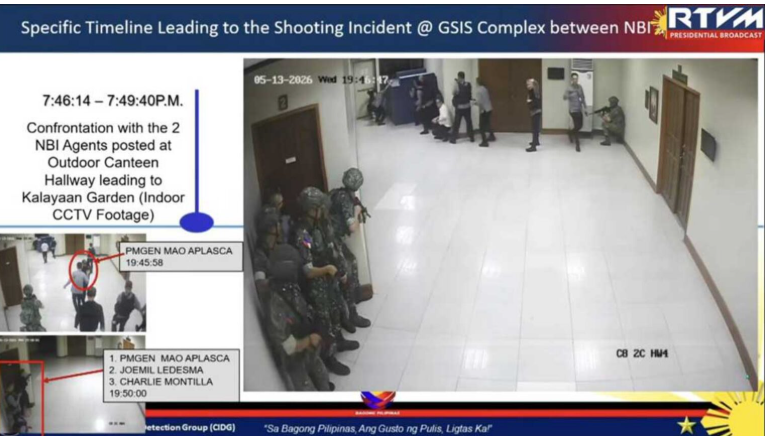
According to Vida, the investigative panel—composed of multiple prosecutors—has gathered testimony from National Bureau of Investigation personnel and media representatives, alongside security footage that provides visual evidence of the incident. The CCTV recordings reportedly show sniper fire originating from the fifth floor of the Senate building, with shots directed at an identifiable NBI vehicle parked at the Government Service Insurance System premises. This forensic evidence forms a critical foundation for understanding how the shooting unfolded and who may have been involved.
The timing of these events raises serious questions about security protocols and chain of custody procedures. The shooting occurred on May 13, and within hours—during the early morning of May 14—dela Rosa managed to leave protective custody. The proximity of these incidents has prompted investigators to determine whether there is a causal relationship or whether officials may have been distracted, compromised, or complicit in facilitating the senator's departure from what should have been secure confinement.
Vida emphasized that the probe remains in its preliminary phase, with investigators still gathering and analysing evidence before making formal accusations. He noted that while multiple public officials appear to be connected to the incident based on initial findings, the department has not yet identified specific individuals for formal investigation. This cautious approach reflects the sensitivity of examining possible misconduct among government figures, particularly those in the Senate, a branch of government traditionally protective of its members' privileges.
The Justice Secretary's public statements reveal a delicate balancing act between assuring transparency and maintaining investigative integrity. Vida stressed that the department will pursue the matter with professionalism and objectivity, without predetermined conclusions or political interference. He particularly emphasised that no individual—regardless of position or status—stands above the law, addressing concerns that high-ranking senators or officials might escape accountability due to their rank or connections.
Simultaneously, Vida cautioned against rushing to judgment, underscoring that evidence must be comprehensively examined before accusations are levelled. This principle proves particularly important in Philippine jurisprudence, where allegations of government impropriety can become politicised. A premature accusation could contaminate the investigation or provide defence lawyers with grounds to challenge subsequent charges on fairness grounds.
The incident carries broader implications for Philippine law enforcement and judicial credibility. A shooting at the Senate suggests either a significant security breach or an organised operation with sufficient resources and inside knowledge to target a specific NBI vehicle. The subsequent escape of a senator from custody raises questions about whether security personnel were negligent, whether protocols were deliberately circumvented, or whether the escape was facilitated by someone with authority to release the detainee.
For Southeast Asian observers, this episode illustrates ongoing challenges within Philippine institutions regarding accountability and the rule of law. The willingness of the Department of Justice to investigate public officials, including potentially those of senatorial rank, demonstrates that formal mechanisms for oversight exist. However, the outcome will be scrutinised as evidence of whether these mechanisms function independently or succumb to political pressure.
The investigation also touches on fundamental questions about the separation and balance of powers in Philippine government. When a senator becomes the subject of investigation for conduct possibly linked to Senate building security, institutional tensions inevitably arise. The legislative branch may feel its prerogatives are being questioned, while the executive branch, through the Justice Department, asserts its prosecutorial independence.
Vida's emphasis on pursuing the matter "without fear or favour" reflects awareness of these dynamics. The phrase signals to potential witnesses, media observers, and the public that the department intends to follow evidence rather than political considerations. In a jurisdiction where institutional rivalries occasionally overshadow governance, such assurances carry weight, though their credibility ultimately depends on investigative outcomes and prosecutorial decisions.
The availability of CCTV footage and eyewitness accounts from media practitioners and NBI personnel suggests that substantial evidence exists regarding the shooting itself. Establishing who fired the shots, whether orders were given by superiors, and whether any official acted to facilitate dela Rosa's escape will require extensive witness examination and forensic analysis. Each of these questions may implicate different officials at various levels of the government hierarchy.
As the investigation progresses, Philippine institutions face a crucial test. The willingness to examine high-ranking officials impartially, combined with transparent reporting of findings, will influence public confidence in both the Department of Justice and the broader legal system. For Malaysia and other ASEAN nations watching Philippine governance, this case exemplifies the ongoing struggle to balance institutional independence with political pragmatism—a challenge that transcends borders across Southeast Asia.