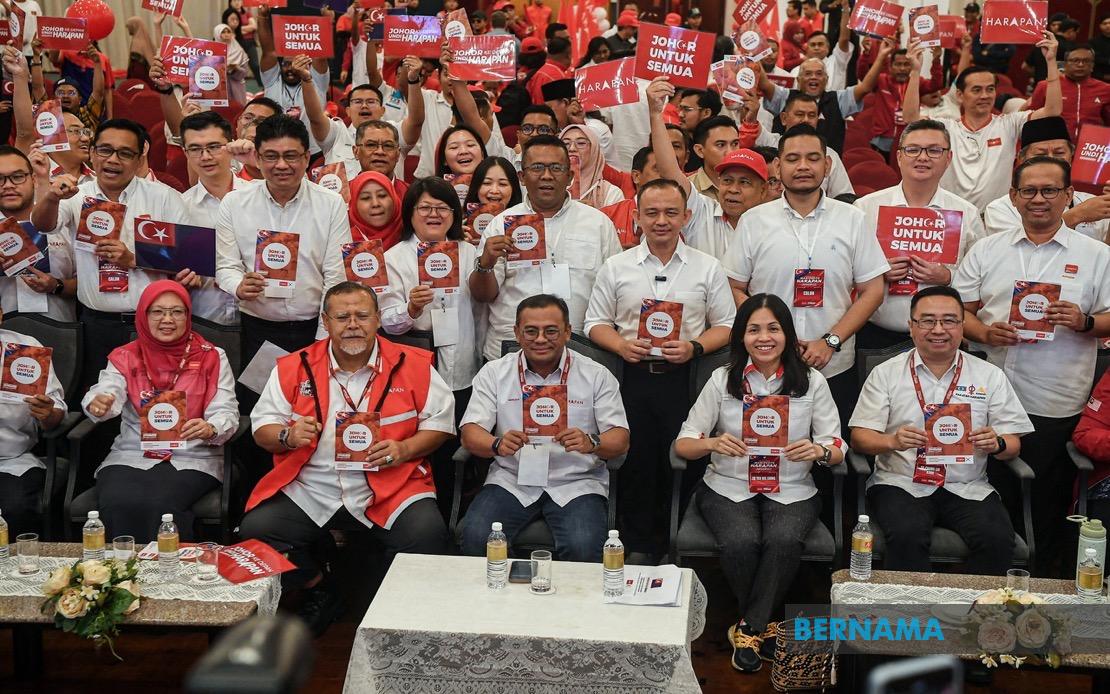
Pakatan Harapan unveiled its election manifesto for Johor's 16th state election on July 3, positioning "Johor Untuk Semua" as a carefully calibrated response to the state's pressing social and economic challenges. Johor DAP chairman Teo Nie Ching rejected suggestions that the document amounts to mere campaign rhetoric, insisting instead that each promise reflects ground-level feedback and careful consideration of what the state's finances can realistically sustain.
The manifesto targets a deliberately broad constituency, addressing the concerns of young professionals seeking economic opportunity, mothers balancing work and family responsibilities, and children requiring quality education. This deliberate inclusivity represents a shift from narrowly focused party platforms toward what coalition strategists view as comprehensive governance architecture. The approach appears designed to counter narratives of PH serving particular demographic segments at others' expense—a persistent criticism that shaped electoral dynamics across multiple previous state contests in Malaysia.
Education policy features prominently among the manifesto's central pillars, acknowledging longstanding frustrations among Johor families regarding school quality, teaching standards, and student preparedness for modern job markets. By elevating educational reform to primary importance, PH signals that it recognizes how state-level governance significantly influences educational outcomes through funding, teacher recruitment, curriculum support, and infrastructure investment. This emphasis matters particularly in Johor, where demographic shifts and economic transformation have created uneven educational access between urban and rural areas.
A specific pledge to reduce waiting times at Johor-Singapore border crossings by half targets one of the state's most visible operational challenges. The chronic congestion at Causeway and Second Link crossings costs the economy millions in lost productivity and frustrates tens of thousands of daily commuters. Teo expressed confidence that coordination with the federal Home Ministry could make this target achievable, signalling that PH's approach emphasizes multi-level governance and institutional coordination rather than siloed decision-making. Success here would demonstrate state government competence on an issue voters experience directly.
The proposed Johor Health Scheme represents one of the manifesto's more ambitious undertakings, offering households enhanced medical coverage and preventive care support. Teo referenced Selangor's existing health insurance model as proof of concept, arguing that an established neighbouring state's demonstrated success should reassure Johor voters that similar initiatives can work beyond theoretical projections. This cross-state comparison strategy acknowledges that Malaysian voters increasingly evaluate election promises against concrete evidence of implementation elsewhere rather than accepting pledges at face value.
Among ten key policy offers, first-time homebuyer deposit assistance addresses a critical barrier preventing younger Malaysians from accessing property ownership. Johor's housing market has become increasingly unaffordable for ordinary workers, with property speculation and rising construction costs pricing out families earning modest incomes. Direct financial assistance through deposit contributions represents state-level intervention in a market that has historically functioned beyond ordinary household reach.
A RM500 million youth development fund targets economic opportunity creation for young adults confronting scarce job prospects and limited entrepreneurial support. Youth unemployment and underemployment continue generating social frustration, particularly in smaller towns where diversification beyond traditional employment has progressed slowly. Dedicated capital allocation for youth programming signals recognition that demography determines electoral sustainability—young voters mobilized or demobilized today reshape political landscapes for decades.
The manifesto's strength lies partly in its apparent balance between immediate material benefits and longer-term institutional capacity building. Voters encounter promises spanning healthcare access, housing affordability, border efficiency, and education quality—domains directly affecting daily life rather than abstract governance metrics. This tangible grounding distinguishes the platform from manifestos emphasizing ideological commitments or symbolic policy positions disconnected from lived experience.
Teo's repeated emphasis on federal-state coordination reveals that PH recognizes the manifesto's achievability depends substantially on cooperative relationships with Kuala Lumpur. Border crossing efficiency requires Home Ministry engagement; healthcare coordination involves Health Ministry partnerships; education reform necessitates Education Ministry alignment. This institutional interdependence means Johor voters effectively evaluate not only state-level competence but also whether a PH Johor government can maintain productive working relationships with federal counterparts—itself a significant electoral consideration.
The election campaign enters its final phase before July 11's polling day, with early voting scheduled for July 7. Johor's election carries broader significance within Malaysian politics, as states with substantial economic weight and population carry outsized influence in national political calculations. A decisive PH victory could reshape perceptions of coalition viability beyond the 2022 watershed; conversely, reduced support would suggest that federal government performance significantly constrains state-level political dynamics regardless of local policy offerings.
The manifesto's credibility ultimately depends on implementation mechanisms rather than rhetorical ambition. Voters increasingly distinguish between promises and capacity, having observed multiple election cycles where stated commitments encountered budgetary constraints, bureaucratic resistance, or deprioritization once campaigns concluded. Teo's emphasis on manifesto deliverability—conditional on federal cooperation and voter support—represents an implicit acknowledgment that campaign promises require ongoing political will and institutional functionality to transform into tangible outcomes.

